There is perhaps no dish more iconic or deeply rooted in the heart of West African culinary tradition than West African Fufu paired with a rich, nut-forward Egusi soup. This isn’t just a meal; it is a sensory journey that defines the concept of comfort food for millions. From the rhythmic pounding of the mortar to the vibrant, golden hue of the palm oil, every element tells a story of heritage and artisanal skill. Whether you are revisiting a childhood favorite or exploring sweet African crepes'>African crepes for your cultural exploration, this savory powerhouse is the soul-warming dinner you need.
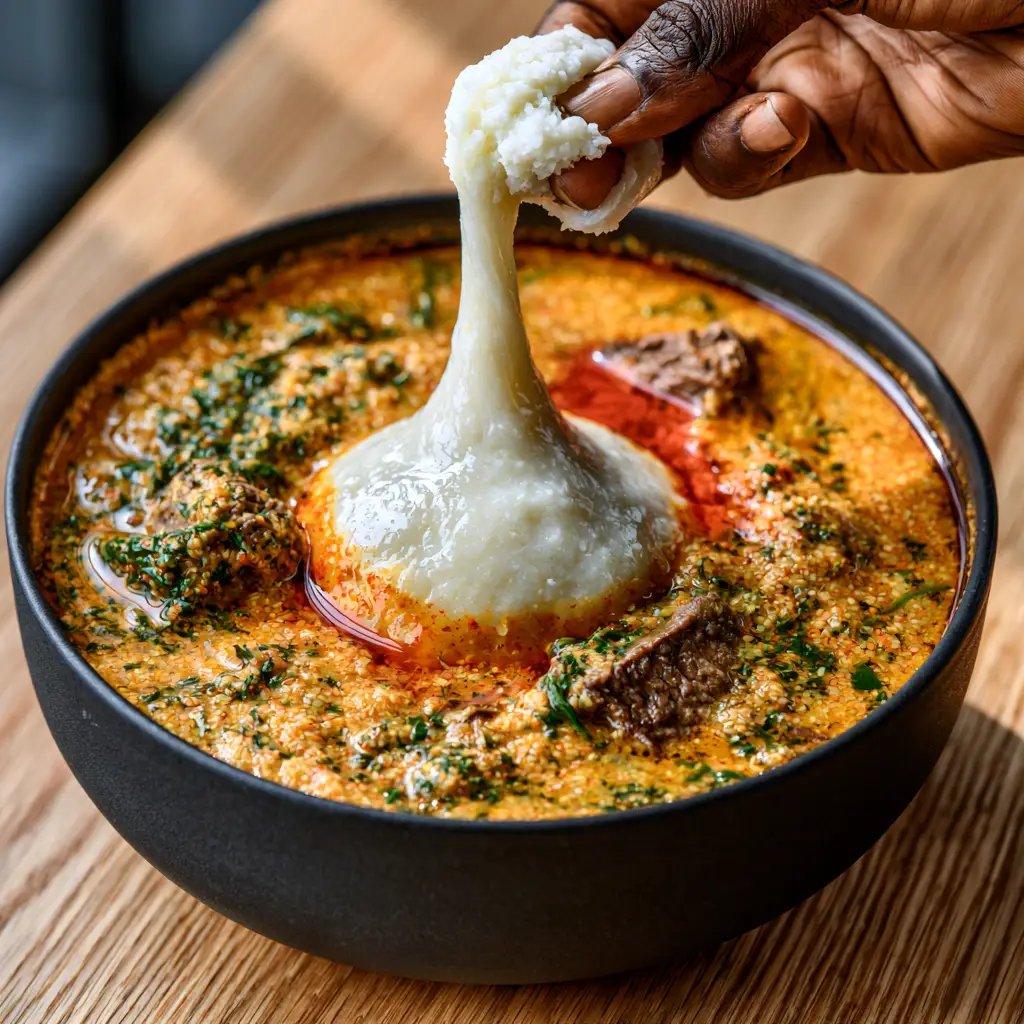
Why This Traditional Swallow is a Culinary Masterpiece
- The Perfect Snap: Traditional West African Fufu is prized for its incredible, stretchy, lump-free elasticity that allows it to be used as an edible utensil.
- Textural Harmony: The contrast between the velvety smooth cassava mound and the granular, nutty texture of toasted ground melon seeds is a masterclass in mouthfeel.
- Deep Umami Base: Braised beef chunks and toasted Egusi create a savory depth that is amplified by the earthy, floral notes of authentic red palm oil.
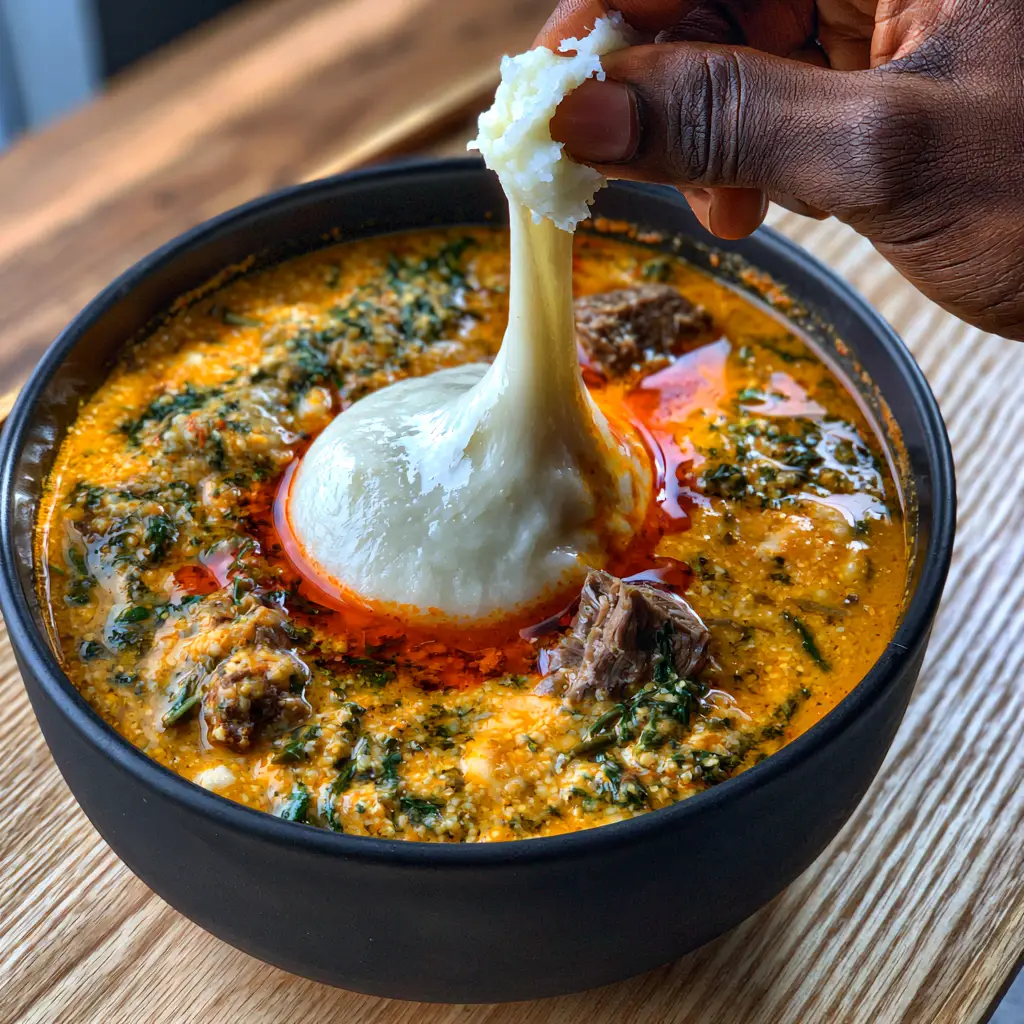
- Visual Vibrancy: The golden-orange soup base, punctuated by flecks of chopped fresh spinach, creates a stunning presentation in any matte ceramic vessel.
Essential Elements for the Golden Egusi and Silky Fufu
Cassava Flour (Water-Extracted): 2 cups (480ml). This fermented and dried flour is the foundation of the white, glossy fufu; its high starch content provides the necessary “stretch” when properly hydrated and worked.
Ground Egusi (Melon Seeds): 1.5 cups (225g). These seeds must be toasted to release their natural oils, providing the soup with its signature granular texture and nutty backbone.
Red Palm Oil: 1/2 cup (120ml). This isn’t just a fat; it’s a colorant and a flavor powerhouse that provides the glistening golden-orange finish and a distinct floral aroma.
Beef Chuck: 1 lb (450g), cut into 1-inch (2.5cm) cubes. Braising these tender chunks until they are “spoon-soft” ensures every bite melts into the rich soup base.
Fresh Spinach: 3 cups (90g), finely chopped. Adding the greens at the very end preserves their vibrant color and provides a fresh contrast to the heavy, savory soup.
Aromatics and Spices: 1 medium red onion (150g), 2 scotch bonnet peppers (to taste), and 2 tbsp (30ml) of bouillon or crayfish powder for that essential West African umami profile.
Foundational Liquid: 4 cups (960ml) of water or beef stock. This is required for braising the meat and later hydrating the Egusi seeds to create the soup’s body.
Tools Required for Professional Results
To achieve the smooth, glossy finish shown in our visual guide, you will need a heavy-bottomed pot or a Dutch oven. This ensures even heat distribution, preventing the fufu from scorching at the bottom before it is fully cooked. A sturdy wooden spatula (often called an ‘omorogun’) is non-negotiable for the vigorous stirring required to develop the cassava’s elasticity. Finally, a high-speed blender is essential for pulsing your aromatics into a perfectly smooth paste to create that uniform golden-orange soup base.
The Art of the Braise: Building the Egusi Foundation
Searing the Beef and Preparing the Aromatics
Begin by seasoning your beef chunks with salt and pepper. In your heavy pot, heat 1 tbsp (15ml) of vegetable oil over medium-high heat and sear the beef until a deep, dark brown crust forms on all sides. This Maillard reaction is the first layer of flavor for your soup. While the beef sears, blend your onion and scotch bonnet peppers into a smooth slurry.
Toasting the Melon Seeds for Maximum Flavor
In a dry pan over medium heat, add your ground Egusi seeds. Stir constantly for 3-5 minutes until the powder smells nutty and takes on a slightly darker, toasted hue. This step is critical; it prevents the soup from tasting “raw” and ensures the seeds hold their texture rather than dissolving into the broth. Once toasted, mix the Egusi with a small amount of water to form a thick, gritty paste.
Simmering the Golden Soup Base
Add the blended aromatics to the pot with the seared beef, followed by 3 cups (710ml) of stock. Lower the heat and simmer for 45 minutes, or until the beef is tender enough to be pierced easily with a fork. Stir in the red palm oil, watching as the liquid transforms into a vibrant, glistening orange. Carefully drop small clumps of your toasted Egusi paste into the simmering liquid. Cover and do not stir for 10 minutes; this allows the melon seeds to set into the “curds” that give Egusi soup its iconic texture.
Mastering the Fufu: Stirring for Strength and Shine
Hydration and Initial Thickening
In a separate clean pot, bring 2 cups (480ml) of water to a gentle boil. Gradually whisk in the cassava flour, stirring constantly to prevent lumps. The mixture will quickly transition from a liquid to a thick, opaque paste. At this stage, it may look dull and slightly shaggy—this is normal. Keep the heat on medium-low to ensure the starch gelatinizes evenly without burning.
Developing Elasticity and the “Finger Indent” Test
This is where the physical work begins. Using your sturdy wooden spatula, begin to vigorously mash and turn the fufu against the sides of the pot. As you “pound” the dough with the spatula, the steam will help the starch molecules cross-link, creating a stretchy, elastic structure. Add a splash of hot water if the dough feels too stiff. Continue this process for 8-10 minutes until the fufu is perfectly smooth, glossy white, and pulls away from the sides of the pot. When you press a clean finger into the warm mound, it should leave a deep indent but slowly spring back, showing its incredible elasticity.
Final Assembly and the Spinach Fold
Return to your Egusi soup. Gently fold in the chopped spinach and let it wilt for just 60 seconds in the residual heat. This preserves the “vibrant green” look against the “golden-orange” base. Turn off the heat and allow the soup to sit for 5 minutes; this lets the “glistening red palm oil drizzle” rise to the surface for that authentic blog-ready finish.
Expert Tips for a Lump-Free Experience
- Sift Your Flour: Always sift your cassava flour before adding it to the water. This is the easiest way to ensure a perfectly smooth, professional-grade fufu.
- The “Lump-Busting” Technique: If you see lumps forming, remove the pot from the heat and use the back of your wooden spoon to smear the dough against the sides of the pot until it is smooth again.
- Palm Oil Quality: Use “unrefined” red palm oil for the most authentic color and flavor. It should be thick and vibrant, almost like a deep orange-red butter.
- Temperature Control: If your fufu is cooking too fast, the outside will become rubbery while the inside remains raw. Low and slow, combined with constant motion, is the secret.
Sourcing and Storing Your West African Feast
West African Fufu is best enjoyed immediately while the starch is at its peak elasticity. If you have leftovers, wrap the fufu tightly in plastic wrap to prevent a crust from forming. The Egusi soup actually improves the next day as the flavors meld, making it one of our favorite quick dinner recipes for a busy weeknight. Store the soup in an airtight container in the refrigerator for up to 3 days, or freeze for up to a month.
What to Serve With Your Egusi and Fufu
While this pairing is a complete meal on its own, it is often part of a larger spread of savory Egusi soup'>savory Egusi soup with additional protein like smoked fish or tripe. For those who enjoy a variety of starches, a side of fluffy rice pilaf can provide a different textural experience alongside the heavy swallow.
Frequently Asked Questions
Absolutely. While spinach is common, you can use bitter leaf, pumpkin leaves (Ugu), or even kale, though cooking times may vary slightly based on the toughness of the green.
The secret is sifting the flour before cooking and using a ‘mashing’ motion with a wooden spatula against the side of the pot to break down any starch clusters during the cooking process.
Yes, traditional fufu made from cassava flour or pounded yams is naturally gluten-free, making it an excellent starch alternative for those with gluten sensitivities.
Egusi soup has a unique, nutty, and savory flavor profile. The toasted melon seeds provide a texture similar to fine curds, while the palm oil and aromatics add earthy and floral undertones.
Elasticity comes from proper starch gelatinization. This requires enough heat, moisture, and vigorous stirring (pounding) for at least 8-10 minutes to develop the long-chain carbohydrates.
The Final Recipe: Authentic Cassava Fufu and Egusi Soup
West African Fufu and Egusi Soup: The Ultimate Guide to Perfect Elasticity
Ingredients
Equipment
Method
- In a heavy pot, sear beef chunks in 1 tbsp oil until deep golden-brown crust forms. Remove meat and set aside.
- Dry toast ground egusi seeds in a pan over medium heat for 3-5 mins until nutty. Mix with a splash of water to form a paste.
- Add blended onion and pepper to the pot. Add beef back with 3 cups stock. Simmer for 45 mins until meat is tender.
- Add palm oil and clumps of egusi paste. Simmer covered for 10 mins without stirring. Fold in spinach at the very end.
- Whisk cassava flour into boiling water. Stir vigorously on medium-low heat as it thickens into a shaggy paste.
- Pound and turn the dough against the pot walls with a wooden spatula for 10 mins. Look for a glossy, smooth, and stretchy texture.
Notes
Test elasticity by pressing a finger into the fufu; it should leave an indent but feel springy.
Share the Flavors of West Africa!
Creating the perfect fufu is a skill that brings immense satisfaction once mastered. We hope this guide helps you achieve that glossy, elastic texture and rich, golden-orange soup you’ve been dreaming of. If you enjoyed this recipe, please leave a comment below and share your results! Don’t forget to pin this recipe to your favorite board on Pinterest so you can find it the next time you’re craving a taste of West Africa. Happy cooking!