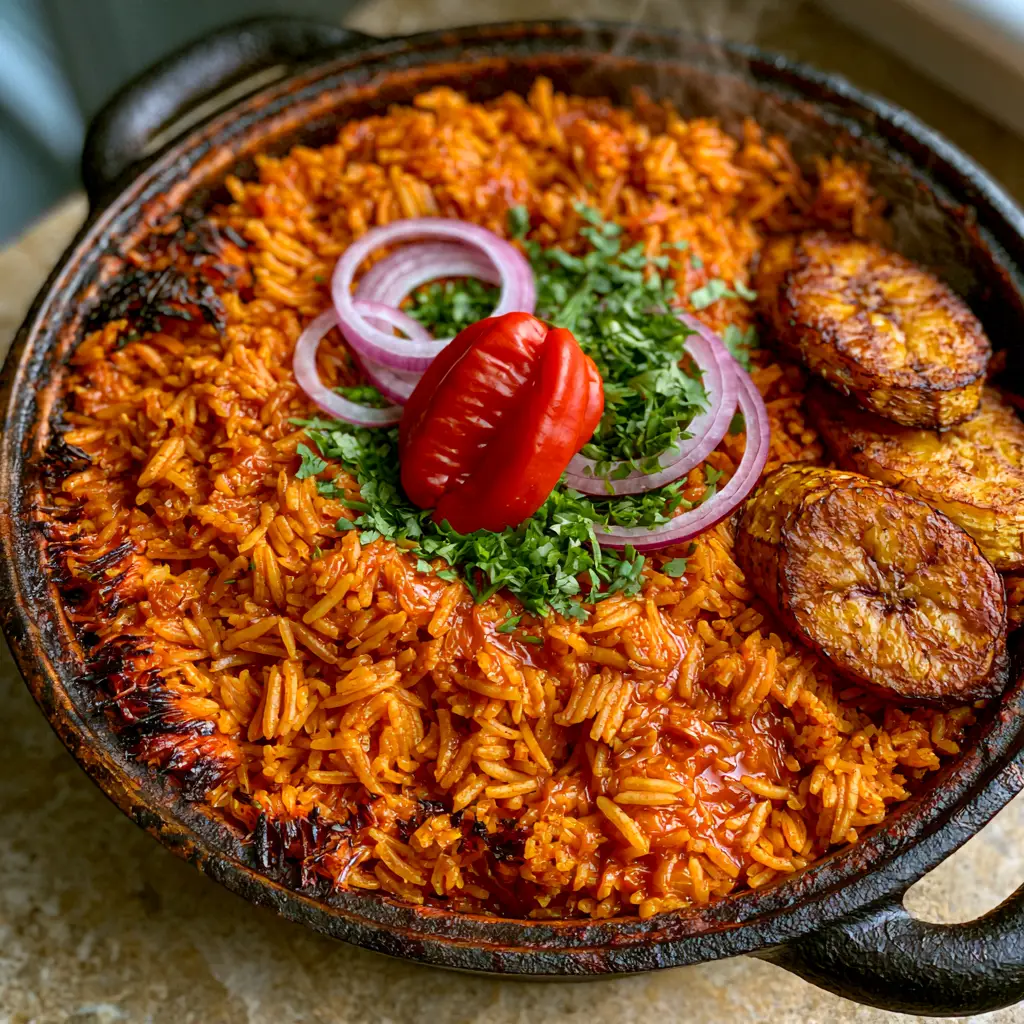
There is a specific, soul-warming magic that happens when a rustic black cast iron pot hits the table, filled with the vibrant, deep orange-red glow of Jollof rice. This recipe for authentic African dishes captures the essence of a West African celebration, where every single grain of long-grain rice is distinct, perfectly coated in a glossy, concentrated pepper sauce.
Imagine the aroma of charred rice bits mingling with the sweet scent of caramelized onions and the subtle, creeping heat of a whole scotch bonnet pepper. This isn’t just a meal; it’s a sensory journey that combines technical precision with the rustic charm of home-style cooking.
Whether you are a seasoned explorer of global flavors or a curious home cook, this dish delivers a complex profile of smoky, savory, and sweet notes. The addition of golden-brown, caramelized fried plantains provides the perfect creamy contrast to the firm, spicy grains of the rice.
Why This Vibrant One-Pot Masterpiece Works
- Perfectly Individual Grains: By using parboiled long-grain rice and a specific steaming technique, we avoid any mushiness, ensuring every grain stands alone.
- Concentrated Flavor Base: The foundation is a rich, fried-down blend of red bell peppers and tomatoes, creating that signature deep-red hue and umami depth.
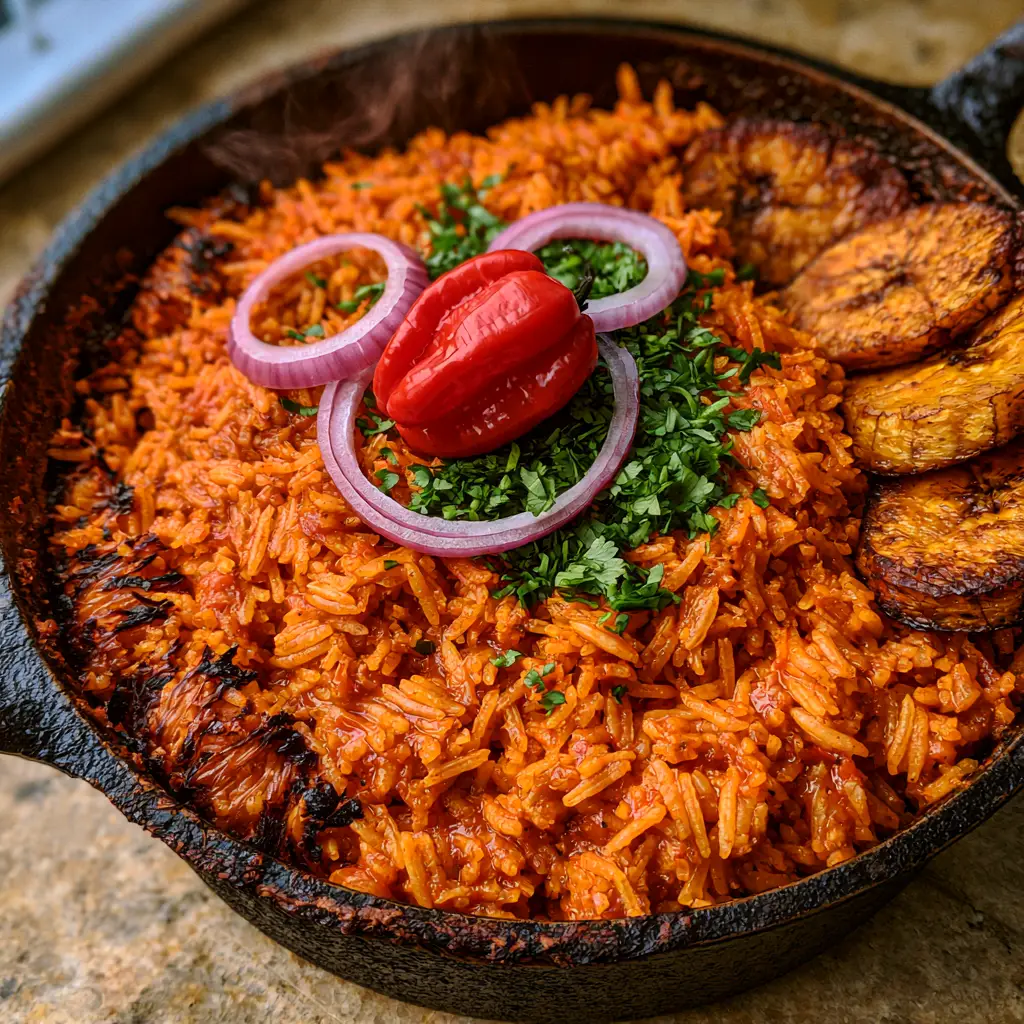
- The “Party Rice” Char: We intentionally allow the bottom layer of rice to toast against the cast iron, creating those coveted “bottom-pot” charred bits that define authentic African dishes.
- Contrasting Textures: The crunch of raw red onion rings and the silkiness of fried plantains create a professional-level plating experience.
The Pantry Staples for Authentic African Flavor
Parboiled Long-Grain Rice: 3 cups (600g). Parboiled rice is sturdier than jasmine or basmati, which allows it to withstand long steaming without breaking or becoming sticky.
Red Bell Peppers: 3 large (approx. 450g). These provide the bulk of the “stew” base, offering sweetness and a vibrant red color without excessive heat.
Roma Tomatoes: 5 medium (approx. 300g). These add the necessary acidity to balance the richness of the oil and the sweetness of the peppers.
Scotch Bonnet Pepper: 1 whole for garnish plus 1-2 for the sauce base. This pepper provides the iconic fruity heat that is central to authentic African dishes.
Tomato Paste: 6 oz (170g). Frying the tomato paste in oil is the “secret” to achieving that deep, glossy orange-red color seen in professional Jollof.
Red Onions: 2 medium. One is blended into the sauce base, while the other is sliced into thin, crisp rings for a fresh, biting garnish.
Vegetable Oil: 1/2 cup (120ml). A generous amount of oil is required to “fry” the sauce, which prevents the rice from clumping and creates the glossy finish.
Chicken or Vegetable Stock: 3 cups (720ml). Using high-quality stock instead of water ensures every grain of rice is infused with savory depth from the inside out.
Yellow Plantains: 2 large, ripe. Look for skins that are yellow with black spots; these will caramelize into the golden-brown slices that complete the dish.
Fresh Cilantro: 1/4 cup (15g), finely chopped. The bright green herb cuts through the richness of the stewed rice for a perfect finish.
The Path to Smoky Jollof Perfection
Crafting the Concentrated Pepper Base
Begin by blending your red bell peppers, tomatoes, one onion, and 1 scotch bonnet pepper until completely smooth. Pour this mixture into a pot and simmer over medium-high heat for 15-20 minutes until the water evaporates and you are left with a thick, concentrated paste.
Building the Flavor Foundation
In your rustic black cast iron pot, heat the vegetable oil over medium heat. Add the tomato paste and fry it for 5-8 minutes, stirring constantly, until it turns a dark maroon and the oil begins to separate; this removes the “raw” metallic taste.
The Searing and Steaming Process
Stir in your concentrated pepper base, curry powder, dried thyme, and bay leaves. Wash your parboiled rice thoroughly until the water runs clear, then add it to the pot, stirring well to ensure every grain is coated in the glossy red oil.
Achieving the Signature Char
Pour in the stock, season generously with salt and bouillon, and nestle the whole scotch bonnet pepper on top. Cover the pot with a tight-fitting lid (or foil then a lid) and turn the heat to low, allowing the rice to steam in its own juices for 30 minutes.
Listen for a faint crackling sound toward the end of the cooking time. This indicates the rice at the bottom is beginning to caramelize and char, creating those delicious, smoky “bottom-pot” bits characteristic of authentic African dishes.
Professional Tools for the Perfect Cast Iron Result
To achieve the visual result of the charred edges and perfectly steamed grains, a heavy-bottomed pot is non-negotiable. A 5-quart (4.7L) cast iron Dutch oven or a traditional African “cauldron” style pot provides the even heat distribution required to prevent burning while encouraging caramelization.
You will also need a high-powered blender to ensure the pepper base is completely smooth, and a sharp mandoline or chef’s knife to create those paper-thin, fresh red onion rings used for the final garnish.
Pro Secrets for Flawless Distinct Grains
- The Foil Seal: Jollof rice is cooked by steam, not boiling. Placing a sheet of aluminum foil over the pot before adding the lid traps the moisture, ensuring the top layer of rice cooks as evenly as the bottom.
- The “No Stir” Rule: Once the rice and liquid are combined, do not stir the pot. Stirring releases starches that make the rice sticky, ruining the “distinct grain” look.
- Rinse Until Clear: This cannot be overstated. Removing excess surface starch from the parboiled rice is the only way to achieve that professional, non-clumpy texture.
- Patience with Plantains: Fry the plantains in 1-inch (2.5cm) of oil over medium heat. If the oil is too hot, they will burn before the sugars inside can caramelize into that golden-brown finish.
Keeping Your Leftovers Fresh and Fragrant
Jollof rice is one of those rare authentic African dishes that actually tastes better the next day as the spices continue to meld. Store leftovers in an airtight container in the refrigerator for up to 4 days.
To reheat, add a tablespoon of water or stock to the rice and microwave it covered, or steam it on the stovetop over low heat. The plantains are best enjoyed fresh, but can be reheated in an air fryer at 350°F (175°C) for 3-4 minutes to restore their texture.
What to Serve with Authentic Jollof Rice
While this dish is a complete meal on its own, it is often served as part of a larger West African spread. For a truly traditional experience, pair it with a side of West African fufu and a bowl of savory Egusi soup to balance the spice.
If you are looking for a lighter accompaniment, a crisp cucumber salad provides a cooling contrast to the scotch bonnet heat. For those who enjoy variety in their grains, you might also enjoy comparing this technique to a traditional rice pilaf. Finally, if you have any leftover peppers, they work beautifully in a stuffed peppers recipe for the next day’s lunch.
Common Questions About West African Cooking
Yes, Habaneros are a great substitute as they have a similar heat level, though Scotch Bonnets are slightly fruitier. Use sparingly if you prefer a milder dish.
The secret lies in letting the bottom layer of rice slightly burn or ‘char’ in the cast iron pot. This caramelization creates a smoky aroma that infuses the entire pot of rice.
The vibrant color comes from a combination of concentrated red bell peppers and frying the tomato paste in oil until it darkens, which creates a natural red dye.
Mushiness is usually caused by using too much stock or stirring the rice during the steaming process. Always use a 1:1 or 1:1.25 rice-to-liquid ratio and let the steam do the work.
Parboiled rice has been partially boiled in its husk, which toughens the starch. This prevents the grains from breaking or sticking together, ensuring the ‘distinct grain’ texture essential for authentic Jollof.
The Ultimate Smoky Jollof Rice Recipe
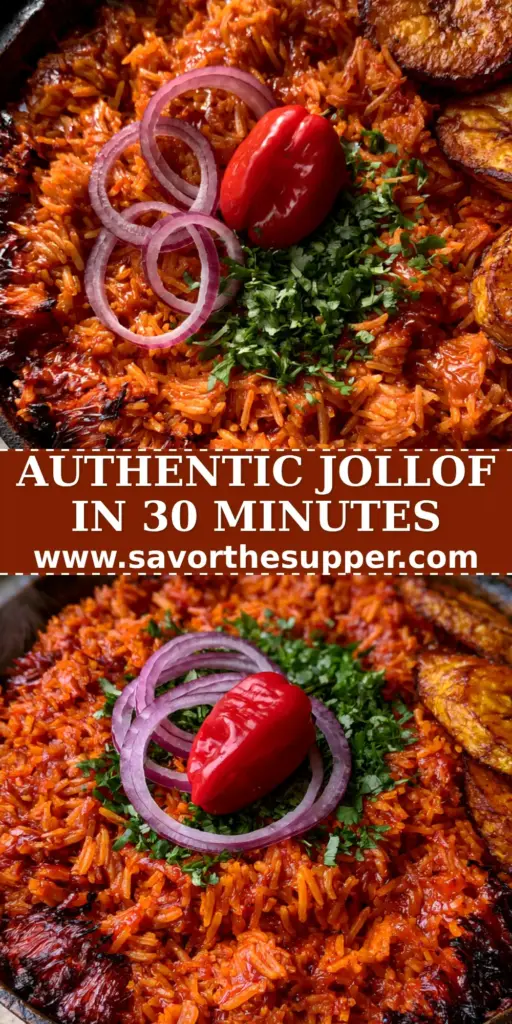
Authentic African Dishes: Smoky West African Jollof Rice with Golden Plantains
Ingredients
Equipment
Method
- Blend red peppers, tomatoes, one onion, and one scotch bonnet until smooth. Simmer in a saucepan for 15 minutes until liquid reduces by half.
- Heat oil in the cast iron pot. Fry tomato paste for 5-8 minutes until it turns a deep maroon and the oil is red and glossy.
- Add the reduced pepper blend to the oil. Cook for another 10 minutes until the oil floats to the top.
- Add the rinsed rice to the pot. Stir to coat every grain in the red oil. Pour in stock, add seasonings, and place a whole scotch bonnet on top.
- Cover with foil and a tight lid. Cook on low heat for 30 minutes. Do not open the lid until the time is up to ensure distinct grains.
- In a separate pan, fry plantain slices in oil until golden-brown and caramelized on both sides.
- Fluff the rice gently, ensuring you scrap up the charred bits from the bottom. Top with fresh red onion rings, the fried plantains, and chopped cilantro.
Notes
The 'crackling' sound at the end of cooking is the key to authentic smoky flavor.
Closing & Call to Action
Mastering authentic African dishes like this smoky Jollof rice brings a piece of West African heritage into your kitchen. The combination of the distinct, glossy grains and the sweet, caramelized plantains creates a restaurant-quality meal that is as visually stunning as it is delicious. If you enjoyed this recipe, please leave a comment below and share your results! Don’t forget to follow us on Pinterest for more global culinary inspiration.