Mastering the Egusi Soup Recipe is a rite of passage for anyone exploring the rich, savory landscape of Nigerian cuisine. This isn’t just a stew; it is a textural masterpiece defined by firm, golden-yellow melon seed lumps and a vibrant, shimmering palm oil base.
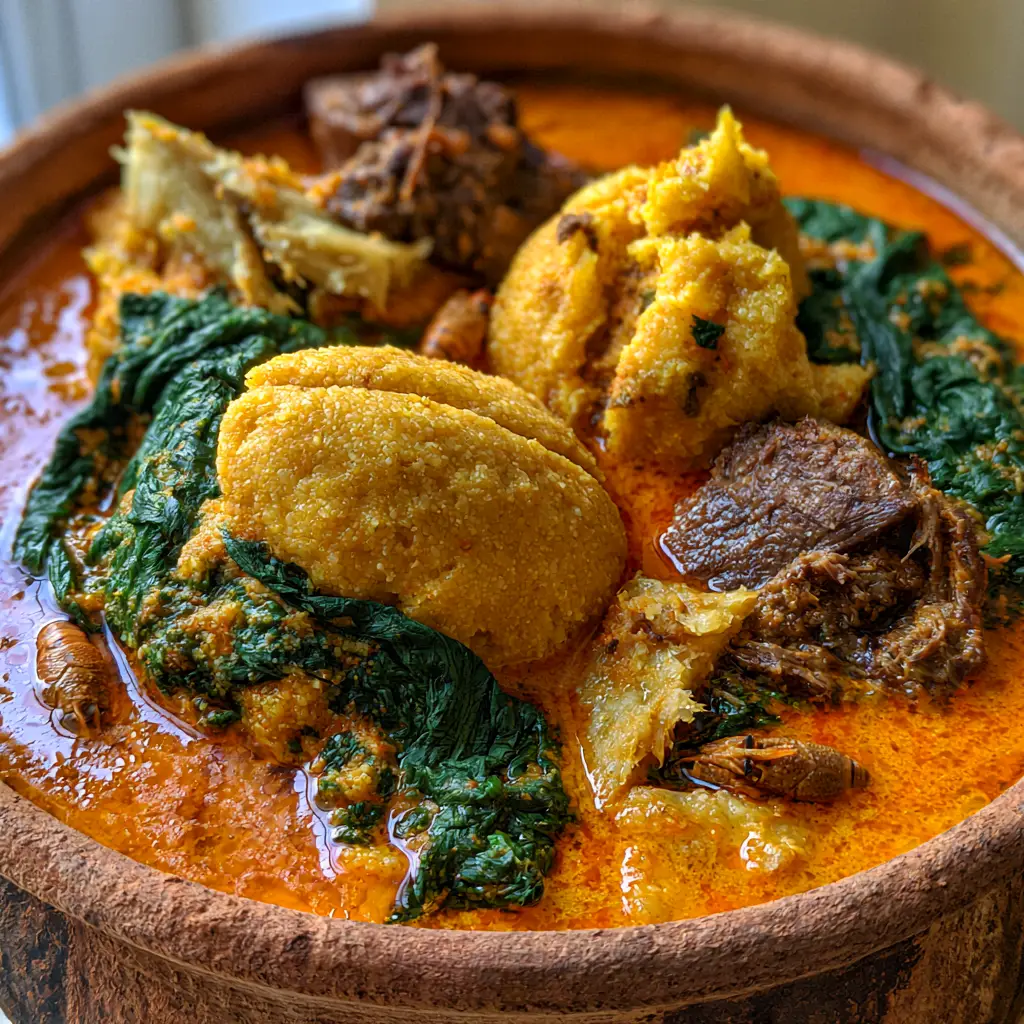
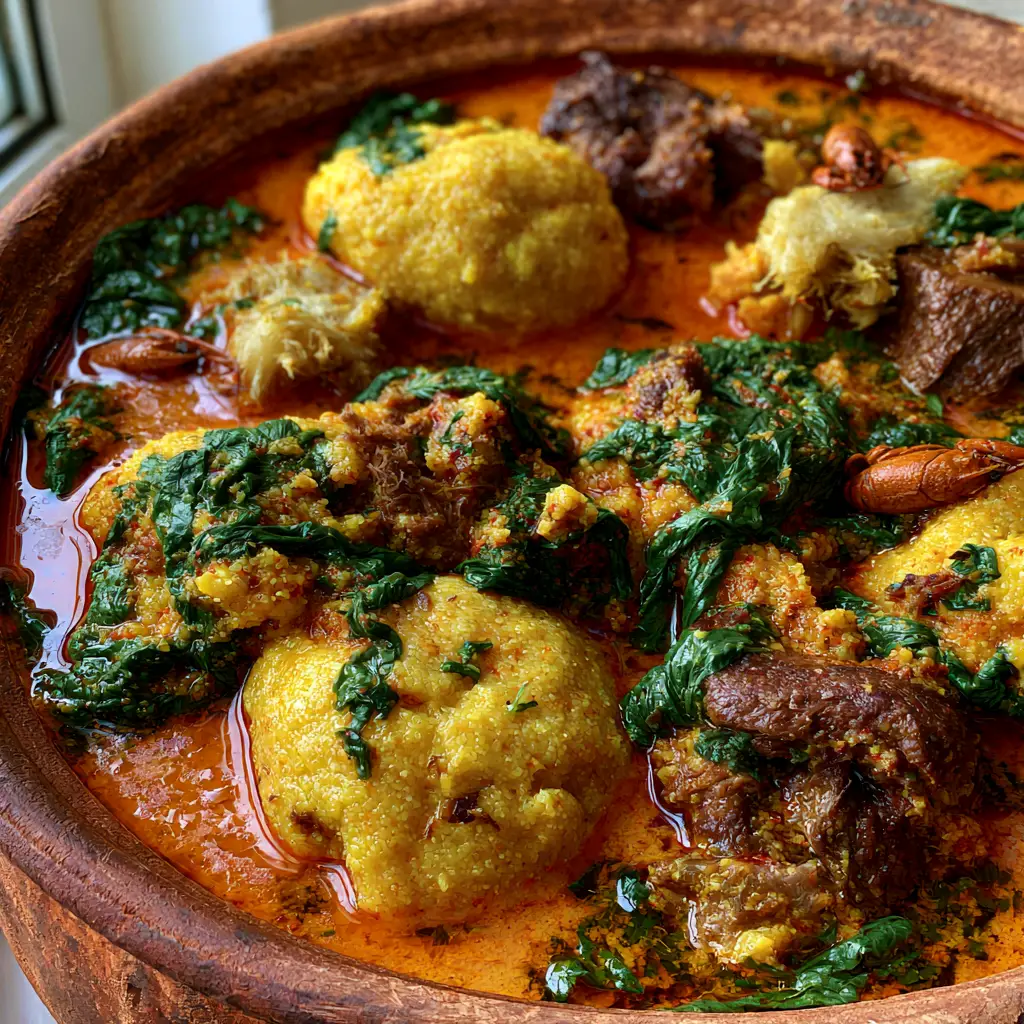
The visual appeal of this dish is undeniable, especially when served in a traditional rustic clay pot where the deep green of wilted spinach contrasts against the rich orange-red sauce. In this guide, we will replicate the exact handheld-photo quality results you crave, focusing on the science of “lumpy” egusi.
Whether you are a seasoned cook or a curious newcomer, this version of the Egusi Soup Recipe provides the succulent mouthfeel of braised beef and the umami depth of stockfish. Let’s dive into the forensic details of West Africa’s most beloved comfort food.
The Visual and Flavor Profile of Authentic Lumpy Egusi
What sets an elite Egusi Soup Recipe apart from a standard one is the presence of distinct, “steamed” melon clusters rather than a grainy, sandy texture. This specific method ensures every spoonful is packed with variety.
- Firm Melon Lumps: Large, golden-yellow clusters that provide a satisfying, almost egg-like bite.
- Glossy Palm Oil Emulsion: A rich, vibrant orange-red sauce that features characteristic golden oil bubbles on the surface.
- Succulent Proteins: Tender chunks of braised beef and chewy, rehydrated stockfish that have absorbed the spicy broth.
- Visual Texture: A beautiful layering of deep green spinach, small whole crayfish, and thin slices of red scotch bonnet peppers.
Essential Ingredients for the Ultimate Egusi Soup Recipe
To achieve the hyper-realistic food textures seen in professional culinary photography, we must use high-quality, authentic ingredients. Each component serves a visual and structural purpose.
Egusi Seeds (Melon Seeds): 2.5 cups (approx. 375g) of ground melon seeds. These are the protein-rich heart of the dish, forming the iconic golden lumps.
Red Palm Oil: 1 cup (240ml) of pure, unrefined palm oil. This provides the “glossy shimmer” and the essential vibrant orange-red hue.
Braised Beef: 1.5 lbs (680g) of chuck or brisket, cut into succulent chunks. The beef provides the “tender, succulent” protein visual in the blueprint.
Stockfish and Whole Crayfish: 1 cup (approx. 100g) of rehydrated stockfish and 1/2 cup (40g) of whole dried crayfish. These add incredible umami and a “rustic” seafood texture.
Fresh Spinach: 3 cups (approx. 150g) of fresh spinach leaves. These are folded in at the end to provide that “deep green wilted” look.
Scotch Bonnet Peppers: 3-4 peppers, some blended for heat and others sliced thin for a “red pepper” visual garnish. They provide the necessary “golden oil bubbles” reaction when fried.
Aromatic Base: 1 large red onion (approx. 200g) and 2 bouillon cubes. These are the “invisible” ingredients that build the savory foundation of the soup.
Must-Have Tools for Nigerian Soup Perfection
While a standard pot works, achieving the “rustic clay pot” look requires specific attention to heat distribution. A heavy-bottomed Dutch oven or a traditional earthenware pot is ideal.
You will also need a high-speed blender to achieve a smooth pepper base, and a fine-mesh strainer for cleaning the stockfish. A wooden spatula is essential for the “folding” technique used to preserve the egusi lumps.
Step-By-Step Instructions: Engineering the Perfect Lumps
1. Preparing the Protein Foundation
In a large pot, combine your beef chunks, rehydrated stockfish, and half a sliced onion. Season with salt and bouillon, then add enough water to cover the meat. Simmer for 45-60 minutes until the beef is succulent and tender; reserve the broth as it is pure liquid gold.
2. Creating the Egusi Paste
While the meat simmers, place the ground egusi seeds in a bowl. Add 1/4 cup (60ml) of warm water or stock and mix until a thick, dough-like paste forms. This “steaming paste” technique is the secret to getting those large, firm lumps in your Egusi Soup Recipe.
3. Developing the Vibrant Palm Oil Base
Heat the 1 cup (240ml) of palm oil in a clean pot on medium heat for about 3 minutes. Do not bleach the oil; you want it to remain a vibrant orange-red. Sauté the remaining onions until translucent, then pour in your blended scotch bonnet and onion mixture.
4. Steaming the Egusi Lumps
Lower the heat and use a spoon to scoop small balls of the egusi paste into the simmering oil and pepper base. Do not stir. Cover the pot and let the melon lumps steam for 10 minutes. You will see “golden oil bubbles” rising around the golden-yellow lumps.
5. Folding and Finishing
Gently add the braised beef, stockfish, and whole crayfish into the pot. Pour in 1-2 cups (240-480ml) of the reserved beef stock. Simmer for another 10 minutes until the oil floats to the top. Finally, fold in the fresh spinach and sliced scotch bonnets until just wilted.
Expert Tips for Success
- The “No-Stir” Rule: To maintain the “large firm lumps” described in the visual blueprint, resist the urge to stir the egusi for the first 10 minutes of steaming.
- Temperature Control: Palm oil has a lower smoke point than vegetable oil. Keep the heat at medium-low to maintain the glossy, shimmering surface without burning the nutrients.
- Water Content: If the soup is too thick, add stock in 1/4 cup (60ml) increments. The goal is a rich sauce, not a watery broth.
- The Whole Crayfish: Adding whole crayfish rather than just powder provides a sophisticated, rustic texture that mimics high-end handheld food photography.
What to Serve With This Egusi Soup Recipe
Egusi soup is traditionally paired with “swallow” (starchy sides used to scoop the soup). Pounded yam, fufu, or eba are the gold standards here.
If you are looking for a full Nigerian feast, this soup pairs beautifully as a side to a vibrant Nigerian Fried Rice. For a lighter pairing, consider serving it alongside a bowl of fragrant Coconut Rice (coming soon).
If you have leftover spinach from the recipe, you might enjoy making these crispy zucchini and spinach fritters for breakfast the next morning. If you’re in the mood for something different but equally comforting, try our East African Kuku Paka.
Storage, Reheating, and Freezing
This Egusi Soup Recipe tastes even better the next day as the flavors meld. Store in an airtight container in the refrigerator for up to 4 days. When reheating, add a splash of water to loosen the sauce and heat on the stovetop over low flame.
To freeze, place cooled soup in freezer-safe bags. It stays fresh for up to 3 months. Thaw overnight in the fridge before reheating to preserve the texture of the melon lumps.
Frequently Asked Questions
Yes, kale or bitter leaf can be used. However, spinach or ‘Ugu’ (fluted pumpkin leaves) are traditional choices that provide the soft, wilted texture seen in authentic versions.
No, for an authentic Egusi Soup Recipe, you should only heat the oil until it melts and is hot enough to sauté onions. Bleaching the oil changes the flavor profile and removes the vibrant orange-red color.
The heat comes from the scotch bonnet peppers. For less heat, remove the seeds before blending, or use only two peppers. For more heat, add extra sliced peppers as a garnish at the end.
Tougher cuts like chuck, brisket, or shaki (tripe) are best because they can withstand long simmering times, becoming succulent and tender while flavoring the broth.
Grainy egusi usually happens when the ground seeds are added directly to the liquid and stirred immediately. To get lumps, mix the egusi into a thick paste first and steam it in the oil without stirring for at least 10 minutes.
Authentic Lumpy Nigerian Egusi Soup
Egusi Soup Recipe: The Secret to Perfectly Steamed Melon Lumps
Ingredients
Equipment
Method
- Simmer beef chunks and stockfish with salt, onions, and bouillon until tender, about 60 minutes.
- Mix ground egusi with a little water to form a thick, dough-like paste.
- Drop small scoops of paste into the palm oil and pepper base. Cover and steam for 10 minutes without stirring.
Notes
Use high-quality unrefined palm oil for the best vibrant red color.

Closing & Call to Action
This authentic Egusi Soup Recipe brings the vibrant colors and deep, savory flavors of Nigeria directly to your kitchen. From the shimmering oil bubbles to the succulent braised beef, it is a dish designed to impress both the palate and the eyes.
If you enjoyed this culinary journey, please leave a comment below and let us know how your melon lumps turned out! Don’t forget to save this recipe to your “African Classics” board on Pinterest so you never lose it.