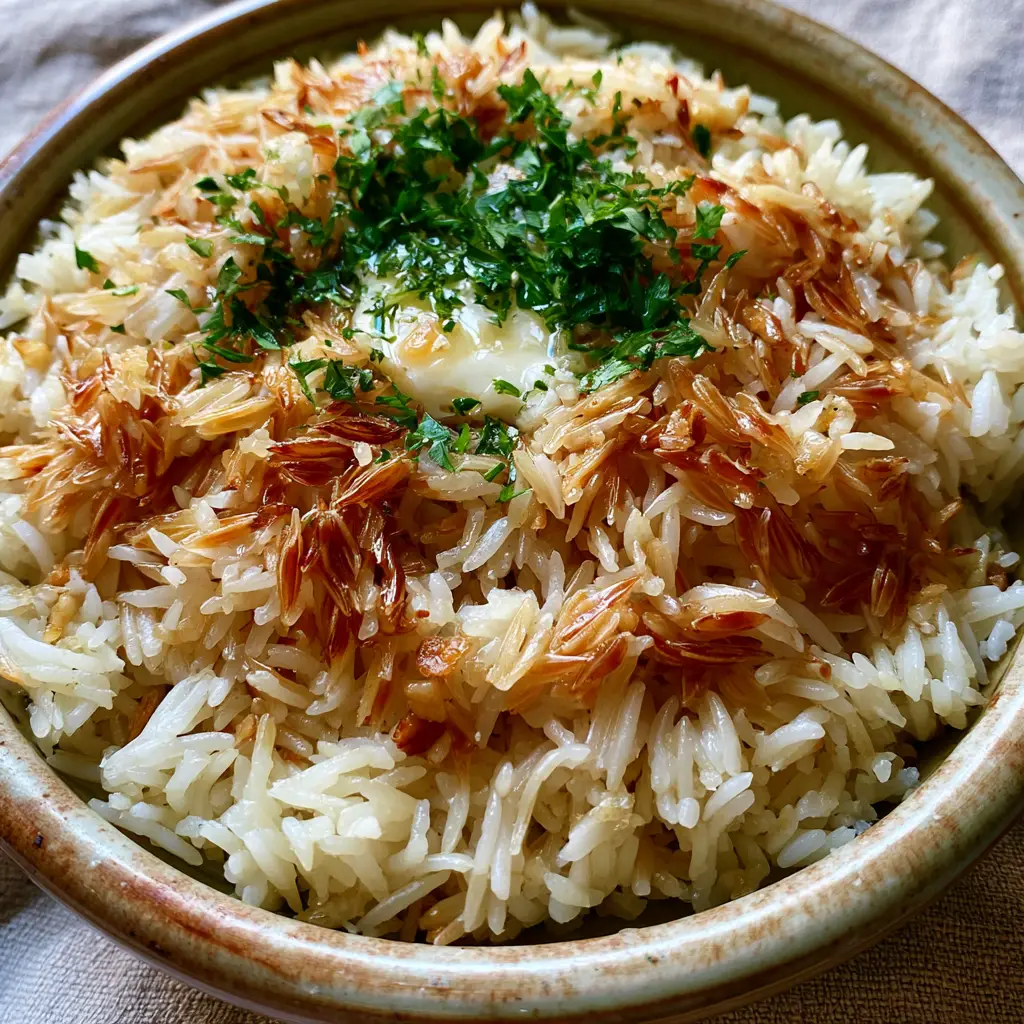
There is a specific, comforting magic in a bowl of perfectly executed rice pilaf. Imagine a rustic ceramic bowl, heavy in your hands, filled with steaming long-grain rice that glistens under soft natural daylight. This rice pilaf recipe isn’t just a side dish; it is a masterclass in texture and aromatic depth, featuring deep golden-brown orzo and a rich garlic butter glaze.
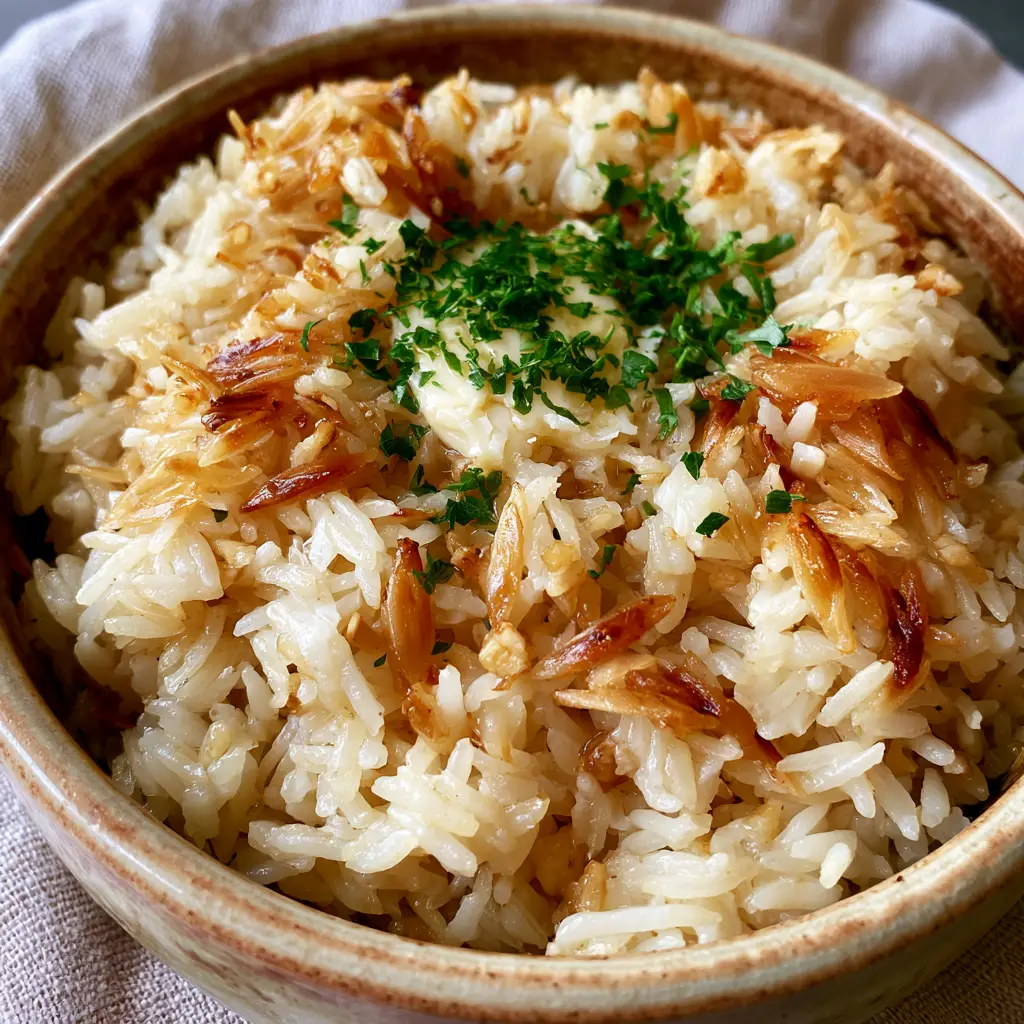
When you look closely at the grains, you’ll see the beautiful contrast between the fluffy white rice and the toasted pasta. Every forkful offers a symphony of flavors, from the nutty undertones of the browned orzo to the sharp, savory bite of minced sautéed garlic. Finished with a melting pat of salted butter and a shower of fresh parsley, this is the side dish that steals the spotlight from the main course.
Why This Golden Garlic Butter Pilaf is a Total Game-Changer
Most home cooks struggle with rice that is either too mushy or too bland. This rice pilaf recipe solves both problems by utilizing the traditional pilaf method—toasting the grains before simmering—to ensure every grain remains distinct and infused with fat.
- Visual Perfection: The contrast of the toasted deep-golden orzo pasta against the snowy long-grain rice creates a professional, restaurant-quality presentation.
- Textural Contrast: You get the softness of the steamed rice paired with the slight “al dente” chew of the toasted pasta grains.
- Aromatic Depth: Sautéing minced garlic in butter before adding the liquid creates a foundational flavor profile that permeates every single grain.
- The Glisten Factor: A final glaze of garlic butter and a melting pat of butter on top ensures a luxurious mouthfeel and a beautiful shine for your dinner table.
The Essential Pantry Staples for Restaurant-Quality Pilaf
To achieve the specific visual and flavor profile of this rice pilaf recipe, you need a balance of aromatics and high-quality grains. We use a combination of pantry staples and fresh herbs to create a dish that tastes as vibrant as it looks.
Long-Grain White Rice: 1.5 cups (300g). Use a high-quality Basmati or Jasmine rice; the long grains are essential for that “perfectly separated” look seen in the blueprint.
Orzo Pasta: 0.5 cup (100g). These tiny pasta shapes are toasted until they reach a deep golden-brown hue, providing the nutty backbone of the dish.
Unsalted Butter: 4 tbsp (56g). We split this—half for sautéing the aromatics and half for the final “melting pat” glaze that gives the dish its signature glisten.
Fresh Garlic: 4 cloves (approx. 20g). Minced finely, these tiny bits of sautéed garlic become visible throughout the rice, offering bursts of savory flavor.
Chicken or Vegetable Broth: 3 cups (710ml). Using a high-quality stock instead of water provides the foundational “invisible” salt and umami required for a professional result.
Fresh Parsley: 0.25 cup (10g). Finely chopped fresh parsley adds a pop of bright green color that contrasts beautifully against the golden tones of the rice.
Sea Salt Flakes and Cracked Black Pepper: To taste. We use flakes specifically for that visible crystalline texture on the surface of the melting butter.
Professional Tools for Perfectly Separated Grains
Achieving the fluffy texture described in our visual prompt requires the right heat distribution. A heavy-bottomed pot or a wide Dutch oven is your best friend here, as it prevents the bottom from scorching while the steam does its work.
You will also need a fine-mesh strainer to rinse your rice. Removing excess starch is the “secret” step that ensures your rice pilaf recipe doesn’t turn into a sticky clump. Finally, a sharp chef’s knife is required to get those “tiny bits of minced garlic” that are visible throughout the final dish.
Master the Art of the Pilaf Method: Step-by-Step
Toasting the Orzo to Golden Perfection
In your heavy-bottomed pot, melt 2 tbsp (28g) of butter over medium heat. Add the orzo pasta and stir constantly for 3-5 minutes. You are looking for a deep, nutty aroma and a color that shifts from pale cream to a vibrant, toasted golden-brown.
Sautéing the Garlic and Grains
Once the orzo is toasted, add your rinsed and drained rice along with the minced garlic. Stir the grains for another 2 minutes; this coats every grain in the garlic butter glaze, sealing the exterior and ensuring they stay separate after cooking.
The Gentle Simmer
Pour in your 3 cups (710ml) of broth and bring to a rolling boil. Immediately drop the heat to the lowest setting and cover with a tight-fitting lid. This trapped steam is what creates the “fluffy long-grain” texture we are aiming for.
The Resting Period
After 15-18 minutes, the liquid should be fully absorbed. Turn off the heat but do not remove the lid. Let it sit for 10 minutes. This allow the moisture to redistribute, preventing the bottom grains from being wetter than the top grains.
The Final Flourish
Remove the lid and fluff with a fork—never a spoon! Gently fold in the finely chopped parsley. Transfer to a rustic bowl and place a small, cold pat of butter right in the center, allowing it to melt into a golden pool. Sprinkle with sea salt flakes and cracked black pepper.
Pro Secrets for the Fluffiest Rice Every Time
To truly master this rice pilaf recipe, you must respect the science of starch. Rinsing your rice until the water runs clear is non-negotiable; this removes the surface amylopectin that causes sticking.
Another tip is to use a clean kitchen towel under the lid during the resting phase. The towel absorbs the excess rising steam, preventing it from dripping back onto the rice and making the top layer soggy. This ensures that “glistening” look without the “mushy” feel.
Lastly, ensure your garlic is minced uniformly. If the pieces are too large, they won’t distribute evenly; if they are too small, they might burn during the toasting phase. Aim for the size of a grain of sand for that perfect visual integration.
The Best Main Courses to Pair with This Pilaf
This rice pilaf recipe is an incredibly versatile side dish that complements a wide array of flavors. For a Mediterranean-inspired dinner, serve it alongside a zesty garlic shrimp preparation (coming soon) or some grilled lemon chicken.
If you are looking for something more comforting, it acts as a perfect bed for crispy chicken cordon bleu or even a hearty serving of savory sausage and peppers. The buttery notes of the pilaf also help cut through the acidity of a crispy cucumber salad, making for a well-rounded meal.
For those who love fusion flavors, try pairing this nutty pilaf with creamy Kenyan coconut chicken for a unique take on a classic dinner.
Meal Prep and Reheating Your Pilaf
This rice pilaf recipe holds up surprisingly well for meal prep. Store leftovers in an airtight container in the refrigerator for up to 4 days. The butter in the recipe helps keep the grains from drying out too quickly.
When reheating, avoid the microwave if possible, as it can make the rice rubbery. Instead, place the rice in a skillet with a splash of water or broth, cover, and steam over low heat until warmed through. This restores the “steaming” quality and the “melted garlic butter glaze” look.
Common Pilaf Pitfalls and Questions
Yes, but you will need to increase the liquid to 3.5 cups and the cooking time to 45 minutes. The texture will be heartier and less fluffy than white rice.
While oil works for toasting, butter provides the signature ‘glisten’ and rich flavor profile essential for this specific garlic butter pilaf result.
For this recipe, we use a 1.5:1 ratio of liquid to total dry grains (rice + orzo) to ensure the grains remain distinct and al dente.
Toasting the orzo pasta creates a deep, nutty flavor and a firm texture that prevents the pasta from becoming mushy while the rice steams.
Sticky rice is usually caused by excess surface starch. Ensure you rinse the rice thoroughly in cold water until the water runs completely clear before cooking.
The Ultimate Garlic Butter Rice Pilaf Recipe Card
Rice Pilaf Recipe: The Ultimate Garlic Butter and Toasted Orzo Side Dish
Ingredients
Equipment
Method
- In a large pot, melt 2 tbsp (28g) of butter. Add orzo and cook over medium heat, stirring constantly, until deep golden-brown and nutty.
- Add the rinsed rice and minced garlic. Sauté for 2 minutes until the grains are glistening with the garlic butter glaze.
- Add broth and bring to a boil. Reduce heat to low, cover, and simmer for 15-18 minutes until liquid is absorbed.
- Remove from heat. Let the pot sit, covered, for 10 minutes to allow the steam to finish the grains perfectly.
- Fluff with a fork, fold in parsley, and top with the remaining pat of butter, sea salt, and pepper.
Notes
Use a kitchen towel under the lid during the rest period to catch excess moisture.
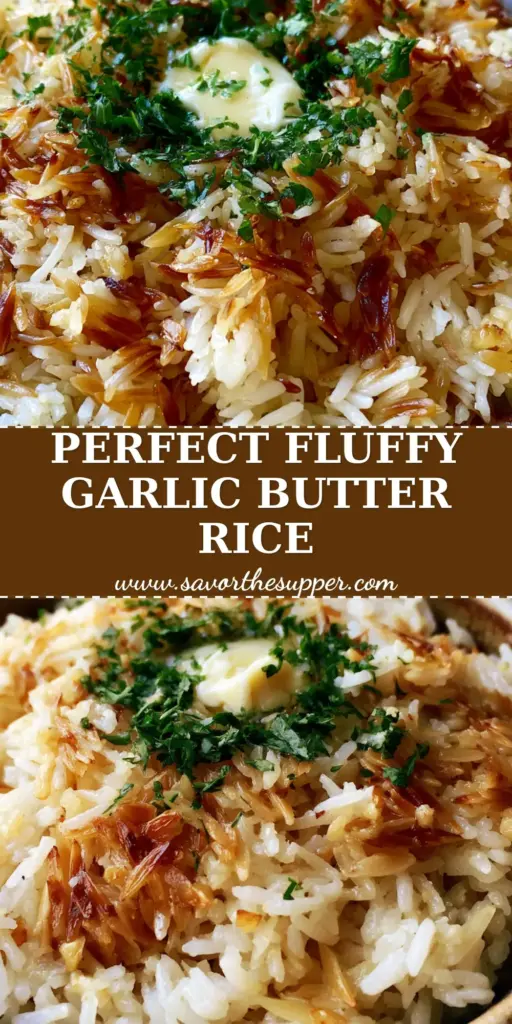
Bring the Restaurant Experience Home
This rice pilaf recipe is more than just a side—it’s a testament to how simple ingredients like rice, pasta, and butter can be transformed through technique. Whether you are hosting a formal dinner or just want to elevate your weeknight meal, these glistening, golden grains are sure to impress.
If you enjoyed making this dish, please leave a comment below and let us know how it turned out! Don’t forget to follow us and share your creations on Pinterest to help other home cooks find the fluffiest rice recipes on the web.