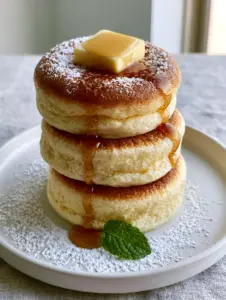
There is a specific kind of culinary magic that happens when a simple semolina batter hits a hot griddle and begins to breathe. African crepes, specifically the Moroccan variety known as Baghrir, are a breathtaking display of edible architecture.
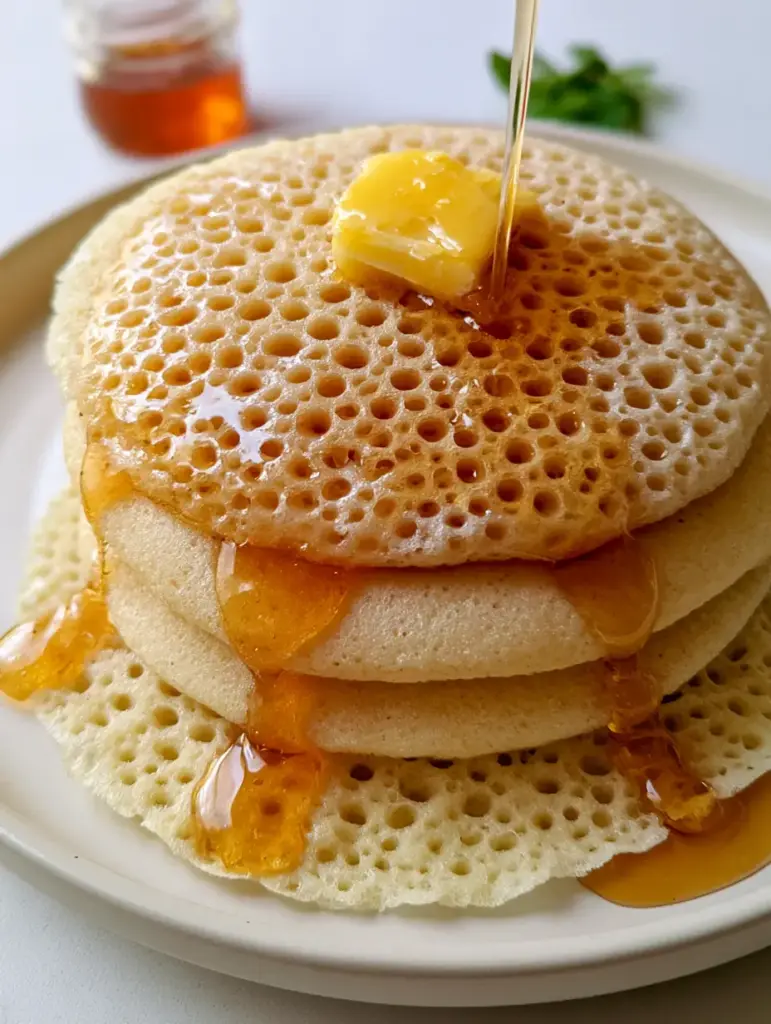
Unlike their thin, smooth European cousins, these crepes are defined by a thousand tiny, perfectly formed circular “eyes” or porous holes that cover the entire surface. These holes are not just for show; they act as microscopic reservoirs designed to trap a thick, glossy, translucent golden-amber honey and melted butter mixture.
When you prepare these African crepes, the result is a pale golden stack of lacy-edged wonders that are soft, spongy, and incredibly satisfying. In this guide, we will walk you through the forensic details of achieving that perfect aeration and the rich, cascading glaze that makes this dish a breakfast icon.
Why You Will Fall in Love with These Thousand-Hole Crepes
- The Porous Texture: The “thousand holes” create a unique mouthfeel that is both light and incredibly absorbent, unlike any other pancake.
- No-Flip Technique: These are cooked strictly on one side, ensuring the top remains soft and the holes stay open to receive the syrup.
- Amber Honey Glaze: A thick, amber-colored honey and butter reduction that fills every crevice for a burst of sweetness in every bite.
- Golden Semolina Base: Using fine semolina gives these crepes a beautiful pale golden hue and a subtle nutty flavor profile.
- Authentic Visual Appeal: Served on a matte white ceramic plate with a melting butter cube and fresh mint, this dish is a masterpiece of authentic African dishes.
The Anatomy of the Perfect African Crepe Batter
To achieve the visual result of a thousand holes, the chemistry of your ingredients must be precise. We aren’t just making a batter; we are creating a living, bubbling emulsion.
Fine Semolina (1 ½ cups / 250g): This is the backbone of the recipe, providing the structural integrity needed to hold those tiny air pockets without collapsing. It gives the crepes their signature pale golden color and a slightly chewy, satisfying texture.
All-Purpose Flour (½ cup / 65g): A small amount of wheat flour helps soften the semolina’s bite, ensuring the edges remain lacy and delicate rather than tough.
Active Dry Yeast (1 tsp / 4g): Yeast is the engine of the “eyes.” It works during the resting phase to create the initial carbon dioxide that will later expand on the pan.
Baking Powder (2 tsp / 10g): While yeast provides the slow rise, baking powder provides the “flash” reaction when hitting the heat, forcing those thousands of holes to pop open instantly.
Warm Water (2 cups / 480ml): The water must be precisely “blood warm” (about 100°F or 38°C) to activate the yeast without killing it. This creates the pourable, thin consistency required.
Sugar (1 tbsp / 12g) and Salt (½ tsp / 3g): Sugar feeds the yeast and aids in the pale golden browning of the bottom, while salt balances the intense sweetness of the honey-butter glaze.
Essential Equipment for Aerated Excellence
Achieving the forensic accuracy of the Baghrir requires a few specific tools to ensure the heat distribution is even and the batter behaves correctly.
A high-quality non-stick skillet or crepe pan is non-negotiable. Because we do not flip these crepes, the heat must be steady enough to cook the top through residual steam while the bottom reaches a pale golden finish.
A high-speed blender is actually the preferred modern method for this batter. It ensures the semolina is fully hydrated and the yeast is evenly dispersed, leading to a more uniform hole structure.
The Secret to the “Thousand-Hole” Aeration Process
Step 1: The High-Speed Emulsion
In your blender, combine the warm water (480ml), sugar, and yeast. Let it sit for 2 minutes until it looks slightly frothy, which indicates the yeast is alive and ready to work.
Add the fine semolina, flour, and salt. Blend on high for exactly 60 seconds until the mixture is completely smooth and features tiny bubbles on the surface.
Step 2: The Critical Activation Rest
Add the baking powder and pulse for just 5 seconds. Pour the batter into a large bowl, cover it with a clean cloth, and let it rest for 15 to 20 minutes in a warm, draft-free spot.
Look for the visual cue: the batter should look slightly thickened and be covered in a fine foam of bubbles. Do not over-rest, or the yeast will exhaust itself and the holes won’t form correctly on the pan.
Step 3: The Single-Side Sear
Heat your non-stick pan over medium heat. Do not use oil or butter on the pan itself, as this can cause the bottom to fry unevenly and block the steam from creating holes.
Pour about ⅓ cup (80ml) of batter into the center of the cool-to-medium pan. Do not swirl the pan like you would for French crepes. Let the batter spread naturally into a circle.
Watch as the magic happens: thousands of tiny bubbles will start to pop from the center outward. The crepe is done when the top is completely dry and no longer looks “wet” or raw, which usually takes about 2 to 3 minutes.
Step 4: The Amber Honey-Butter Infusion
While the crepes cook, melt ½ cup (115g) of salted butter with ½ cup (170g) of high-quality amber honey in a small saucepan over low heat. Stir until it forms a thick, glossy, translucent syrup.
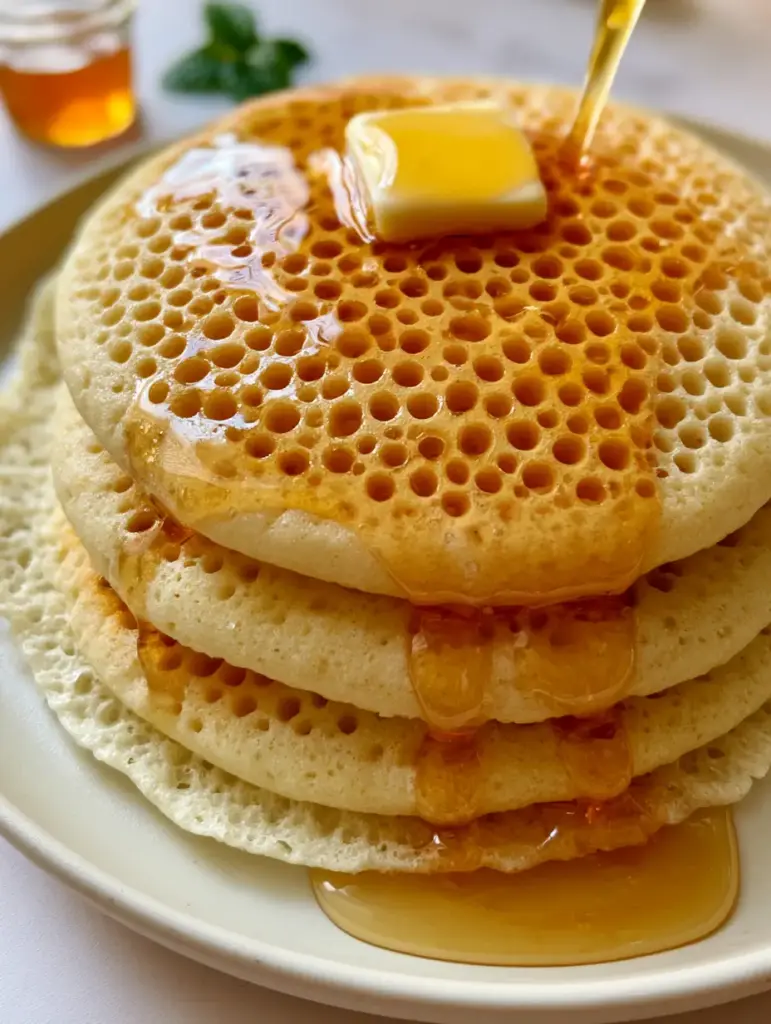
Keep this mixture warm. The goal is a viscosity that allows it to cascade down the sides of the stack in thick, glistening ribbons, just like in our visual blueprint.
Expert Tips for Perfect Moroccan Baghrir
- Control the Pan Temp: If the holes aren’t forming, your pan is too cold. If the bottom is burning before the top dries, your pan is too hot. Wipe the pan with a cold, damp cloth between crepes to reset the temperature.
- Never Flip: Flipping a Baghrir is a culinary sin! The beauty of these African crepes lies in the contrast between the toasted bottom and the tender, porous top.
- The Blender Method: Traditional whisking often leaves the semolina too gritty. The blender breaks down the grains just enough to create a silky, lacy edge.
- Salted Butter is Key: Use salted butter for the glaze. The salt cuts through the heavy honey, highlighting the nutty notes of the semolina.
Serving and Presentation Rituals
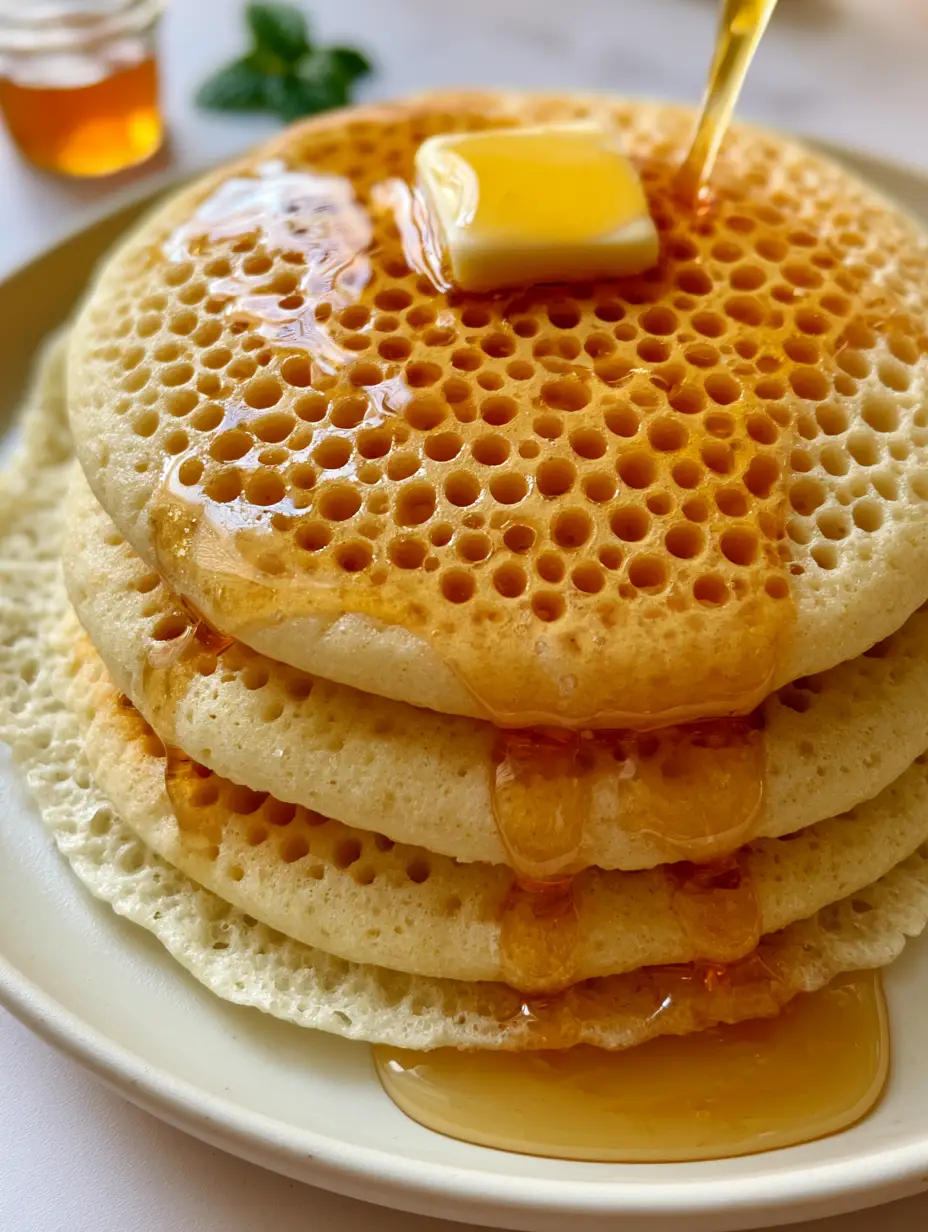
To match the visual blueprint, stack three crepes on a minimalist matte white ceramic plate. The high-angle close-up of this stack should show the “eyes” clearly filled with the golden-amber glaze.
Place a small, perfectly square pat of cold salted butter on the very top of the warm stack. As it begins to melt, it will create a glistening highlight. Garnish with a single, vibrant sprig of fresh mint to provide a pop of color against the warm tones of the dish.
This dish pairs beautifully with a glass of Moroccan mint tea or can be served alongside other breakfast staples like Bananen-Quarkbällchen for a diverse brunch spread. If you are looking for a savory contrast, consider serving these after a light cucumber salad.
Storage, Reheating, and Make-Ahead Advice
Baghrir are best enjoyed immediately while the holes are fresh and the texture is spongy. However, you can store leftover African crepes in an airtight container for up to 2 days.
To reheat, do not use a microwave, as it can make them rubbery. Instead, place them in a dry pan over low heat for 1 minute until warmed through. Alternatively, they can be frozen with parchment paper between each crepe for up to a month.
Frequently Asked Questions
While you can, it won’t be authentic. Semolina provides the structural integrity needed for the holes to stay open. Using only flour results in a texture more like a standard pancake.
No, a dry non-stick pan is best. Oil or butter on the pan can interfere with the formation of the holes and create a fried texture rather than a spongy one.
Yes, the batter for African crepes should be thinner than American pancake batter but thicker than French crepe batter. It should pour easily and spread itself in the pan.
This is usually due to three things: inactive yeast, cold water, or a pan that isn’t hot enough. Ensure your yeast is frothy before blending and the pan is at a steady medium heat.
Cooking on one side allows the air bubbles to escape through the top, creating the ‘thousand holes.’ Flipping the crepe would seal the holes and ruin the unique porous texture.
The Ultimate African Crepe Recipe
African Crepes: The Ultimate Guide to Moroccan Baghrir (Thousand-Hole Pancakes)
Ingredients
Equipment
Method
- Combine warm water, sugar, and yeast in a blender. Let sit for 2 minutes until frothy.
- Add semolina, flour, and salt. Blend on high for 60 seconds. Add baking powder and pulse for 5 seconds.
- Pour batter into a bowl and let rest for 15-20 minutes until a fine foam of bubbles forms on the surface.
- Heat a non-stick pan over medium heat. Do not oil the pan.
- Pour 1/3 cup of batter into the center. Do not swirl. Cook for 2-3 minutes until the surface is covered in holes and looks dry. Do not flip.
- Melt honey and butter together in a saucepan until thick and glossy.
- Stack three crepes. Pour the warm glaze over the top so it fills the holes. Top with a butter cube and mint sprig.
Notes
If the holes are not forming, increase the heat slightly or wipe the pan with a cold cloth to reset surface tension.

Join the Savor the Supper Community!
These African crepes are more than just a meal; they are a sensory experience of texture and light. We hope this guide helps you master the art of the “thousand-hole” pancake in your own kitchen.
Did your Baghrir turn out perfectly porous? We want to see your stacks! Tag us on social media and follow our Pinterest for more visually stunning recipe inspiration. Don’t forget to leave a comment below with your favorite toppings!
For more authentic flavors, check out our guide to West African fufu or explore our collection of egusi soup recipes to continue your culinary journey through Africa.