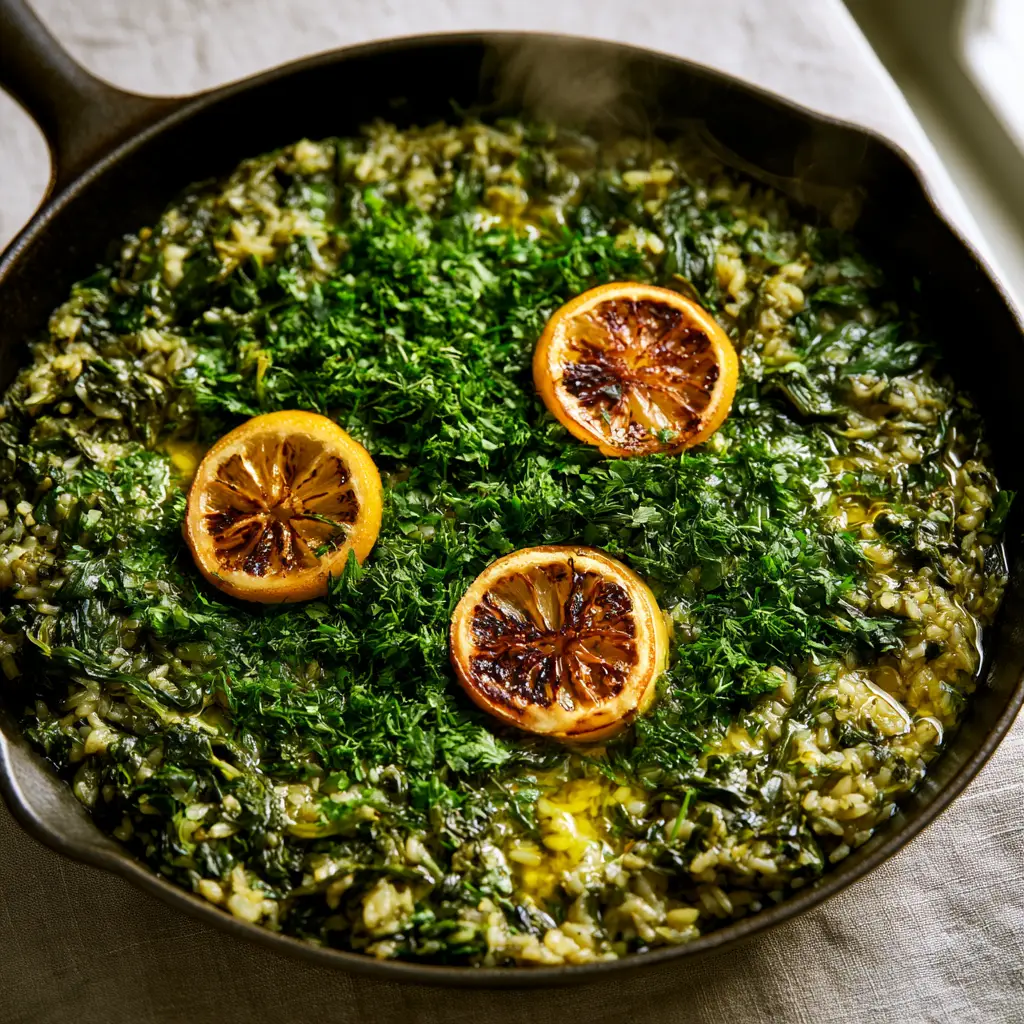
There is a specific kind of magic that happens inside a rustic matte black cast iron skillet when Mediterranean flavors collide. Spanakorizo, the soul-stirring Greek staple of spinach and rice, is often misunderstood as a simple porridge. However, when executed with culinary precision, it transforms into a vibrant masterpiece of fluffy, pearlescent long-grain rice and deep-green ribbons of fresh spinach.
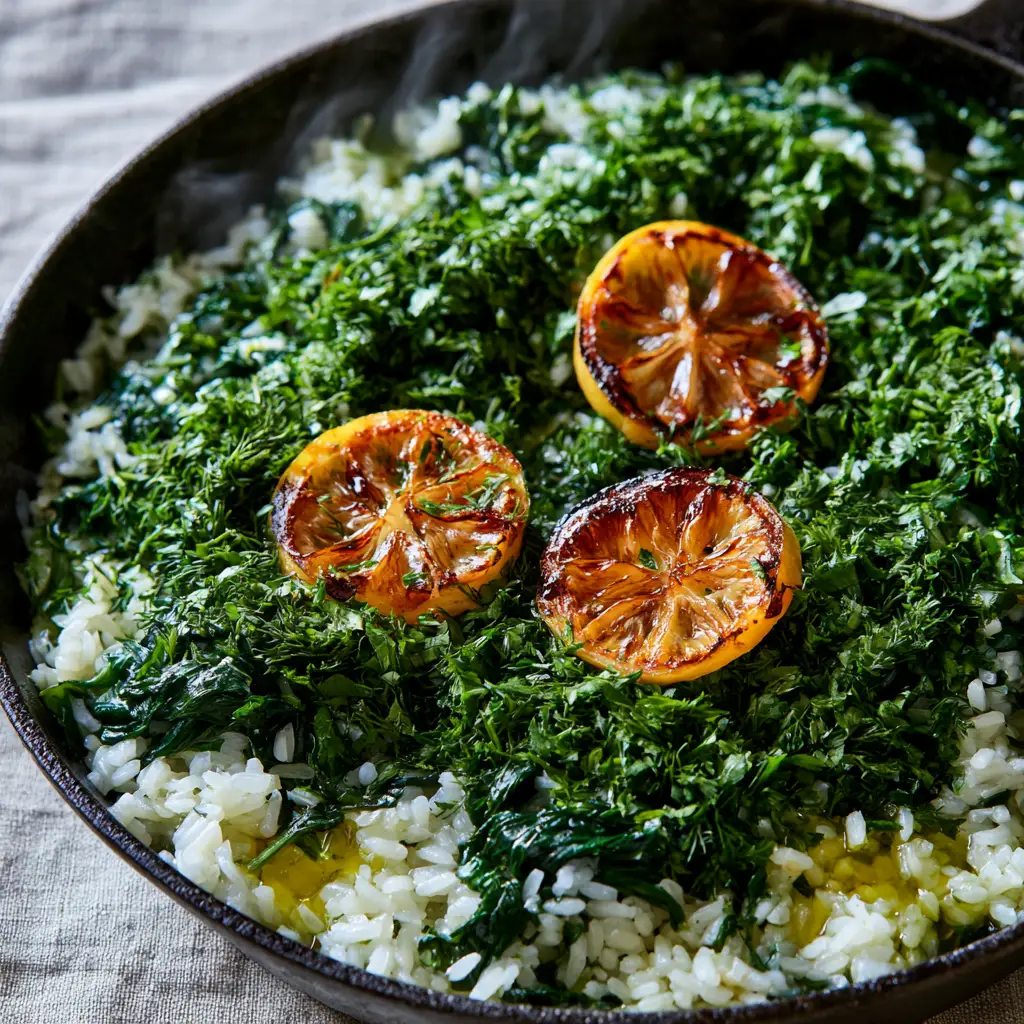
Imagine lifting a lid to reveal soft steam rising from a bed of individual grains, each one distinct and never mushy. The aroma of fresh neon-green dill and flat-leaf parsley fills the kitchen, while caramel-edged charred lemon rounds provide a striking visual contrast. This recipe isn’t just about nourishment; it’s about achieving that perfect macro-shot texture that defines elite Greek home cooking.
Whether you are looking for a stand-alone plant-based meal or a side dish that outshines the main course, this Spanakorizo delivers. By focusing on the science of rice hydration and the timing of delicate aromatics, we will create a dish that looks exactly like a high-end culinary editorial—glossy with extra virgin olive oil and seasoned to perfection with sea salt flakes.
The Secrets to Achieving Flawless Spanakorizo Textures
- Individual Grain Definition: Unlike the stovetop “glop” often served, our method ensures each long-grain rice kernel remains separate and pearlescent.
- Vibrant Color Retention: We use a specific wilting technique to keep the spinach deep green rather than overcooked and grey.
- Aromatic Depth: A double-hit of fresh dill and parsley added at the very end preserves the “neon-green” brightness and essential oils.
- The Charred Element: Caramelizing the lemon rounds in the skillet before deglazing adds a smoky, citrusy complexity that balances the earthy spinach.
- Glossy Finish: A final drizzle of high-quality extra virgin olive oil creates those beautiful pools in the crevices of the rice.
Essential Components for This Mediterranean Masterpiece
Long-Grain Rice: Use 1.5 cups (285g) of high-quality long-grain rice, such as Basmati or Jasmine. These varieties contain less starch than short-grain rice, which is essential for achieving that fluffy, non-mushy texture described in our visual blueprint.
Fresh Baby Spinach: You will need 10 oz (280g) of fresh, vibrant green spinach. Fresh leaves provide the structural “ribbons” that look so appealing in a macro shot, whereas frozen spinach often loses its visual integrity.
Fresh Dill & Flat-Leaf Parsley: Use 1/2 cup (15g) of each, finely chopped. These herbs are the lifeblood of authentic Spanakorizo, providing the bright, neon-green garnish that completes the dish’s aesthetic.
Green Onions: 1 bunch (about 6-8 onions), thinly sliced. Sautéing the whites and light green parts provides a mellow, sweet onion base that doesn’t overpower the delicate spinach.
Lemons: 2 large lemons. One will be sliced into thin rounds for charring, and the other will be juiced to provide the necessary acidity to brighten the rice grains.
Extra Virgin Olive Oil: 1/4 cup (60ml) for the base and extra for the final glossy drizzle. This provides the “liquid gold” appearance and a rich mouthfeel.
Foundational Seasonings: 1 tsp (6g) sea salt flakes and 1/2 tsp (2g) cracked black pepper. These “invisible” ingredients are scientifically required to enhance the natural flavors of the produce.
Vegetable Broth: 2.75 cups (650ml). Using a high-quality broth instead of water adds a layer of umami that coats every grain of rice.
Kitchen Tools for Professional Results
To achieve the look of an authentic Greek kitchen, a 12-inch (30cm) matte black cast iron skillet or a heavy-bottomed shallow Dutch oven is preferred. The wide surface area allows the rice to cook evenly and provides the perfect stage for charring your lemon rounds.
You will also need a fine-mesh strainer to rinse the rice. Rinsing is the most critical step to remove excess surface starch, which is the primary culprit behind mushy rice. A sharp chef’s knife is also essential for achieving that “finely chopped” look for your herbs.
Step-by-Step Evolution of the Perfect Spanakorizo
Step 1: The Starch-Removal Ritual
Place your long-grain rice in a fine-mesh strainer and rinse under cold running water for at least 2 minutes. Agitate the grains with your fingers until the water runs completely clear. This step ensures the “pearlescent” and “distinctly separated” look mentioned in our visual prompt.
Step 2: Charring the Lemon Rounds
Heat 1 tablespoon (15ml) of olive oil in your cast iron skillet over medium-high heat. Place three or four thin lemon rounds in the oil and sear for 1-2 minutes per side until the edges are caramelized and charred. Remove them from the pan and set aside; these will be your crowning garnish.
Step 3: Building the Aromatic Foundation
In the same skillet, add the remaining olive oil and the sliced green onions. Sauté for 3-4 minutes until softened and fragrant. Add the rinsed rice to the pan and toast it for 2 minutes, stirring constantly. This “toasting” phase coats each grain in fat, further ensuring they don’t stick together during the simmering process.
Step 4: The Controlled Simmer
Pour in the vegetable broth, sea salt, and cracked black pepper. Bring to a gentle boil, then reduce the heat to low. Cover the skillet with a tight-fitting lid and simmer for 15-18 minutes. You are looking for the rice to be tender and the liquid to be fully absorbed, leaving behind “fluffy” grains.
Step 5: Integrating the Vibrant Greens
Remove the lid and quickly layer the fresh spinach over the rice. Replace the lid for 2 minutes to allow the steam to wilt the greens. Remove the lid once more and gently fold the spinach into the rice using a fork. This “fork-fluffing” method preserves the rice’s structure better than a spoon.
Step 6: The Final Flourish
Stir in the lemon juice and half of the chopped dill and parsley. Arrange the charred lemon rounds on top. Just before serving, generously garnish with the remaining “neon-green” herbs and a heavy drizzle of extra virgin olive oil so it pools slightly in the rice crevices.
Expert Tips for Culinary Success
- The Resting Period: After the rice finishes cooking, let it sit off the heat, covered, for 5-10 minutes. This allows the moisture to redistribute, resulting in even fluffier grains.
- Herb Timing: Never cook the herbs with the rice. Heat destroys the vibrant color and the delicate flavor profile of dill. Always fold them in at the very end.
- Liquid Ratio: For a skillet-style Spanakorizo, a 1:1.75 or 1:1.8 ratio of rice to liquid is superior to the standard 1:2 ratio, as the spinach releases its own moisture.
- Visual Cues: Look for “steam holes” forming on the surface of the rice. This is a scientific indicator that the hydration process is nearly complete.
Creative Pairings and Serving Suggestions
Spanakorizo is a versatile star that pairs beautifully with other Mediterranean textures. If you are hosting a Greek-themed dinner, consider serving this alongside authentic Greek chicken for a protein-rich meal. The earthy tones of the spinach also complement the sweetness of roasted vegetables, such as a zucchini parmesan casserole or a summer vegetable gratin.
For a lighter lunch, a bowl of Spanakorizo alongside a crispy cucumber salad creates a refreshing contrast in temperatures. If you have leftovers, they make an excellent addition to adult lunchable boxes, as the flavors of the lemon and dill actually deepen overnight in the refrigerator.
Common Questions About Greek Spinach Rice
Yes, you can, but fresh spinach provides the vibrant green ‘ribbons’ seen in authentic versions. If using frozen, thaw and squeeze out all excess water thoroughly before adding it to the rice.
The secret is to fold in half of the herbs after the heat is turned off and use the other half as a raw garnish just before serving. Cooking herbs for too long turns them brown and dull.
Yes, it is naturally vegan as it relies on olive oil and vegetable broth. It is a staple dish during Greek Orthodox fasting periods (Lent).
For a fluffy, separated texture, long-grain rice like Basmati or Jasmine is best. Traditional recipes sometimes use medium-grain, but long-grain is more forgiving for home cooks seeking a non-mushy result.
Mushy Spanakorizo is usually caused by excess starch or too much liquid. To fix this, always rinse your long-grain rice until the water runs clear and use a 1:1.75 liquid ratio to account for the moisture in the spinach.
Authentic Greek Spanakorizo Recipe
[Image-3]
Spanakorizo: The Ultimate Guide to Authentic Greek Spinach and Rice
Ingredients
Equipment
Method
- Rinse the long-grain rice under cold water for 2 minutes until the water runs clear to remove excess starch.
- Heat 1 tbsp oil in a skillet and sear thin lemon rounds until charred and caramelized on the edges. Remove and set aside.
- Sauté green onions in olive oil until soft. Add rice and toast for 2 minutes until pearlescent.
- Add broth, salt, and pepper. Cover and simmer on low for 15-18 minutes until liquid is absorbed and rice is fluffy.
- Layer spinach over rice, cover for 2 minutes to wilt, then gently fold in with a fork.
- Stir in lemon juice and half the herbs. Top with charred lemons, remaining neon-green herbs, and a glossy drizzle of olive oil.
Notes
Add fresh herbs only at the very end to maintain their vibrant neon-green color.
Closing Thoughts on This Mediterranean Classic
Mastering Spanakorizo is a rite of passage for any home cook looking to explore the depths of Greek cuisine. By prioritizing the texture of the rice and the vibrancy of the fresh herbs, you create a dish that is as visually stunning as it is delicious. We invite you to share your results and tag us on social media!
If you enjoyed this recipe, be sure to follow us on Pinterest for more culinary inspiration and high-resolution recipe guides. Don’t forget to leave a comment below with your favorite way to serve this classic spinach and rice dish!