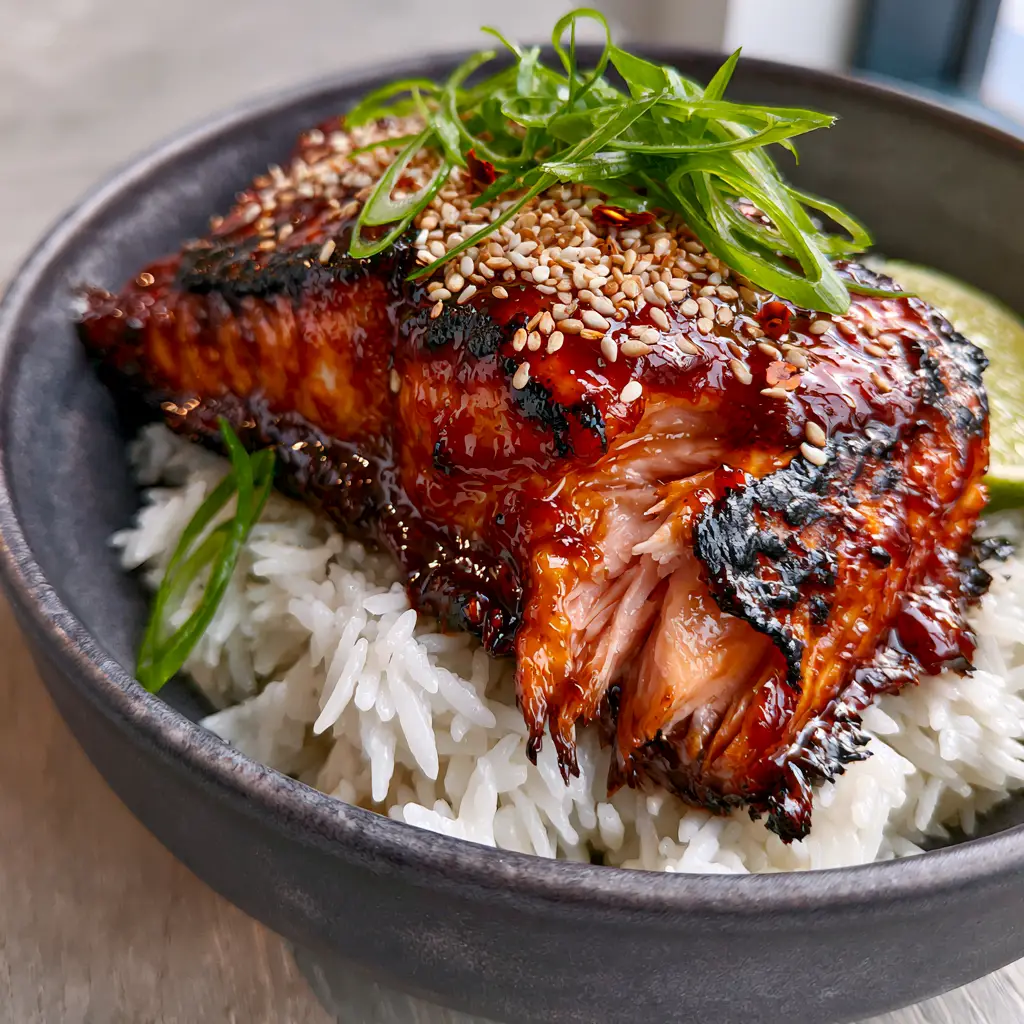
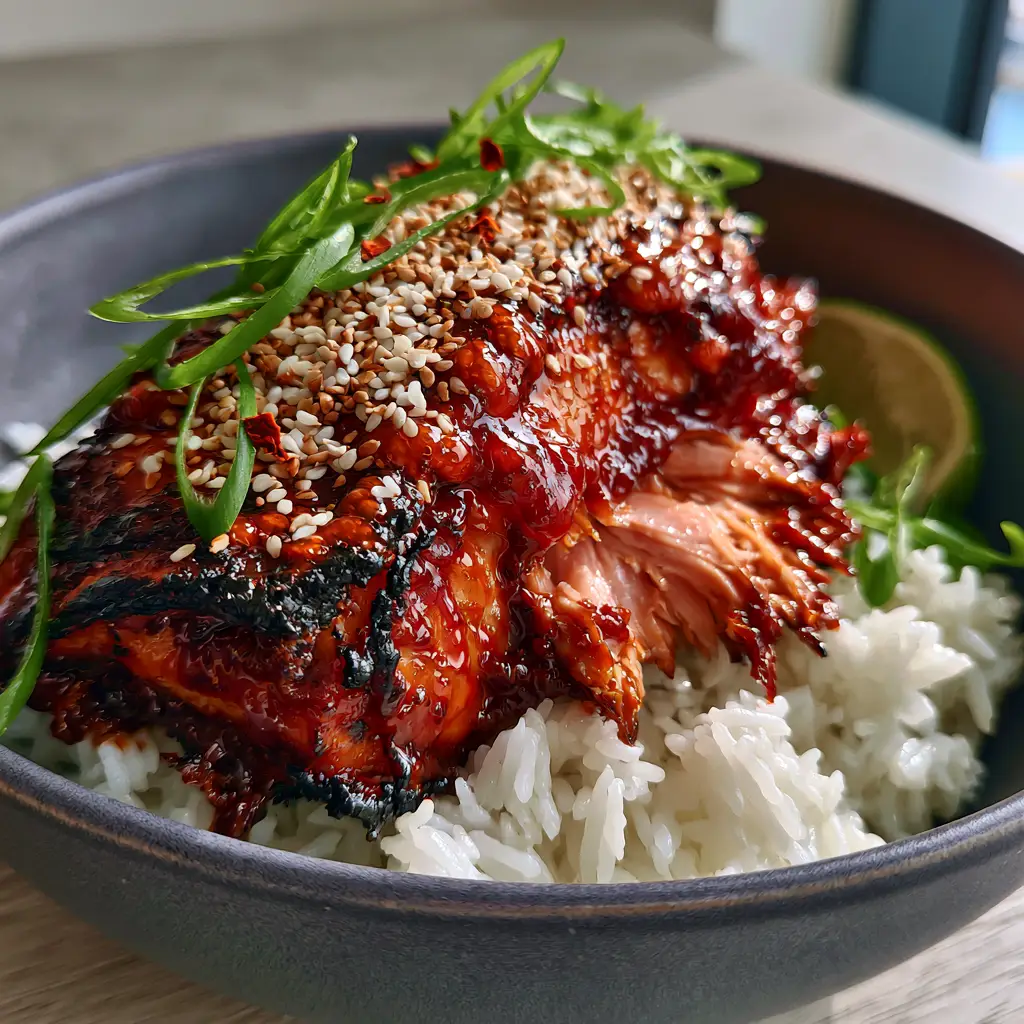
There is a specific kind of magic that happens when the fermented heat of Korean chili paste meets the floral sweetness of honey over a high-heat sear. This gochujang honey glazed salmon isn’t just a meal; it is a sensory experience designed to mimic those viral social media food posts that make you stop scrolling instantly. Imagine a succulent, thick-cut salmon fillet, its edges perfectly caramelized and slightly charred, coated in a thick, bubbling, red-orange glaze that glistens under the light.
When you flake into the fish with a fork, the exterior offers a slight resistance from the sticky reduction, revealing the tender, moist pink meat inside. Resting on a clean bed of fluffy, individual grains of white jasmine rice, this dish is balanced by the brightness of thinly sliced green scallions and the citrusy pop of a fresh lime wedge. Whether you are looking for a quick weeknight dinner or a show-stopping meal for guests, this recipe delivers professional food photography results right in your home kitchen.
The secret to achieving that “wet and sticky” look seen in elite food photography is all about the Maillard reaction and the sugar-to-heat ratio. By using the foundational techniques of professional recipe development, we ensure that the glaze doesn’t just sit on the fish—it becomes a part of it. Every bite is a symphony of sweet, spicy, and savory umami that will have you reaching for seconds before you’ve even finished your first bowl.
Why This Glazed Salmon Recipe Dominates Your Weeknight Menu
- Visual Masterpiece: The deep red-orange hue of the gochujang creates a stunning contrast against the matte charcoal grey ceramic bowls often used in high-end plating.
- Textural Harmony: You get the crunch of charred edges, the silkiness of the glaze, the flake of the salmon, and the fluffiness of the jasmine rice in every single bite.
- Balanced Heat: The honey and lime juice perfectly temper the fermented kick of the gochujang, making it accessible for those who enjoy flavor without overwhelming spice.
- Quick Execution: Despite its complex appearance, this dish comes together in under 30 minutes, making it a staple for busy, enthusiastic home cooks.
- Garnish Game: The heavy sprinkle of toasted white sesame seeds and dried red chili flakes adds both visual pop and essential nutty notes.
Foundational Elements for the Ultimate Umami Glaze
To achieve the specific visual blueprint of “bubbling” and “glistening” sauce, we must select ingredients that behave correctly under heat. This list combines the visible garnishes with the “invisible” culinary workhorses required for structural integrity.
Center-Cut Salmon Fillets: Opt for thick, individual portions (about 6oz (170g) each) to ensure the meat stays moist while the exterior undergoes intense caramelization. A thinner tail piece will overcook before the glaze reaches that signature bubbling stage.
Gochujang (Korean Chili Paste): This is the backbone of the dish, providing a deep, fermented funk and a vibrant red color. It acts as both a flavor base and a thickening agent for the sticky sauce.
Raw Honey: Honey provides the necessary sugars to create those charred, caramelized edges. It gives the glaze its “wet” appearance and helps it cling to the salmon’s surface.
Jasmine Rice: Use high-quality long-grain jasmine rice, rinsed thoroughly until the water runs clear. This ensures the “individual grains” look required for that clean, professional presentation.
Avocado Oil: This is a foundational invisible ingredient with a high smoke point (520°F (271°C)). It allows us to sear the salmon at high temperatures without the oil breaking down or tasting burnt.
Fresh Lime: The lime wedge isn’t just for looks; the acidity cuts through the fatty salmon and the sugar in the honey, brightening the entire flavor profile at the moment of impact.
Toasted White Sesame Seeds: These provide a visual “pop” against the red glaze. Toasting them beforehand enhances their nutty aroma, which complements the fermented gochujang.
Green Scallions: Very thinly sliced on a bias, these provide a fresh, crisp texture and a bright green contrast to the deep orange hues of the fish.
Dried Red Chili Flakes: A light sprinkle adds a secondary layer of heat and mimics the “viral social media post” aesthetic described in our visual goals.
Professional Gear for a Flawless Sear
Achieving the perfect gochujang honey glazed salmon requires the right tools to manage heat and moisture. A heavy-bottomed cast iron or stainless steel skillet is essential for heat retention, allowing for that deep char without the pan temperature dropping. You will also need a fine-mesh strainer to rinse your jasmine rice, ensuring it remains fluffy and not gummy.
A silicone basting brush is vital for applying the “thick, bubbling” glaze in the final stages of cooking. For the perfect presentation, a sharp chef’s knife is required to slice the scallions into those “very thin” translucent rounds. Finally, serving this in a shallow ceramic bowl, preferably in a dark matte finish, will make the glistening red-orange sauce stand out just like a professional handheld smartphone photo.
The Culinary Roadmap to Caramelized Perfection
Preparing the Aromatic Jasmine Rice
Success begins with the rice. Rinse 1 cup (185g) of jasmine rice under cold water at least three times. This removes excess surface starch, which is the key to achieving “fluffy, individual grains.” Combine the rice with 1.5 cups (350ml) of water and a pinch of kosher salt in a small pot. Bring to a boil, then reduce to the lowest simmer, cover, and cook for 15 minutes. Let it sit, covered, for 5 minutes before fluffing with a fork.
Whisking the Glistening Gochujang Glaze
In a small bowl, whisk together 2 tbsp (30g) gochujang, 3 tbsp (45ml) honey, 1 tbsp (15ml) soy sauce, 1 tsp (5ml) rice vinegar, and 1 grated clove of garlic. This mixture will look thick and dark red. The soy sauce provides the salt needed to balance the honey, while the rice vinegar adds a subtle tang that wakes up the fermented notes of the chili paste.
Executing the High-Heat Sear
Pat your salmon fillets completely dry with a paper towel; moisture is the enemy of a good sear. Season lightly with salt. Heat 1 tbsp (15ml) of avocado oil in your skillet over medium-high heat. Once you see a faint wisp of smoke, place the salmon in the pan. Press down lightly with a spatula to ensure full contact. Sear for 3-4 minutes until the edges are noticeably browned and a crust has formed.
The Glaze and Bubbling Finish
Flip the salmon carefully. Immediately pour the gochujang honey mixture into the pan. Use a spoon or brush to coat the top of the fish. As the sauce hits the hot pan, it will begin to bubble vigorously and reduce. Baste the salmon continuously for another 2-3 minutes. You are looking for the glaze to thicken into a “wet and sticky” consistency that looks like a translucent lacquer. The edges of the fish should begin to “char” as the honey sugars caramelize against the hot metal.
Expert Tips for Restaurant-Quality Results
- The Dry Pat: Never skip drying the salmon. If the surface is wet, it will steam rather than sear, and you won’t get those crispy, charred edges.
- Don’t Over-Crowd: If cooking multiple fillets, ensure there is at least an inch of space between them. Overcrowding lowers the pan temperature and prevents the glaze from reducing properly.
- The Carry-Over Cook: Remove the salmon when it is just slightly underdone in the very center. The residual heat from the bubbling glaze will finish the cooking as it rests, ensuring “tender, moist pink meat.”
- High Quality Gochujang: Look for a brand that lists “chili powder” and “fermented rice” as primary ingredients. Avoid those with high-fructose corn syrup if you want a deeper, more authentic umami flavor.
Keeping Your Leftovers Succulent and Fresh
While this dish is best served immediately to appreciate the “bubbling” texture of the glaze, it can be stored in an airtight container for up to 2 days in the refrigerator. To reheat, avoid the microwave if possible, as it can toughen the salmon. Instead, place the salmon in a cold oven and set it to 275°F (135°C). Heat for 10-15 minutes until warmed through; this low-and-slow method preserves the moisture in the fish.
Freezing is not recommended for this specific recipe, as the texture of the “fluffy jasmine rice” and the delicate glaze will degrade significantly upon thawing. Always try to enjoy your gochujang honey glazed salmon fresh to maintain that “viral social media” visual appeal.
What to Serve with This Korean-Inspired Feast
This salmon is a bold, flavor-forward main dish that pairs beautifully with simple, fresh sides. If you are looking to expand your seafood repertoire, you might also enjoy my spicy salmon all’arrabbiata for a Mediterranean twist on heat. For those who prefer a non-seafood option with similar sticky-sweet vibes, this honey lime chicken is a fantastic alternative.
To round out a full dinner spread, consider a light vegetable side like this zucchini stir-fry (minus the chicken) or a simple bowl of spaghetti aglio e olio if you want a fusion-style feast. The goal is to keep the side dishes relatively neutral so the vibrant, glistening salmon remains the star of the show.
Frequently Asked Questions
Yes, but you must thaw the salmon completely and pat it bone-dry with paper towels before searing. Excess moisture from frozen fish will prevent the glaze from sticking and stop the edges from charring.
The key is to add the glaze to the pan during the last 2-3 minutes of cooking. The sugars in the honey will rapidly reduce and bubble, creating that thick, glistening ‘social media’ look.
It has a mild-to-medium heat. The fermentation of the gochujang provides a deep warmth, but the honey and lime juice act as significant counter-balances to keep the spice level accessible for most home cooks.
While gochujang is unique, you can mimic the flavor by mixing Sriracha with a touch of miso paste and brown sugar. However, the color and depth won’t be as vibrant as the original.
This usually happens if the rice isn’t rinsed enough. Rinsing removes the surface starch that causes grains to clump together. Aim for ‘individual grains’ by rinsing until the water is completely clear.
The Ultimate Gochujang Honey Glazed Salmon Recipe
Gochujang Honey Glazed Salmon with Charred Edges and Fluffy Jasmine Rice
Ingredients
Equipment
Method
- Rinse jasmine rice until water is clear. Combine with water and salt in a pot. Bring to a boil.
- Reduce to low, cover, and simmer for 15 minutes. Let rest for 5 minutes before fluffing with a fork.
- Pat salmon dry and season with salt. Heat avocado oil in a skillet over medium-high heat. Sear salmon skin-side down (or top-side down if skinless) for 4 minutes until charred edges appear.
- Whisk glaze ingredients together. Flip salmon and pour glaze into the pan. Baste the fish continuously for 2-3 minutes as the glaze becomes thick, bubbling, and glistening.
- Plate salmon over jasmine rice. Sprinkle heavily with toasted sesame seeds, sliced scallions, and chili flakes. Tuck a lime wedge to the side.
Notes
If the glaze thickens too quickly, add a teaspoon of water to loosen it back to a glistening consistency.
Closing & Call to Action
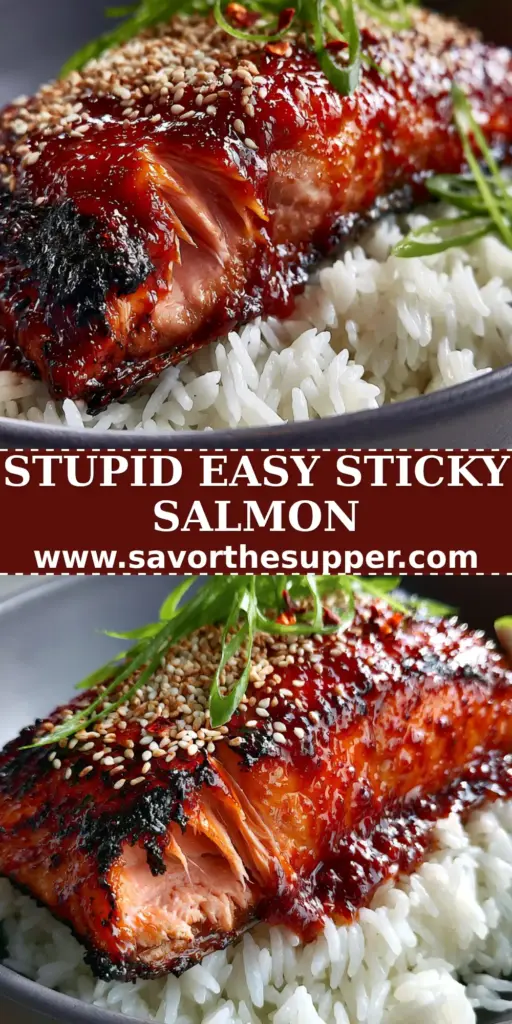
Mastering the art of the gochujang honey glazed salmon is a surefire way to elevate your home cooking game. With its glistening red-orange sauce and perfectly charred edges, it’s a dish that tastes even better than it looks. If you enjoyed this recipe, please leave a comment below and tell me how your glaze turned out! Don’t forget to follow me on Pinterest for more visually stunning recipe inspiration and share your creations with the #SavorTheSupper community.