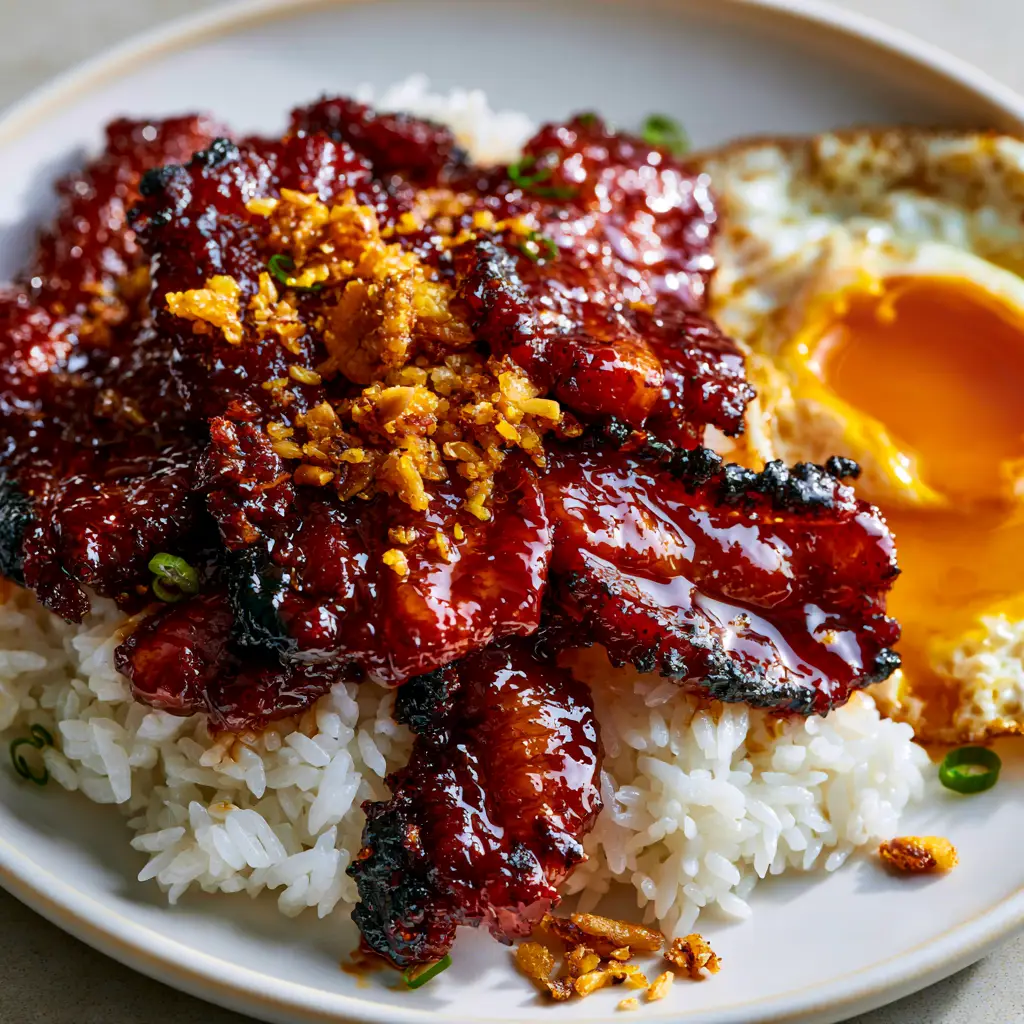
The first time you witness the vibrant, glistening beauty of authentic filipino pork tocino, your perspective on breakfast changes forever. This isn’t just a meal; it is a masterclass in the balance of sweet, salty, and savory, traditionally served as part of the iconic “Toscilog” platter. The deep mahogany glaze, punctuated by those irresistible charred, blackened edges, creates a sensory experience that is as visually stunning as it is delicious.
Imagine thin, tender slices of pork shoulder that have been cured to perfection, then seared until the sugars caramelize into a sticky reduction. When paired with the pungent aroma of garlic fried rice and the rich, golden river of a runny egg yolk, you have a dish that represents the heart of Filipino culinary hospitality. It’s a plate designed for the slow, sun-drenched mornings described in our visual blueprint, where every bite is a celebration of texture and tradition.
Whether you are a seasoned fan of Southeast Asian cuisine or a curious home cook looking to elevate your brunch game, this filipino pork tocino recipe delivers professional results. We will dive deep into the science of the cure and the technique of the sear to ensure your kitchen produces a result that looks exactly like a high-end food photography spread.
Why This Authentic Filipino Pork Tocino Recipe Works
- The Mahogany Glaze: By using a specific ratio of sugar and annatto, we achieve a natural, deep reddish-brown hue without the need for artificial food coloring.
- Textural Contrast: We focus on the “charred, blackened edges” mentioned in our visual prompt, achieved through a controlled pan-frying technique that caramelizes the curing sugars.
- Scientific Tenderness: Using pork shoulder ensures the perfect fat-to-lean ratio, while a touch of phosphate or natural fruit acid helps keep the muscle fibers supple during the curing process.
- Traditional Pairings: This guide includes the essential garlic fried rice (Sinangag) and the lacy-edged sunny-side-up egg to complete the authentic “Silog” experience.
- Balance of Flavors: The inclusion of fresh calamansi halves provides the necessary acidity to cut through the richness of the sweet cured pork.
The Anatomy of the Cure: Essential Ingredients
To recreate the filipino pork tocino from our visual blueprint, every ingredient serves a specific structural or aesthetic purpose. Achieving that “tender muscle fiber” look begins with the right selection of meat and the perfect balance of curing agents.
Pork Shoulder (Butt) (2 lbs / 900g): This cut is preferred over loin because the intramuscular fat melts during the frying process, basting the meat and keeping it moist. Slice it thinly across the grain to ensure every piece is easy to chew and absorbs the marinade deeply.
Brown Sugar (3/4 cup / 150g): This is the primary driver of the “sticky mahogany sugar glaze.” It provides the sweetness that balances the salt and allows for the rapid caramelization that creates those signature charred edges.
Kosher Salt (1.5 tbsp / 18g): Salt is the functional curing agent here. It draws out moisture, concentrates flavor, and alters the protein structure to give the tocino its characteristic “ham-like” texture.
Annatto Powder (1 tsp / 3g): Also known as achuete, this provides the deep, natural mahogany color. Without it, the meat would look like standard fried pork; with it, it transforms into the vibrant centerpiece seen in our handheld smartphone photo style.
Pineapple Juice (1/4 cup / 60ml): The bromelain in pineapple juice acts as a natural meat tenderizer. It also adds a subtle tropical acidity that complements the high sugar content of the cure.
Garlic Powder (1 tbsp / 9g): While we use fresh garlic for the rice, powder is used in the cure to ensure an even distribution of flavor without the risk of burnt garlic bits on the meat during the high-heat sear.
Neutral Oil (2 tbsp / 30ml): Needed for the final frying stage. A high-smoke point oil like canola or grapeseed is essential for achieving the “crispy lace-like edges” on the sunny-side-up egg.
Tools for Achieving Restaurant-Quality Char
While filipino pork tocino is a humble home-style dish, using the right equipment will help you achieve the “unedited, high resolution” look of a professional food blog. A heavy-bottomed skillet is your best friend here.
A cast-iron or carbon steel pan is ideal because it retains heat exceptionally well. This heat retention is what allows the sugar-laden marinade to reduce into a “sticky reduction” rather than just boiling the meat. You will also need a sharp chef’s knife for those thin scallion rounds and a sturdy spatula for flipping the delicate eggs.
Mastering the Method: Step-by-Step Filipino Pork Tocino
Step 1: The Precision Cure
In a large mixing bowl, combine your brown sugar, salt, annatto powder, garlic powder, and pineapple juice. Whisk until the sugar has mostly dissolved into a thick, dark crimson paste. Add your thinly sliced pork shoulder to the bowl, ensuring every fiber is coated in the mixture.
Massage the meat for about 5 minutes; this “mechanical action” helps the cure penetrate the muscle. Transfer to a sealed container and refrigerate for at least 24 hours, though 48 hours is the “sweet spot” for the best color development and flavor depth.
Step 2: Simmering to Tenderness
Unlike standard bacon, filipino pork tocino is first simmered. Place the pork and all its marinade into a wide skillet and add 1/2 cup (120ml) of water. Bring to a gentle simmer over medium heat, covering the pan to trap steam.
This stage ensures the meat is fully cooked and tender before the sugars start to burn. Let it simmer for about 15-20 minutes, or until the water has evaporated and you are left with a thick, bubbling syrup at the bottom of the pan.
Step 3: Achieving the Mahogany Char
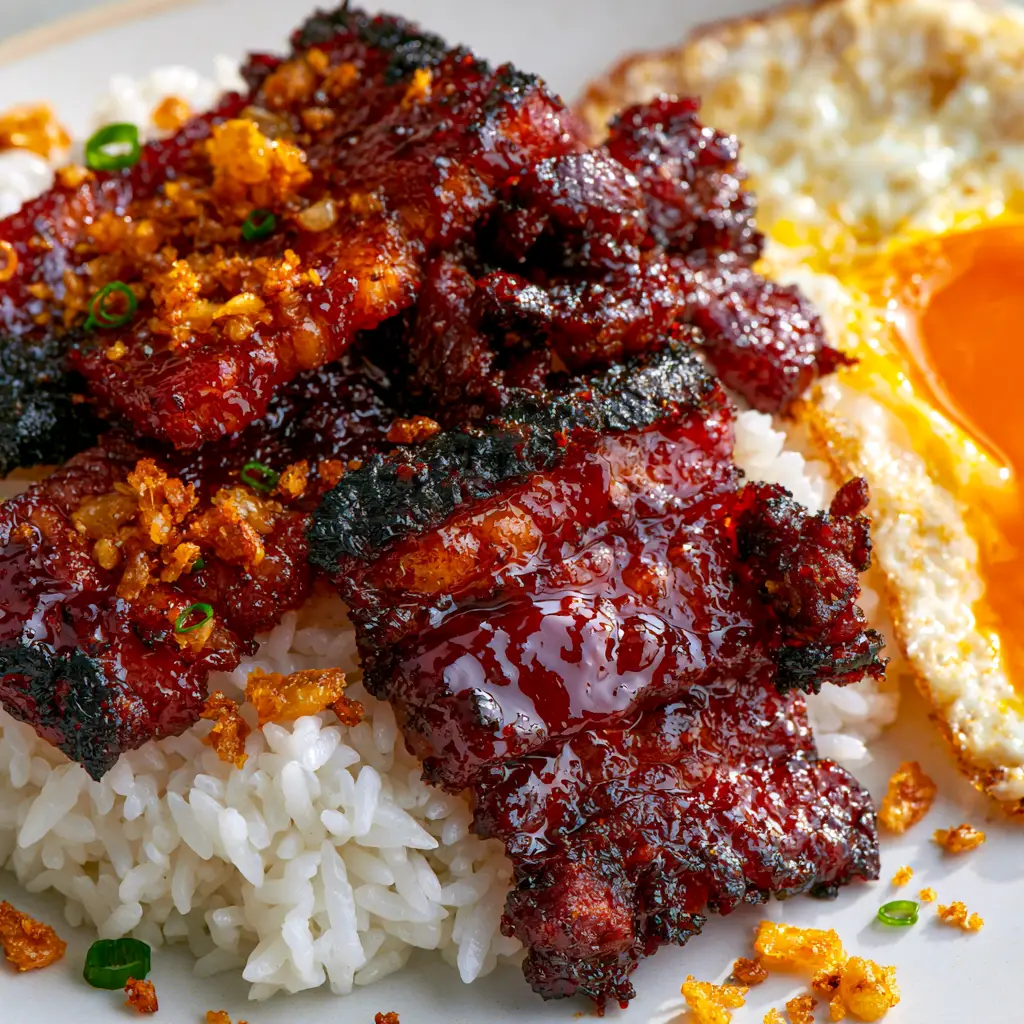
Once the water is gone, add a tablespoon of oil to the pan. Increase the heat to medium-high. You will hear a distinct sizzle as the “sticky mahogany sugar glaze” begins to fry. Watch for the sensory cues: the smell of toasted sugar and the sight of the edges turning dark brown to black.
Flip the slices frequently. You want the meat to look “glistening” and “vibrant,” with the fat rendering out and frying the edges into a caramelized crust. Remove the meat once it matches the deep mahogany tone of our visual prompt.
Step 4: The Ultimate Garlic Fried Rice (Sinangag)
In the same pan (or a fresh one if the sugar is too dark), heat more oil and add a generous amount of minced garlic. Fry until the garlic bits are “golden-brown” and crispy. Toss in day-old white rice, breaking up any clumps.
Stir-fry until the rice is “fluffy” and every grain is coated in garlic-infused oil. This savory base is the perfect foil for the sweet tocino. If you’re looking for other savory inspirations, you might enjoy a salty and savory pasta that utilizes similar aromatic techniques.
Step 5: The Perfect Runny Egg
The “sunny-side-up egg” in our blueprint requires a specific technique. Heat oil until it almost shimmers. Crack the egg gently into the pan. Use a spoon to splash hot oil over the whites but avoid the yolk.
The goal is “crispy lace-like edges” on the whites while maintaining a “perfectly runny, bright orange yolk.” This yolk will act as a rich sauce for the rice and pork, creating a luxurious mouthfeel.
Expert Tips for the Perfect Filipino Breakfast
- Don’t Rush the Cure: The annatto needs time to stain the meat deeply. A short marinade will result in a pale, less appetizing color.
- Temperature Control: If the glaze burns before the meat is heated through, your heat is too high. Lower it and add a splash of water to deglaze the pan.
- The Rice Factor: Always use cold, leftover rice. Fresh rice is too moist and will turn mushy rather than “fluffy” when fried.
- Slicing Technique: Partially freeze the pork shoulder for 30 minutes before slicing. This makes it much easier to get those “thinly sliced” pieces seen in our prompt.
- The Calamansi Finish: Never skip the calamansi. The bright, floral acidity is what makes the dish balanced. If you can’t find them, a mix of lime and tangerine juice is a decent substitute.
What to Serve with Your Tocino
While the traditional “Toscilog” is a complete meal, you can expand your breakfast spread with other global flavors. For those who enjoy a variety of textures, pairing this with balanced Asian meals can offer a lighter contrast to the rich pork shoulder.
If you’re hosting a large brunch, consider adding some garlic-heavy seafood to the table for a surf-and-turf Filipino feast. For a quick treat after such a savory meal, these quick snacks are a perfect way to satisfy a lingering sweet tooth without much effort.
Storage and Reheating Secrets
Filipino pork tocino is an excellent candidate for meal prep. You can freeze the sliced pork in its marinade for up to 3 months. Simply thaw overnight in the refrigerator before following the simmering and frying steps.
Cooked tocino lasts for 4-5 days in an airtight container. To reheat, avoid the microwave as it can make the sugar glaze rubbery. Instead, a quick flash in a hot skillet with a teaspoon of water will restore the “glistening” texture and “tender muscle fibers” of the original dish.
Frequently Asked Questions
Yes, but pineapple juice contains enzymes that help tenderize the pork. If omitting, you may want to increase the marinating time to a full 48 hours.
Pork shoulder (pork butt) is best because its fat content keeps the meat tender during the high-heat frying process. You can use loin, but it will be much drier.
Traditionally, the mahogany red color comes from annatto powder (achuete) or saltpeter (Prague powder). Our recipe uses annatto for a natural, deep reddish-brown hue.
The best way is in a skillet over medium heat with a tiny splash of water to loosen the glaze. Microwaving often makes the sugar-coated meat tough and rubbery.
Tough tocino is usually caused by skipping the simmering step. Boiling the meat in water first breaks down the fibers before the sugar caramelizes and hardens the exterior.
The Definitive Filipino Pork Tocino Recipe Card
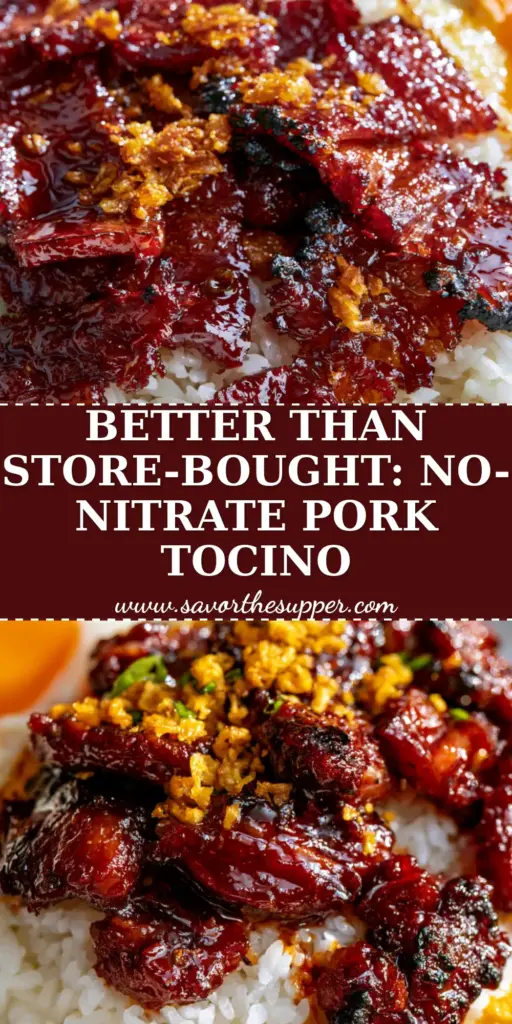
Filipino Pork Tocino: The Ultimate Sticky Mahogany Breakfast Guide
Ingredients
Equipment
Method
- Combine sugar, salt, annatto, and pineapple juice. Massage into thin pork slices and refrigerate for 24-48 hours.
- Place pork and marinade in a pan with 1/2 cup (120ml) water. Simmer until water evaporates and meat is tender.
- Add oil and fry on medium-high until a sticky mahogany glaze forms with charred edges.
- Fry garlic until golden, toss with rice. Fry eggs until edges are lacy but yolks remain runny.
Notes
Use cold rice to ensure a fluffy texture for the Sinangag.
Bring the Flavors of Manila to Your Kitchen
Mastering the art of filipino pork tocino is a rewarding journey into the heart of Filipino breakfast culture. By focusing on the visual cues—the mahogany glaze, the charred edges, and the vibrant yolk—you create a meal that is as much a feast for the eyes as it is for the soul. The combination of sweet pork and pungent garlic rice is a flavor profile that stays with you long after the last bite.
We would love to see your breakfast creations! If you found this guide helpful, please leave a comment below and share your results. Don’t forget to follow us on Pinterest for more visually-inspired recipes and culinary deep-dives. Happy cooking!