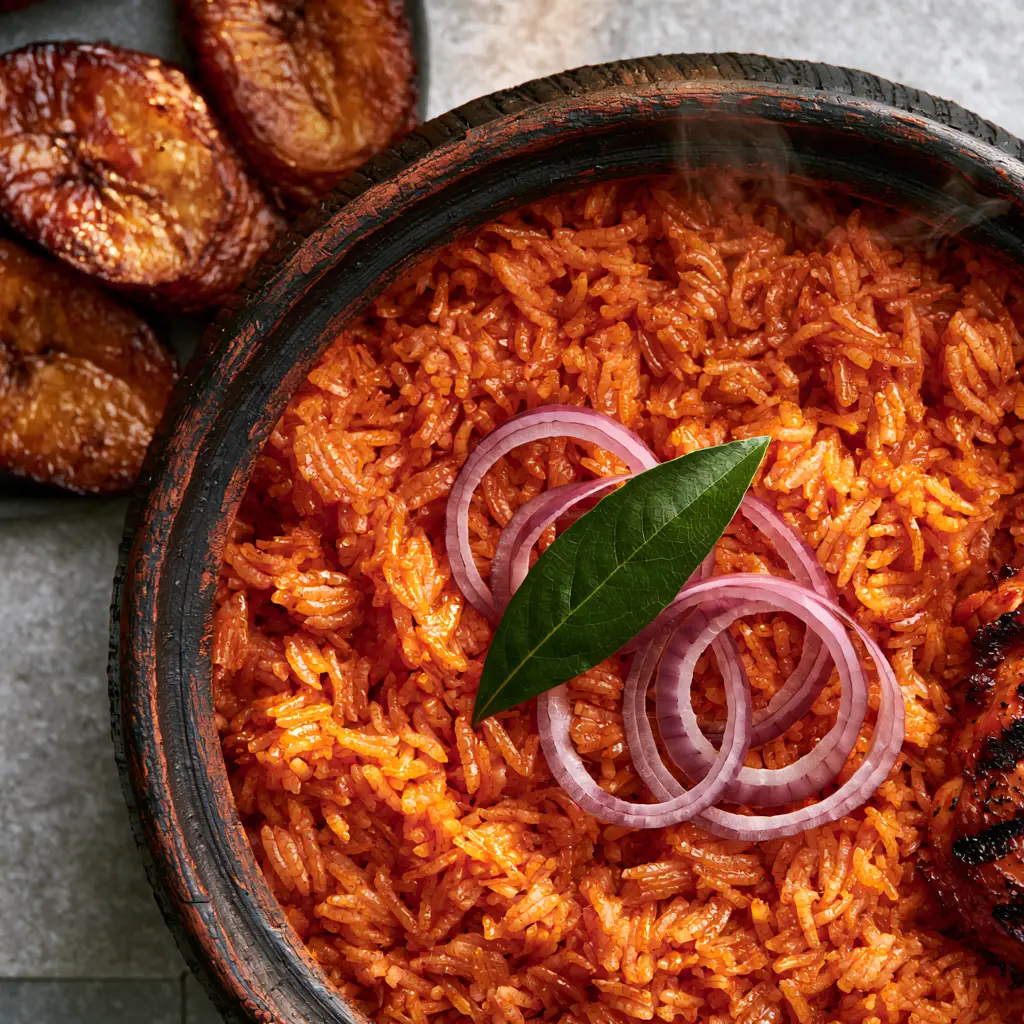
When you lift the lid off a traditional rustic black earthenware pot of authentic Nigerian Jollof Rice, the first thing that hits you isn’t just the heat—it is the aroma. A cloud of fragrant steam carries the scent of charred peppers, rich tomato, and warm spices, promising a culinary experience that is as much about texture as it is about taste.
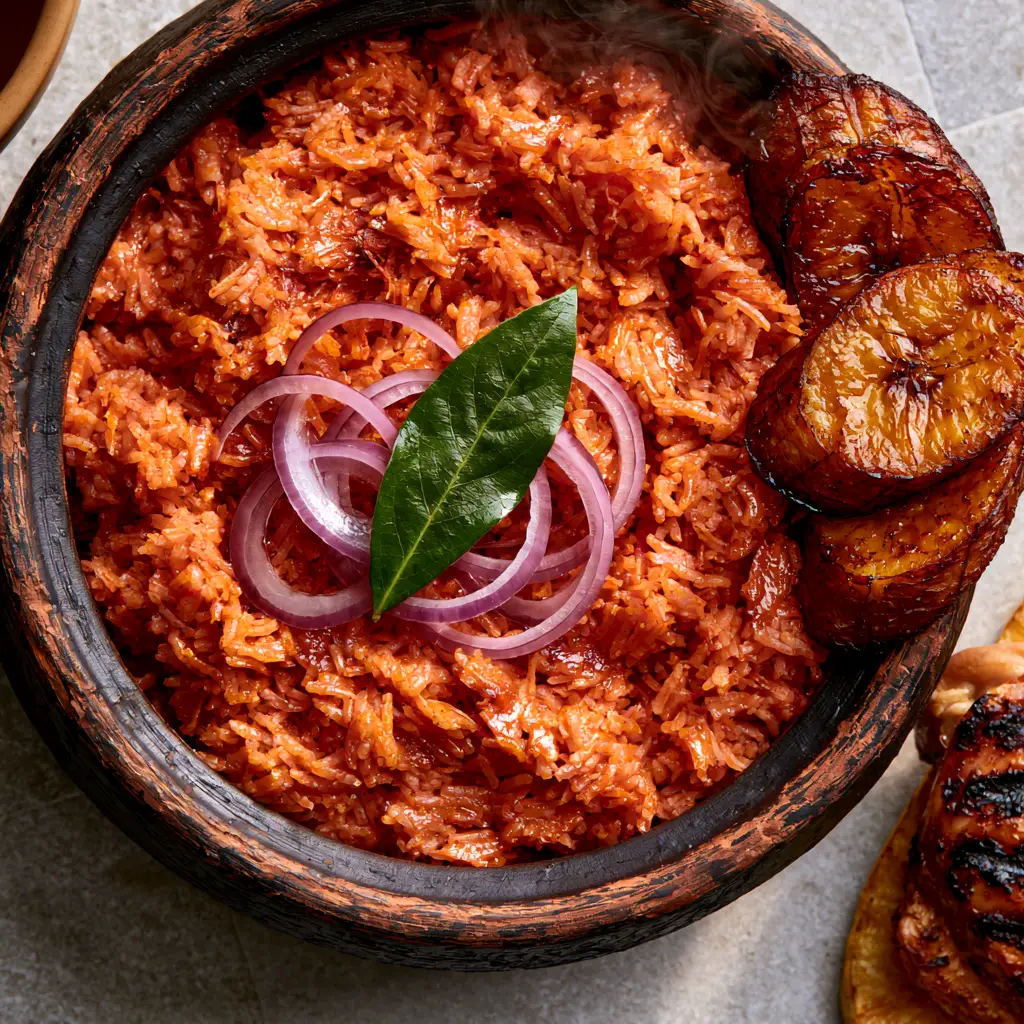
There is a specific visual standard for a world-class Nigerian Jollof Rice. Every single grain of long-grain parboiled rice must be distinct, glistening with aromatic oils, and boasting a vibrant reddish-orange hue that signals a deeply concentrated sauce base. It should never be mushy; instead, it should offer a gentle resistance to the tooth, standing proud alongside caramelized plantains and smoky grilled meats.
In this guide, we are diving deep into the forensics of the perfect pot. From the essential “Obe Ata” pepper base to the science of steaming under foil, you will learn how to recreate that iconic “Party Jollof” flavor in your own kitchen, complete with the charred chicken and sweet dodo that make this meal a legend.
Why This Vibrant Reddish-Orange Rice Reigns Supreme
- Perfect Grain Separation: By using the correct parboiling technique, we ensure every grain stays individual and glistening, never clumping or turning into a mash.
- Deep Flavor Profiling: We build layers of flavor starting with a fried pepper base, infused with bay leaves and aromatic oils for that authentic soul-satisfying taste.
- The Iconic Smoky Finish: Learn the professional “bottom-pot” technique that infuses the rice with a faint, toasted smokiness without needing an outdoor firewood setup.
- Visual Masterpiece: Topped with thin rings of fresh red onion and a single bright green bay leaf, this dish is designed to be the centerpiece of any table.
The Anatomy of Authentic Nigerian Jollof Rice Ingredients
To achieve the visual and textural perfection seen in our blueprint, the quality of your ingredients is paramount. We aren’t just boiling rice; we are slow-braising it in a concentrated essence of West African flavors.
Long-Grain Parboiled Rice: 4 cups (800g). This specific type of rice is sturdier than basmati, allowing it to withstand the long steaming process while maintaining distinct, separated grains.
The Red Pepper Base (Obe Ata): 3 large red bell peppers (450g), 5 medium plum tomatoes (300g), and 2 Scotch bonnet peppers. This blend provides the vibrant reddish-orange color and the foundational fruity heat that defines the dish.
Aromatic Oil and Onions: 1/2 cup (120ml) vegetable oil and 2 large red onions. We use half the onions for the blend and the other half for frying to create a sweet, savory oil base that coats every grain.
Chicken Stock: 3 cups (720ml) of high-quality, deeply seasoned stock. This provides the liquid required for the rice to swell, injecting protein-rich savory notes into the starch.
Tomato Paste: 6 oz (170g). This is the secret to the deep color; it must be fried in oil until it loses its raw tinny taste and turns a dark, brick red.
Foundational Spices: 2 tsp (4g) dried thyme, 2 tsp (4g) curry powder, 3-4 dried bay leaves, and 2 bouillon cubes (Maggi or Knorr). These spices provide the “warmth” and umami depth that lingers on the palate.
The Sides: 2 large ripe plantains and 4 chicken drumsticks. The plantains must be “yellow with black spots” to ensure they caramelize into golden-brown perfection, while the chicken provides the essential protein contrast.
Essential Tools for the Perfect Steamed Finish
While you can use a standard Dutch oven, a heavy-bottomed pot or a traditional earthenware vessel is ideal for heat distribution. You will also need a high-powered blender for the pepper base to ensure a perfectly smooth consistency before frying.
Crucially, you must have aluminum foil or parchment paper. Because we are steaming the rice rather than boiling it, a tight seal is mandatory to trap the steam and cook the grains evenly without adding excess water that could lead to mushiness.
Step 1: Preparing the Concentrated Pepper Essence
Start by blending your red bell peppers, tomatoes, Scotch bonnets, and one red onion until completely smooth. Pour this mixture into a pot and simmer over medium heat for 15-20 minutes until the water evaporates and you are left with a thick, concentrated paste.
This reduction is critical for the Nigerian Jollof Rice color. If the base is too watery, the rice will steam unevenly, and the flavor will be diluted; look for a consistency similar to a thick marinara sauce.
Step 2: Searing the Chicken and Infusing the Oil
Season your chicken drumsticks with salt, pepper, and a pinch of curry powder. In your main cooking pot, heat the vegetable oil and fry the chicken drumsticks until the skin is crispy and golden-brown.
Remove the chicken and set aside; the oil is now liquid gold, infused with chicken fat and spices. Add your sliced onions to this oil and sauté until translucent, then add the tomato paste, frying for 5-8 minutes until it darkens.
Step 3: The Slow-Fry Method for Flavor Depth
Pour the reduced pepper blend into the fried tomato paste and oil mixture. Add your bay leaves, thyme, curry powder, and bouillon cubes.
Fry the sauce on medium-low heat, stirring frequently. You will know it is ready when the oil begins to separate from the sauce and float to the top, and the color has shifted to a deep, vibrant crimson.
Step 4: Parboiling and Steaming the Rice
Wash your long-grain parboiled rice in hot water repeatedly until the water runs completely clear, removing all excess surface starch. Add the rice to the pot with the fried sauce and stir thoroughly to coat every single grain in the aromatic oil.
Pour in the chicken stock—the liquid should only just cover the rice (about 1/2 inch above the grain line). Place a sheet of aluminum foil over the pot, then press the lid down tightly; this traps the steam, which is what actually cooks the rice.
Reduce the heat to the lowest possible setting. Let the rice steam for 30 minutes without lifting the lid; you want to hear a very faint sizzle, which indicates the “bottom pot” is forming, providing that signature smoky flavor.
Step 5: Frying the Sweet Plantains and Grilling the Chicken
While the rice steams, peel and slice your plantains into diagonal rounds. Fry them in a separate pan with a little oil over medium heat until they are caramelized and golden-brown on both sides.
Take your par-fried chicken drumsticks and finish them under a broiler or on a grill for 5-10 minutes. This creates those visible char-grilled marks and ensures the skin is perfectly crispy before serving.
Expert Tips for Success
- The “No-Peek” Rule: Lifting the lid releases the steam required to cook the rice. Keep the lid sealed for at least 30 minutes to ensure the grains don’t end up hard.
- Watch the Liquid: It is better to start with less stock and add a splash more later than to swamp the rice. Too much liquid is the primary cause of mushy Jollof.
- The Smoke Factor: If you want more smoke, let the rice “burn” slightly at the very bottom for the last 5 minutes. This toasted layer (ipekere) infuses the entire pot with an outdoor-cooked aroma.
- Consistent Grain: Ensure you are using parboiled rice; if you try this with standard long-grain white rice or a creamy coconut rice (coming soon), the timing and liquid ratios will change significantly.
Storage, Reheating, and Make-Ahead Advice
Nigerian Jollof Rice is famous for tasting even better the next day as the spices have more time to penetrate the grains. Store leftovers in an airtight container in the refrigerator for up to 4 days.
To reheat, sprinkle a teaspoon of water over the rice and microwave it covered, or steam it briefly on the stovetop. This moisture revives the glistening texture of the oils without making the grains soggy.
What to Serve With Your Smoky Jollof
While this rice is a meal on its own, it is traditionally served as part of a larger spread. If you want a variety of textures, consider serving it alongside a seafood-infused side or even a crisp salad.
For those looking for a different protein profile, spicy chicken skewers complement the smoky notes of the rice beautifully. If you seek a meat-free version for guests, check out our plant-based jollof alternative (coming soon) which uses mushroom stock for depth.
Frequently Asked Questions
You can, but it is not traditional for Nigerian Jollof. Basmati is more fragile and requires significantly less liquid and a shorter steaming time to avoid turning into a mash.
While ‘parboiled rice’ refers to the type of grain, many chefs also pre-cook the rice in boiling water for 5 minutes before adding it to the sauce to further ensure grain separation.
The secret is the ‘bottom pot’ method. Let the rice slightly burn/toast at the very bottom of the pot during the last 5 minutes of steaming. This infuses the whole pot with a smoky aroma.
The color comes from frying a high ratio of red bell peppers and tomato paste. Frying the paste until it darkens before adding liquid is key to achieving that vibrant reddish-orange hue.
Mushiness usually occurs due to excess water or using the wrong rice. Ensure you use long-grain parboiled rice and rely on steam (trapped by foil) rather than boiling water to cook the grains.
The Perfect Smoky Nigerian Jollof Rice Recipe
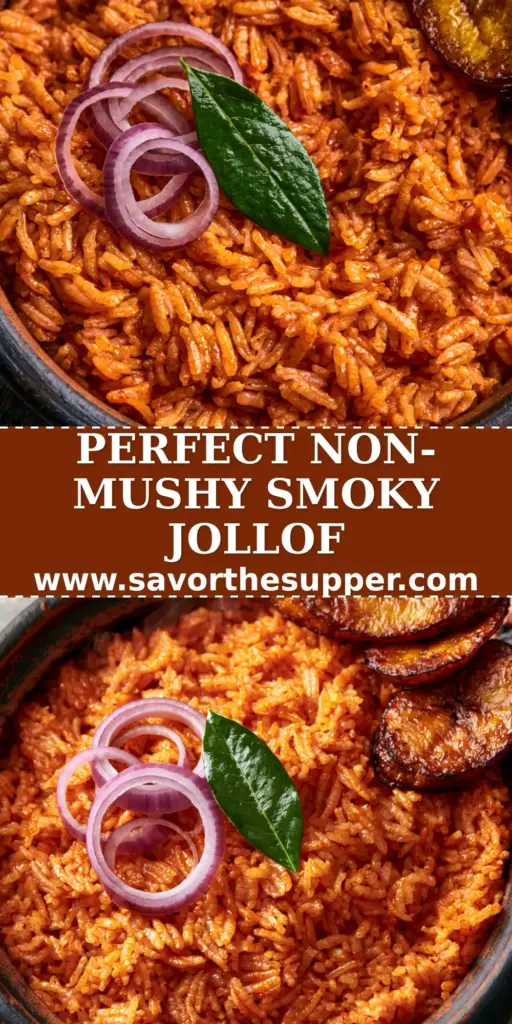
Nigerian Jollof Rice: The Ultimate Guide to Smoky, Perfectly Grainy Party Rice
Ingredients
Equipment
Method
- Blend bell peppers, tomatoes, Scotch bonnets, and one onion. Simmer in a pot for 20 minutes until reduced to a thick paste.
- Sauté the second sliced onion in oil, add tomato paste and fry for 8 minutes until it darkens. Stir in the reduced pepper blend and spices.
- Cook the sauce until the oil separates and floats to the top, indicating the raw pepper taste is gone.
- Stir in washed rice to coat with oil. Add chicken stock. Cover with foil and a tight lid. Steam on low heat for 30 minutes.
- Fry sliced plantains until golden. Grill the drumsticks until charred. Garnish rice with raw onion rings and a fresh bay leaf.
Notes
Trapping steam with foil is more important than the amount of water used.
A Legacy in Every Grain
Mastering the Nigerian Jollof Rice is a rite of passage for any serious home cook. It is a dish that demands patience, a bit of culinary “forensics” to get the pepper ratios right, and an appreciation for the subtle art of steaming.
When you serve this vibrant, reddish-orange masterpiece in its rustic pot, topped with fresh red onion and that iconic bay leaf, you aren’t just serving dinner—you are serving a piece of West African culture. If you enjoyed this recipe, please leave a comment below and share your photos with us on Pinterest!