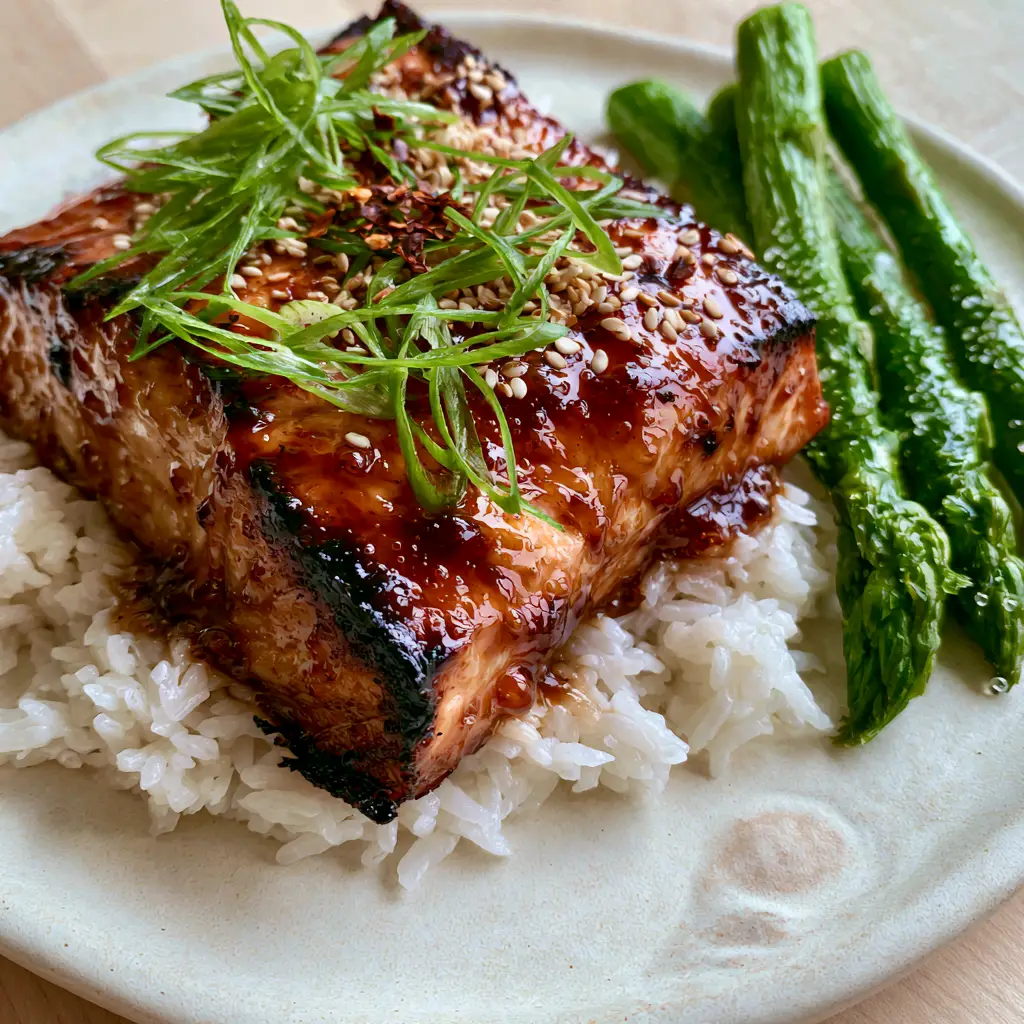
There is something inherently hypnotic about a thick Atlantic salmon fillet glistening under a deep amber, sticky honey garlic glaze. When that glaze begins to bubble and caramelize against the heat of a cast-iron skillet, it creates a culinary masterpiece that looks as good as it tastes.
This honey glazed salmon recipe is designed to bridge the gap between a high-end restaurant entree and a reachable weeknight dinner. We are aiming for that macro-photography finish: flaky, succulent fish with perfectly seared, slightly charred edges that provide a smoky contrast to the floral sweetness of the honey.
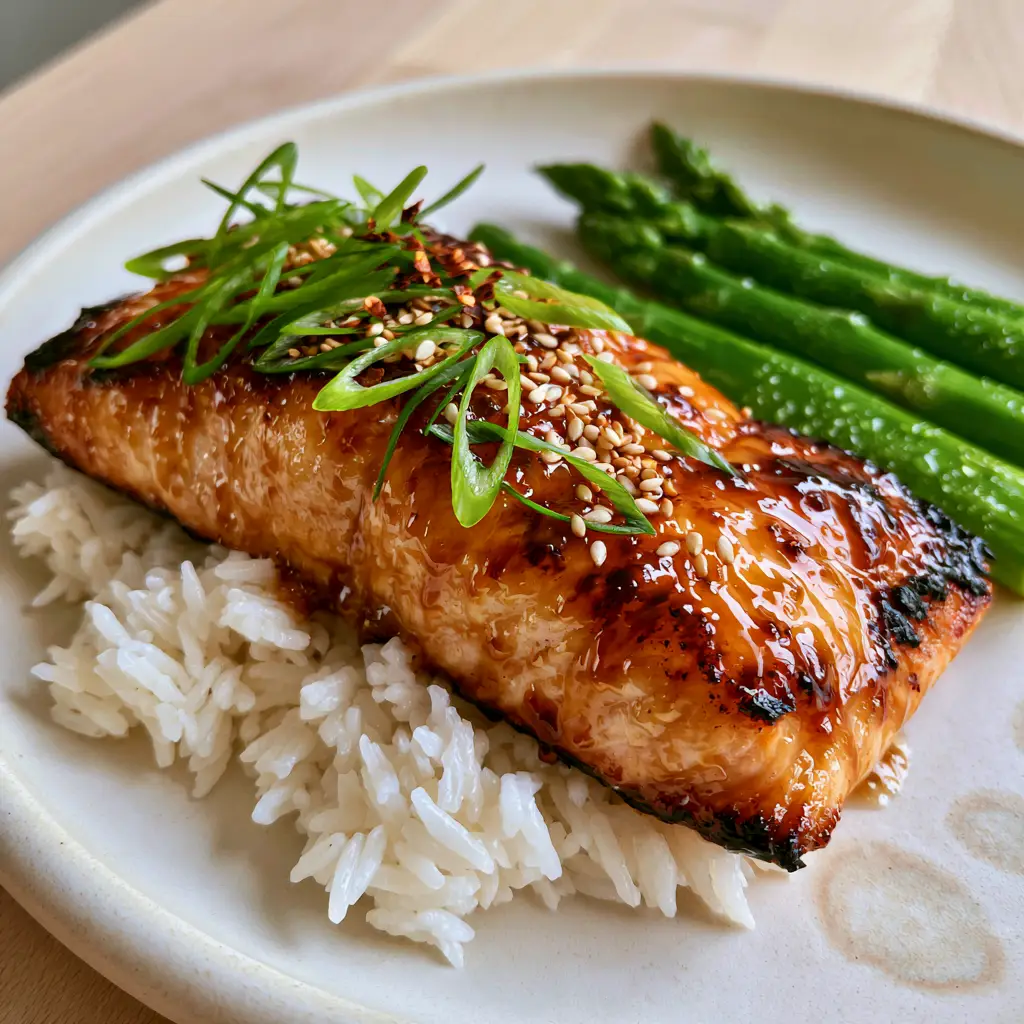
By pairing this protein with fluffy jasmine rice and vibrant, snap-crisp asparagus, you create a balanced plate that hits every sensory note. From the crunch of toasted sesame seeds to the subtle heat of red pepper flakes, every ingredient serves a visual and structural purpose.
Why This Pan-Seared Honey Glazed Salmon Works
- The Viscosity Factor: We don’t just pour honey over fish; we reduce a garlic-infused glaze until it reaches a syrupy consistency that clings to every flake.
- Textural Contrast: The “snap-crisp” steamed asparagus provides a refreshing break from the rich, buttery texture of the Atlantic salmon.
- Perfect Caramelization: By using a high-heat searing technique, we achieve those charred, candy-like edges without overcooking the center of the fillet.
- Aromatic Foundation: Fresh green onions and toasted white sesame seeds add a layer of toasted nuttiness and sharp freshness that cuts through the sugar.
The Anatomy of an Elite Honey Garlic Glaze
To achieve the results seen in professional food photography, you need more than just honey. The science of a great glaze involves balancing sugar, acid, and fat to ensure it bubbles beautifully under heat.
Atlantic Salmon Fillets: Look for thick-cut fillets, approximately 6 oz (170g) each. Thick fillets are essential because they allow the exterior to char while the interior remains a succulent, medium-rare pink.
Raw Honey: Use 1/4 cup (60ml) of high-quality honey. Honey acts as our primary sweetener and the catalyst for the Maillard reaction, which creates that deep amber color.
Fresh Garlic: Four cloves of minced garlic provide the pungent aromatic base. As the garlic toasts in the honey, it loses its bite and becomes mellow and savory.
Soy Sauce: 2 tbsp (30ml) of low-sodium soy sauce adds the necessary salt and umami. It also deepens the color of the glaze, moving it from a golden yellow to a rich mahogany.
Fresh Lemon Juice: 1 tbsp (15ml) of acid is the “invisible” ingredient. It balances the cloying sweetness of the honey and brightens the flavor of the fish.
Avocado Oil: 1 tbsp (15ml) of a high-smoke-point oil is required for the initial sear. Unlike butter, avocado oil won’t burn at the temperatures needed to achieve charred edges.
Foundational Seasoning: Never skip 1/2 tsp (3g) of kosher salt and 1/4 tsp (1g) of cracked black pepper to season the raw flesh before it hits the pan.
Essential Tools for Professional Results
Achieving a restaurant-quality honey glazed salmon requires the right heat conduction. A heavy-bottomed stainless steel or cast-iron skillet is non-negotiable for that specific charred crust.
You will also need a steamer basket for the asparagus to ensure they maintain their “vibrant green” hue and “snap-crisp” texture. Overboiling vegetables is the fastest way to ruin the visual appeal of a dish.
Finally, a wide fish spatula is helpful for flipping the fillets without breaking the delicate protein fibers once the salmon begins to flake.
How to Master the Sear and Glaze
Preparing the Fluffy Jasmine Rice
Start by rinsing 1 cup (185g) of jasmine rice under cold water until the water runs clear. This removes excess starch, ensuring the rice is “fluffy” and individual rather than gummy.
Combine the rice with 1.5 cups (350ml) of water and a pinch of salt. Bring to a boil, then reduce to a simmer, cover, and cook for 15 minutes. Let it sit covered for 5 minutes before fluffing with a fork.
Achieving the Perfect Snap-Crisp Asparagus
Trim the woody ends off 1 bunch (approx. 454g) of asparagus. Place them in a steamer basket over boiling water for 3 to 4 minutes.
You are looking for a visual change to “vibrant green.” Immediately remove them from the heat; they should still have a firm “snap” when bitten. These should show tiny droplets of moisture on the plate for that fresh, macro-look.
Searing the Atlantic Salmon
Pat the salmon fillets completely dry with paper towels. This is the secret to a crust; moisture is the enemy of a sear. Season both sides with salt and pepper.
Heat the avocado oil in your skillet over medium-high heat until it shimmers. Place the salmon flesh-side down. Press down lightly to ensure total contact. Sear for 3-4 minutes until a deep golden-brown crust forms on the edges.
Developing the Bubbling Honey Garlic Glaze
Flip the salmon. Lower the heat to medium and add the honey, soy sauce, lemon juice, and minced garlic to the pan. As the honey melts, it will begin to bubble vigorously.
Use a spoon to continuously baste the salmon with the liquid. As the water evaporates, the glaze will thicken into a “viscous” syrup. Watch for the edges of the salmon to turn slightly charred and dark amber.
Expert Tips for Visual and Flavor Success
- Don’t Move the Fish: Once the salmon hits the hot oil, leave it alone. Moving it too early will tear the flesh and prevent the formation of those beautiful charred edges.
- Baste Constantly: The bubbling action of the glaze is what cooks the top of the fish and creates that glistening, smartphone-ready sheen.
- Check for Doneness: Salmon is done when it reaches an internal temperature of 125°F (52°C) for medium. It will continue to cook slightly once removed from the pan.
- Garnish with Precision: Scatter the green onions, sesame seeds, and red pepper flakes from a height. This ensures an even, professional distribution rather than clumps.
The Best Pairings for Honey Glazed Salmon
While jasmine rice is the classic choice, you might also enjoy this salmon alongside other globally-inspired dishes. If you love the profile of this glaze, you must try my Gochujang honey glazed salmon for a spicy Korean twist.
For those who prefer a more Mediterranean approach to seafood, consider serving this after a starter of Salmon all’arrabbiata. If you’re looking for more “snap-crisp” vegetable inspiration, check out my guide to French side dishes.
If you’re meal prepping, this salmon goes beautifully in ground beef bowl recipes style setups—just swap the protein for a high-omega alternative.
Storage, Reheating, and Freezing
To Store: Keep the salmon and glaze in an airtight container in the refrigerator for up to 3 days. Store the rice and asparagus separately to maintain their textures.
To Reheat: Avoid the microwave if possible, as it can make the salmon rubbery. Instead, place the salmon in a pan over low heat with a splash of water and cover it until warmed through.
To Freeze: I do not recommend freezing the cooked asparagus as it loses its snap. However, the honey glazed salmon can be frozen for up to 2 months. Thaw overnight in the fridge before reheating.
Common Questions About Pan-Seared Salmon
Yes! If using skin-on, sear the skin side first for 4-5 minutes to get it crispy, then flip and add the glaze. The skin adds a wonderful texture to the final dish.
The secret is reduction. You must let the honey and soy sauce mixture bubble in the hot pan for at least 2-3 minutes. As the moisture evaporates, the glaze becomes viscous and clings to the fish.
Jasmine rice is preferred for its floral aroma and fluffy texture, which absorbs the extra honey garlic glaze beautifully. Brown rice works but has a nuttier profile that can compete with the glaze.
Your pan likely isn’t hot enough, or you are using an oil with a low smoke point like butter. Use avocado oil and ensure the pan is shimmering before adding the fish.
The Ultimate Honey Glazed Salmon Recipe
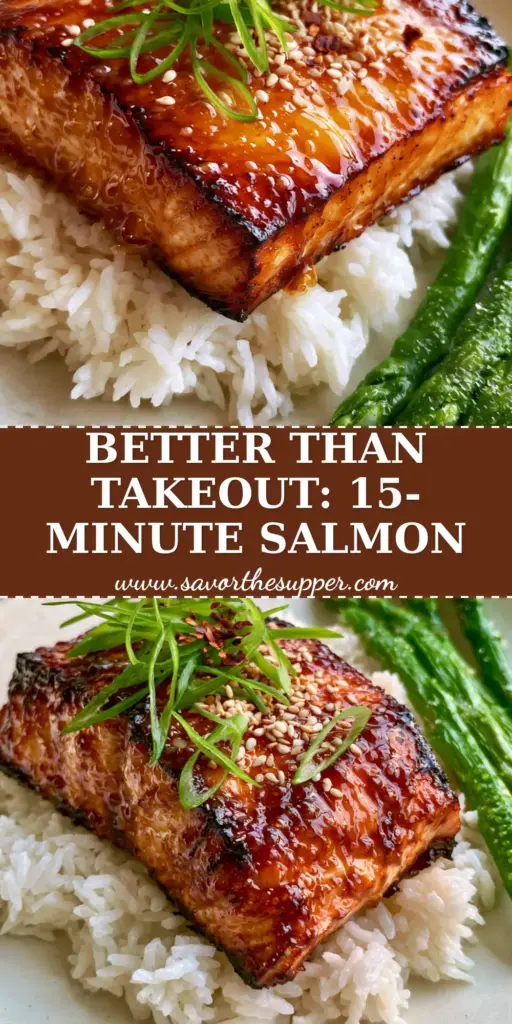
Honey Glazed Salmon with Garlic and Charred Edges
Ingredients
Equipment
Method
- Combine rinsed jasmine rice with 1.5 cups water. Bring to boil, simmer covered for 15 minutes, then fluff.
- Steam asparagus for 3-4 minutes until vibrant green and snap-crisp. Remove immediately.
- Heat oil in skillet. Pat salmon dry, season, and sear flesh-side down for 3-4 minutes until charred edges appear.
- Flip salmon. Add honey, garlic, soy sauce, and lemon. Baste bubbling glaze over fish for 2-3 minutes until viscous.
- Top with green onions, sesame seeds, and red pepper flakes before serving on rice.
Notes
Do not overcook; salmon should flake easily with a fork.
Final Thoughts on This Glossy Atlantic Salmon
Mastering honey glazed salmon is about the harmony of heat and sugar. When you see that glaze glistening and the sesame seeds clinging to the charred edges, you know you’ve created something special. This dish isn’t just about feeding the body; it’s a visual feast that celebrates the beauty of fresh ingredients.
If you enjoyed the succulent texture of this dish, please leave a comment below and let me know how your sear turned out! Don’t forget to share your photos and follow savorthesupper on Pinterest for more culinary inspiration.