French crepes are the pinnacle of elegant breakfast craftsmanship, offering a delicate, translucent texture that practically melts on the tongue. Unlike their thicker American pancake cousins, these crepes are defined by their incredible flexibility and intricate, lacy edges.
To achieve the perfect French crepes, one must master the balance of a thin, pourable batter and the precise heat required for that iconic golden-brown leopard spotting. This recipe focuses on the sensory details—the sizzle of salted butter and the soft, buttery sheen that characterizes an authentic Parisian street-side treat.
Whether you are folding them into quarters or rolling them with decadent fillings, the visual appeal of these crepes is undeniable. With their micro-pores and soft, non-cracking edges, they represent a true culinary art form that is surprisingly achievable in your own kitchen.
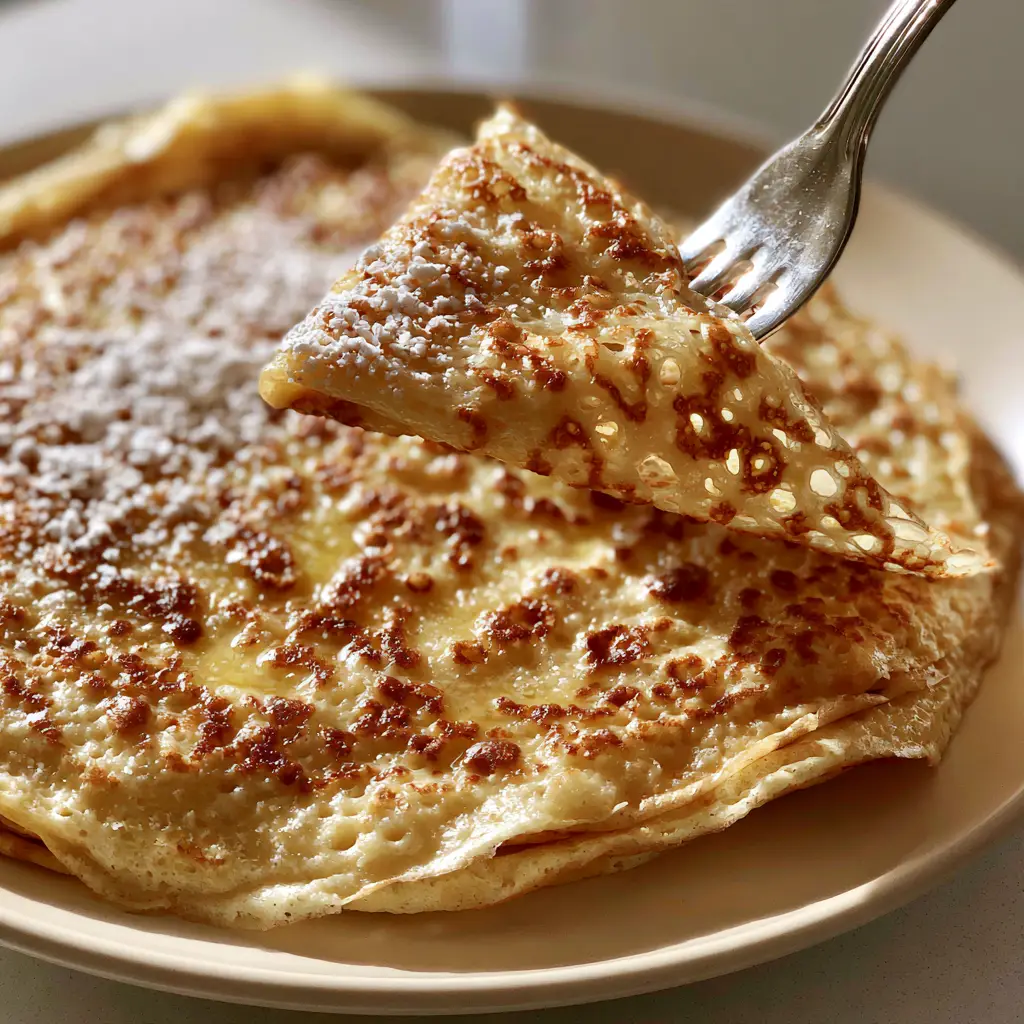
The Signature Characteristics of Authentic French Crepes
- Translucent Flexibility: The batter is specifically engineered to be paper-thin, allowing light to pass through when lifted with a silver fork.
- Golden Leopard Spotting: Controlled caramelization of milk solids creates a beautiful, mottled pattern across the surface of the crepe.
- Salted Butter Glaze: A final brush of melted salted butter provides a savory contrast to the delicate sweetness of the batter.
- Zero Dryness: Through proper heat management and a quick steam-stacking method, the edges remain soft and supple rather than crisp or brittle.
- Micro-Porous Surface: Small pores across the crepe’s face perfectly catch and hold a microscopic dusting of ultra-fine powdered sugar.
The Science of Thinness: Essential Ingredients for French Crepes
All-Purpose Flour (140g / 1 cup): This provides the necessary structure without being too heavy, ensuring the crepe holds together even when stretched to its thinnest point.
Large Eggs (3): Eggs act as the primary binder and contribute to the rich, golden hue and the “leopard spotting” during the searing process.
Whole Milk (300ml / 1 ¼ cups): The fats in whole milk are crucial for creating a soft crumb and facilitating the Maillard reaction for better flavor.
Filtered Water (60ml / ¼ cup): Adding a small amount of water thins the proteins in the milk, resulting in a significantly lighter, more translucent crepe.
Melted Salted Butter (45g / 3 tbsp): Incorporating butter directly into the batter prevents sticking and creates that signature “leopard” pattern when it hits the hot pan.
Granulated Sugar (12g / 1 tbsp): A touch of sugar aids in browning and provides a subtle base for the final dusting of powdered sugar.
Pure Vanilla Extract (5ml / 1 tsp): This aromatic ingredient bridges the gap between the savory butter and the sweet toppings.
Fine Sea Salt (pinch): A tiny amount of salt enhances the sweetness and mimics the authentic flavor profile of a Breton galette.
The Culinary Toolkit for Mastering Translucent Crepes
To achieve the professional results seen in our visuals, a 10-inch (25cm) non-stick crepe pan or a well-seasoned carbon steel skillet is essential. The low sides of a dedicated crepe pan allow for easy flipping without tearing the delicate, paper-thin edges.
A small silicone pastry brush is required to apply the melted salted butter glaze evenly across the surface. For the final aesthetic touch, a fine-mesh sieve is indispensable for achieving that microscopic dusting of powdered sugar that looks like a light morning frost.
Step-by-Step Evolution of the Perfect French Crepes
Blending and Hydrating the Batter
Combine the flour, sugar, and salt in a large bowl. Gradually whisk in the eggs, milk, water, and melted butter until the mixture is the consistency of heavy cream. For the absolute best results, strain the batter through a fine-mesh sieve to remove any micro-lumps of flour.
Crucially, allow the batter to rest in the refrigerator for at least 30 minutes. This allows the gluten to relax and the flour to fully hydrate, ensuring your French crepes are flexible and lacy rather than rubbery or tough.
The Art of the Swirl and Sear
Heat your pan over medium-high heat until a drop of water sizzles instantly. Lightly grease the surface with a tiny bit of butter, then pour about 1/4 cup (60ml) of batter into the center while simultaneously swirling the pan.
Listen for a gentle hiss; this indicates the pan is hot enough to create the micro-pores. Cook for approximately 60-90 seconds until the edges start to lift naturally and you see golden-brown leopard spotting on the underside.
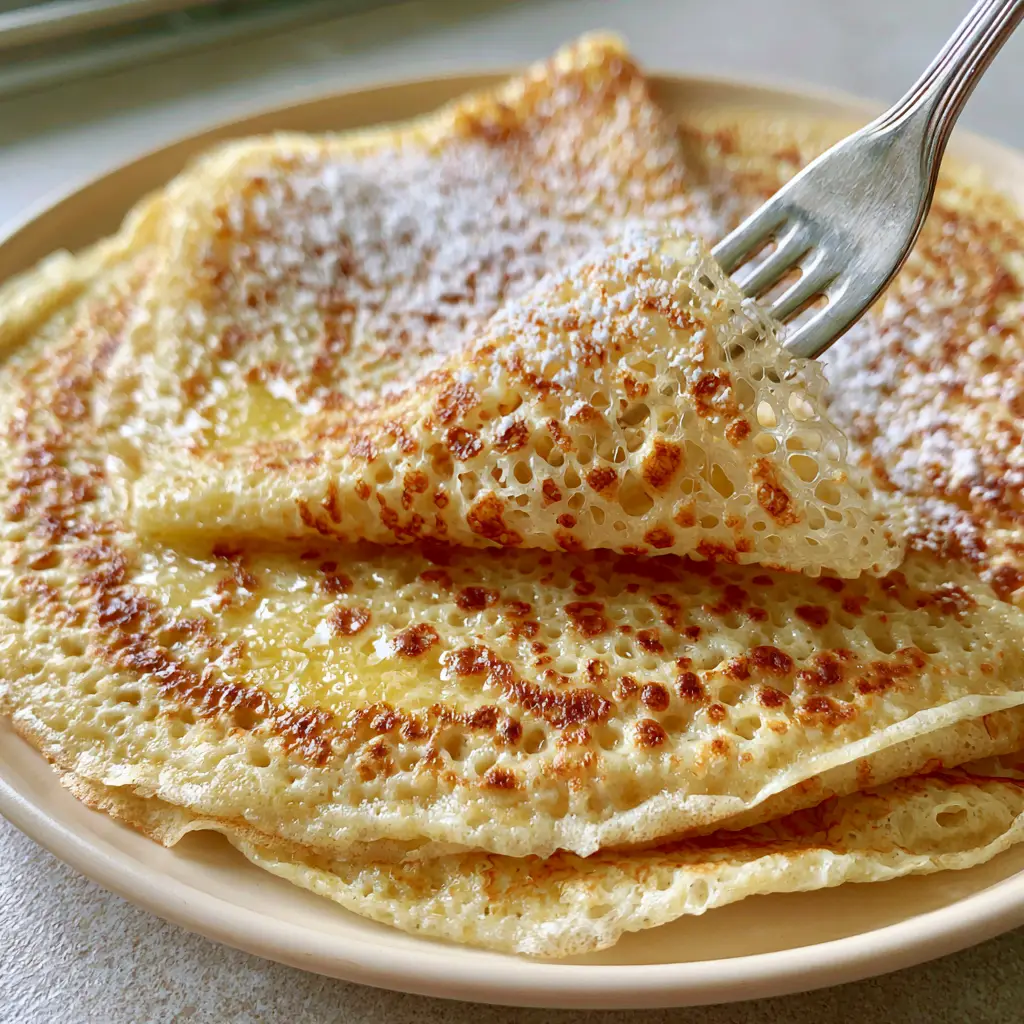
Achieving the Buttery Glow and Soft Stack
Quickly flip the crepe and cook the second side for a mere 20-30 seconds. Slide the crepe onto a matte cream ceramic plate and immediately brush the top with a thin layer of melted salted butter.
Stack the crepes as you go, covering them with a clean kitchen towel. This creates a small amount of steam that ensures the edges stay soft and pliable, preventing the dryness often found in inferior recipes.
Expert Troubleshooting for Flawless Leopard Spotting
- Avoid Over-Greasing: Too much oil in the pan will cause the batter to slide rather than grip, resulting in uneven patches instead of delicate spots.
- Temperature Control: If the crepes are pale, increase the heat slightly; if they are dark brown without spots, your pan is likely too hot for the sugars to caramelize slowly.
- The Resting Phase: Never skip the 30-minute rest. This is the difference between a crepe that tears and one that is incredibly flexible.
- Sift the Sugar: Only apply the powdered sugar once the butter glaze has slightly set to prevent the sugar from dissolving into a syrup.
Preserving Freshness: Storage and Reheating
Leftover French crepes can be stored in the refrigerator for up to 3 days. Place a small piece of parchment paper between each crepe to prevent them from sticking together, then wrap the stack tightly in plastic wrap.
To reheat, place a single crepe in a dry non-stick pan over low heat for 30 seconds per side. This revives the salted butter glaze and restores the lacy texture without drying out the edges.
The Best Accompaniments for a Parisian Morning
To turn these French crepes into a full meal, consider serving them alongside classic French side dishes such as a fresh herb omelet or seasonal fruit. If you enjoy the texture of thin pancakes, you might also find the variations in African-style crepes fascinating to compare.
For a heartier brunch, pair your crepes with a light crisp cucumber salad or even some sophisticated lunchable components for a balanced sweet-and-savory spread. If you are serving these as a dessert, they go wonderfully after a meal of Chicken Cordon Bleu.
Frequently Asked Questions
Yes, a blender is excellent for achieving a smooth, micro-pore texture. Just be sure to let the batter rest for 30 minutes afterward to allow the air bubbles to settle before cooking.
Leopard spotting is achieved by using a combination of milk solids and butter in the batter, cooked on a medium-high, evenly heated non-stick surface. Avoid over-greasing the pan, which leads to solid browning rather than spots.
The secret is adding a small amount of water to the milk and ensuring your pan is hot enough that the batter sets the moment it is swirled. The batter should be the consistency of heavy cream, not pancake batter.
Rubbery crepes are usually caused by over-mixing the batter or failing to let it rest. Resting allows the gluten to relax and the flour to fully hydrate, ensuring a tender, paper-thin result.
Crispy edges happen when the crepe is cooked for too long or at too low a temperature. To keep them soft, stack the cooked crepes and cover them with a towel to let the residual steam soften the edges.
The Official French Crepes Recipe Card
French Crepes: The Ultimate Guide to Paper-Thin Lacy Crepes with Leopard Spotting
Ingredients
Equipment
Method
- Whisk flour, sugar, and salt. Add eggs, milk, water, vanilla, and melted butter. Blend until smooth and strain through a sieve to ensure a translucent, lump-free texture.
- Cover and refrigerate for 30 minutes. This is essential for the gluten to relax, creating the flexibility seen in the final French crepes.
- Heat a non-stick pan over medium-high. Pour 1/4 cup of batter and swirl quickly to coat the bottom in a paper-thin layer.
- Cook for 90 seconds until golden-brown leopard spotting appears and edges are lacy. Flip and cook for 20 more seconds.
- Brush each warm crepe with melted salted butter. Stack them to keep the edges soft and moist.
- Sift a microscopic dusting of powdered sugar over the stack before serving on a warm ceramic plate.
Notes
Use a pastry brush for the butter glaze to ensure even, thin coverage without soaking the crepe.

Bringing the Bistro Home: Closing Thoughts
Mastering French crepes is a rite of passage for any home cook looking to elevate their breakfast repertoire. The combination of the lacy texture, the salted butter glaze, and the gentle morning light makes for an unforgettable dining experience that appeals to all the senses.
We would love to see your “leopard spotting” success! Please leave a comment below with your favorite fillings, and don’t forget to share this recipe to Pinterest to save it for your next lazy Sunday morning.