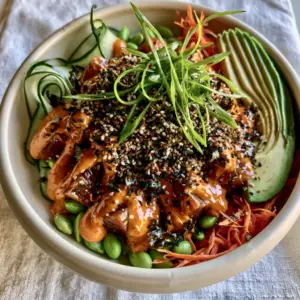
Embarking on a journey toward health doesn’t mean sacrificing the deep, savory satisfaction of a gourmet meal. When we look at Japanese recipes for weight loss, we discover a culinary philosophy that prioritizes nutrient density, vibrant colors, and the elusive fifth taste: umami. This Miso-Glazed Salmon Bowl is a masterclass in functional nutrition, designed to keep you satiated while delighting every one of your senses.
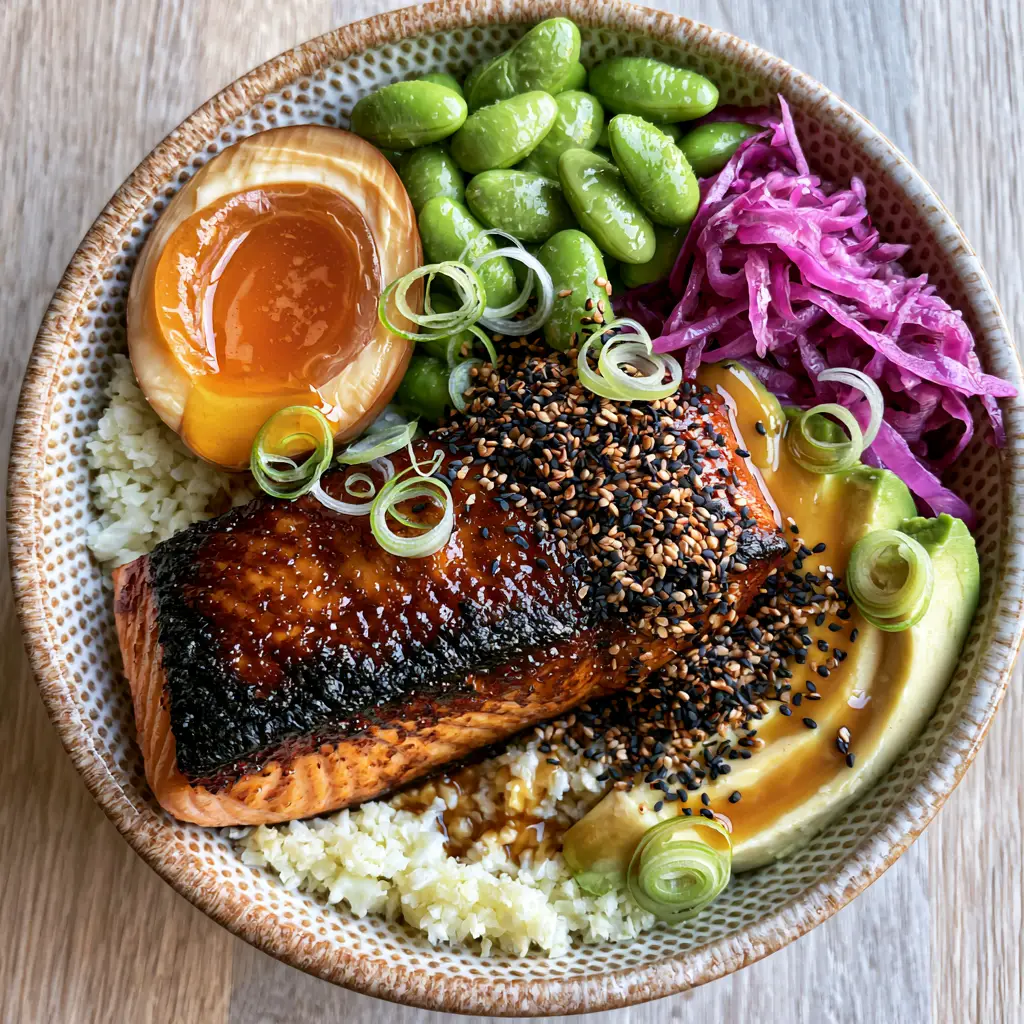
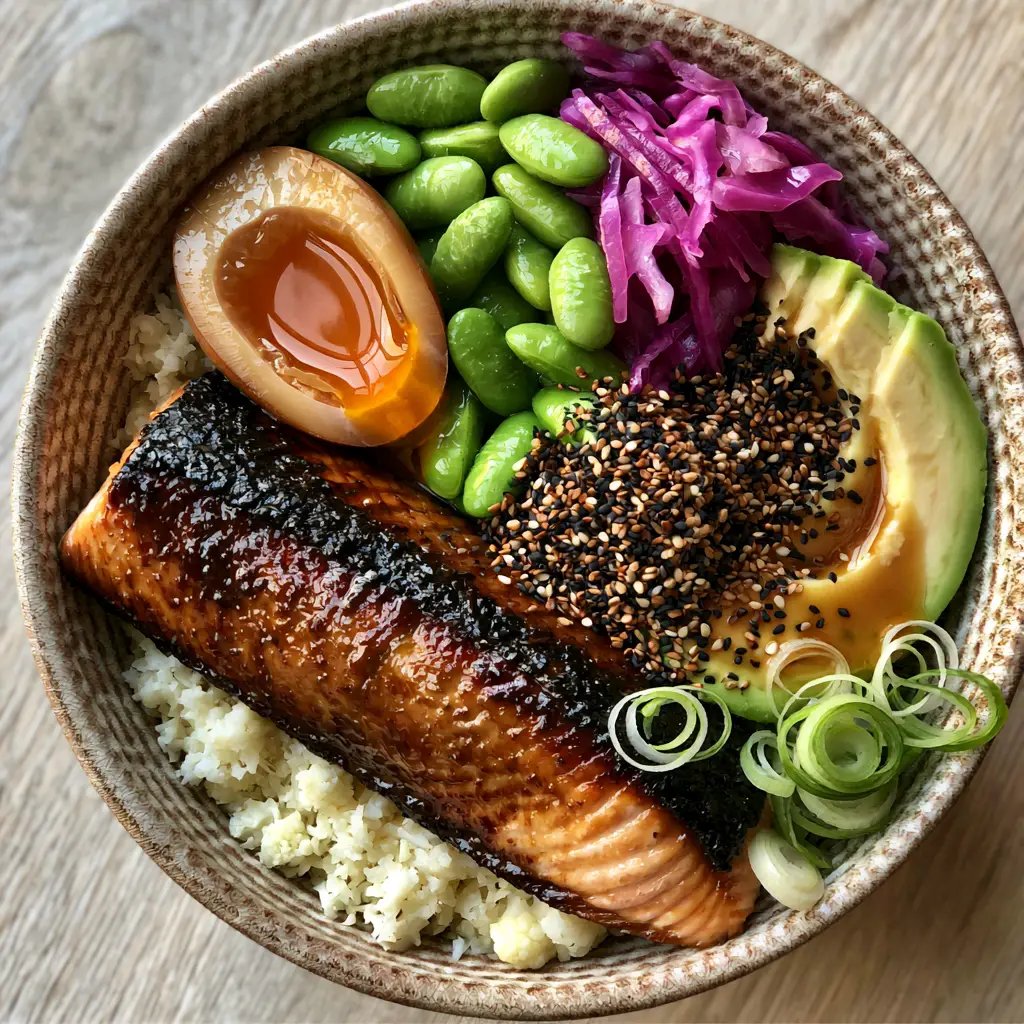
Imagine a textured ceramic bowl filled with the aroma of toasted sesame and fresh ginger. At its center lies a perfectly seared miso-glazed salmon fillet, boasting crispy charred edges and a glossy brown sheen that catches the natural morning light. This isn’t just a meal; it’s a visual and textural symphony that aligns perfectly with your wellness goals without ever feeling like a “diet” dish.
By replacing traditional white rice with a fluffy cauliflower rice base, we significantly reduce the caloric load while increasing fiber. The addition of a jammy soft-boiled egg—its liquid orange yolk waiting to be broken—adds a luxurious creaminess that rivals any high-calorie sauce. This is the gold standard of Japanese recipes for weight loss, proving that you can have your crispy, savory salmon and eat it too.
Why This Nutrient-Dense Bowl Works for Your Goals
- High-Protein Satiety: The combination of fresh salmon and a soft-boiled egg provides a double dose of high-quality protein to support muscle maintenance and keep hunger at bay.
- Low-Carb Innovation: Using cauliflower rice as a base allows for a massive volume of food for a fraction of the carbohydrates found in traditional grain bowls.
- Metabolic Boosters: Ingredients like fresh ginger and fermented miso paste support digestion and provide a healthy dose of probiotics and anti-inflammatory compounds.
- Visual Fullness: The “rainbow” of purple cabbage, bright green edamame, and orange salmon triggers visual satisfaction, which studies suggest can lead to better portion control.
Essential Elements for an Authentic Umami Experience
To achieve the specific visual results of a glossy, charred salmon and vibrant vegetables, you need high-quality components. Each ingredient in this recipe serves a structural and nutritional purpose, ensuring the final dish looks exactly like a professional food photograph.
Center-Cut Salmon Fillets: Choose 6 oz (170g) portions with the skin on. The skin provides a natural barrier that allows the flesh to stay moist while the miso glaze caramelizes into those signature charred edges.
White Shiro Miso: This milder, slightly sweet fermented soybean paste creates the base of our glaze. It provides that essential “glossy brown sheen” described in our visual blueprint without overpowering the delicate fish.
Fresh Cauliflower: You will need 1 large head (approx. 600g) or pre-riced cauliflower. This serves as our neutral, fluffy base that absorbs the ginger-soy drizzle beautifully.
Red Cabbage: Half a small head (250g) of purple cabbage provides the vibrant pop of color. We will quick-pickle this in rice vinegar to add a necessary acidic brightness to the bowl.
Avocado: Half a medium avocado (approx. 80g) per bowl. The creamy fats in the avocado balance the salty miso and the sharp acidity of the pickled cabbage.
Shelled Edamame: 1/2 cup (75g) of bright green beans. These provide a popping textural contrast and a boost of plant-based protein and fiber.
Large Eggs: Use the freshest eggs possible for that liquid orange yolk. We will cook these for exactly 6 minutes and 30 seconds to reach “jammy” perfection.
Aromatic Drizzle Ingredients: You will need low-sodium soy sauce (or tamari), fresh grated ginger, and a hint of sesame oil. This creates the “thin ginger-soy dressing” that ties the elements together.
Finishing Touches: Toasted black sesame seeds and scallions. The scallions should be sliced into “delicate curls” by cutting them thinly on a sharp bias and soaking them in ice water.
Foundational Pantry Staples for Weight Loss Cooking
In addition to our visual stars, we need a few “invisible” ingredients to ensure success. Use a high-smoke point oil, such as 1 tbsp (15ml) of avocado oil, for searing the salmon to prevent sticking and burning. A pinch of sea salt and cracked black pepper are essential for seasoning the cauliflower rice, though we must be mindful of the salt already present in the miso.
If you enjoy this style of assembly, you might also love our savory ground beef bowls which follow a similar high-protein, vegetable-forward philosophy. For those looking for even faster options, our collection of quick weeknight recipes offers plenty of inspiration for the busy home cook.
Professional Tools for Culinary Precision
Achieving the perfect “charred edge” on your salmon requires a heavy-bottomed skillet, preferably cast iron or high-quality stainless steel. This ensures even heat distribution and a superior sear. You will also need a fine-mesh grater or Microplane for the ginger to ensure the dressing is thin and smooth, rather than chunky.
A small saucepan is required for the eggs, along with a slotted spoon to gently lower them into the boiling water. Finally, a sharp chef’s knife is non-negotiable for creating those delicate scallion curls and perfectly even avocado slices. If you are building your kitchen arsenal, these tools are just as important for Mediterranean cooking, such as our spicy salmon all’arrabbiata.
Mastering the Art of the Perfect Miso Sear
Preparing the Signature Miso Glaze
In a small bowl, whisk together 2 tbsp (30g) of white miso, 1 tbsp (15ml) of mirin, and 1 tsp (5ml) of honey or maple syrup. The sugars in the mirin and honey are what create that “glossy brown sheen” when exposed to heat. Brush this generously over the top of your salmon fillets, allowing them to marinate for at least 10 minutes at room temperature before they hit the pan.
Achieving the 6.5-Minute Jammy Egg
Bring a pot of water to a rolling boil. Carefully lower your eggs into the water and immediately reduce to a simmer. Set a timer for 6 minutes and 30 seconds. While they cook, prepare an ice bath. Once the timer beeps, plunge the eggs into the ice water to stop the cooking process instantly. This technique guarantees the “translucent liquid orange yolk” that defines a high-end Japanese bowl.
Searing for Texture and Color
Heat 1 tbsp (15ml) of oil in your skillet over medium-high heat until it shimmers. Place the salmon fillets in the pan, skin-side down first. Press down lightly with a spatula to ensure even contact. Sear for 4 minutes until the skin is ultra-crispy. Flip carefully and sear the miso-coated side for only 1-2 minutes. Watch closely; the miso can go from “crispy charred” to burnt quickly due to the sugar content.
Constructing the Vibrant Vegetable Base
Sauté your cauliflower rice in the same pan (after removing the salmon) for 3-4 minutes with a splash of water or broth until tender but not mushy. Meanwhile, toss your shredded cabbage with 2 tbsp (30ml) of rice vinegar and a pinch of salt. The acidity will cause the purple hues to brighten significantly, creating the “vibrant purple” look required for visual excellence.
Expert Tips for Visual and Culinary Success
- The Ice Water Trick: To get the scallions to curl into “delicate curls,” slice them as thin as possible on a long diagonal, then drop them into a bowl of ice water for 5 minutes. They will naturally twist and crisp up.
- Preventing Miso Burn: If your skillet is running too hot, the miso glaze will blacken before the fish is cooked. If you see it darkening too fast, add a teaspoon of water to the pan to create steam and lower the surface temperature.
- Peeling the Perfect Egg: Crack the shell gently all over and peel the egg under a stream of cool running water. This helps the membrane separate from the white, keeping the exterior smooth and professional.
- Avocado Oxidation: Only slice the avocado at the very last second. To keep it looking “creamy” and bright, a tiny squeeze of lime juice can prevent browning without altering the Japanese flavor profile.
Storage, Reheating, and Meal Prep Advice
This bowl is an excellent candidate for meal prep, though it is best assembled fresh. Store the seared salmon, edamame, and cauliflower rice in one airtight container for up to 3 days. Keep the pickled cabbage in a separate small jar to prevent its color from bleeding into the other ingredients. The jammy egg is best eaten within 24 hours for the best texture.
When reheating, do so gently. The salmon is best warmed in a toaster oven or air fryer at 300°F (150°C) to maintain the crispy edges. Avoid microwaving the egg; instead, let it come to room temperature or place it in a bowl of warm water for a few minutes before serving. If you love meal prepping bowls, consider our chicken and zucchini stir-fry for your next rotation.
What to Serve With Your Japanese Weight Loss Bowl
While this bowl is a complete meal in itself, you can expand your healthy menu with other global inspirations. Start with a light soup, like those found in our guide to healthy soups, to increase volume and hydration. If you are hosting a dinner party, pairing this with light French side dishes like a simple green salad with a vinaigrette can bridge the gap between East and West cuisines.
Frequently Asked Questions
Absolutely. Ensure the salmon is completely thawed and patted dry with paper towels before applying the miso glaze to ensure you still get those crispy charred edges.
The easiest way is to swap white rice for cauliflower rice or shirataki noodles. You can also increase the ratio of protein (like salmon or tofu) and fiber-rich vegetables.
Yes, miso is a fermented food that supports gut health and digestion. It is relatively low in calories but high in umami, which helps you feel satisfied with smaller portions.
Yes, but it is high in sodium, which can cause water retention. Use low-sodium soy sauce or tamari, and balance it with fresh ginger and rice vinegar for flavor.
The secret is precise timing (6 minutes and 30 seconds) and an immediate ice bath to stop the cooking, keeping the yolk translucent and liquid.
The Ultimate Miso-Glazed Salmon Weight Loss Bowl
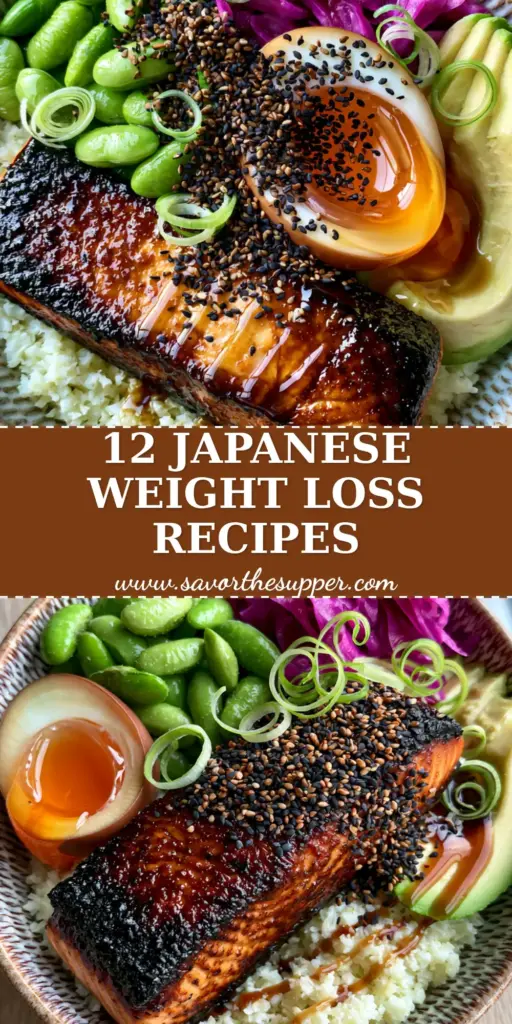
Japanese Recipes for Weight Loss: The Ultimate Miso-Glazed Salmon Bowl
Ingredients
Equipment
Method
- Toss shredded cabbage with rice vinegar and a pinch of salt. Let sit for 15 minutes until vibrant purple.
- Whisk miso, mirin, and honey. Brush onto salmon flesh. Let marinate for 10 minutes.
- Boil eggs for 6 minutes and 30 seconds, then immediately transfer to an ice bath for 'jammy' yolks.
- Sear salmon skin-side down in a hot skillet for 4 minutes. Flip and sear the miso side for 1-2 minutes until glossy and charred.
- Sauté riced cauliflower in the same skillet for 3-5 minutes until tender-crisp.
- Layer cauliflower rice, salmon, halved eggs, edamame, cabbage, and avocado. Drizzle with soy-ginger sauce and top with black sesame and scallion curls.
Notes
Ice water curls the scallions for a professional look.
Closing Thoughts on Healthy Japanese Cooking
Mastering Japanese recipes for weight loss is about finding the balance between discipline and indulgence. This Miso-Glazed Salmon Bowl proves that you don’t need heavy creams or excessive carbohydrates to create a meal that feels like a reward. The contrast of the warm, charred salmon against the cool, pickled cabbage and the rich, jammy egg creates a dining experience that is as mentally satisfying as it is physically nourishing.
If you enjoyed this recipe, please leave a comment below and tell us how your sear turned out! Don’t forget to follow us on Pinterest and share your creations. Happy cooking!