If you have ever stepped into a traditional kebab house in Istanbul, you know the vibrant, ruby-red punch of a perfectly prepared Turkish onion salad. This isn’t just a side dish; it is a bright, acidic, and crunchy essential that cuts through the richness of grilled meats and savory stews.
Our Turkish onion salad features paper-thin red onion half-moons that have been massaged until they are supple and translucent. Heavily dusted with deep ruby-red sumac, every bite offers a tangy, citrusy explosion that is visually stunning and culinarily transformative.
This recipe focuses on the forensic details—the way the extra virgin olive oil creates a glistening sheen and how the fresh lemon juice droplets interact with flaky sea salt. Whether you are a seasoned chef or a home cook looking to elevate your Mediterranean spread, this 5-minute recipe is a game-changer.
Why You Will Love This Vibrant Sumac Salad
- Supple Texture: By massaging the onions with salt, we transform a sharp, raw vegetable into a tender, mellow, and translucent delight.
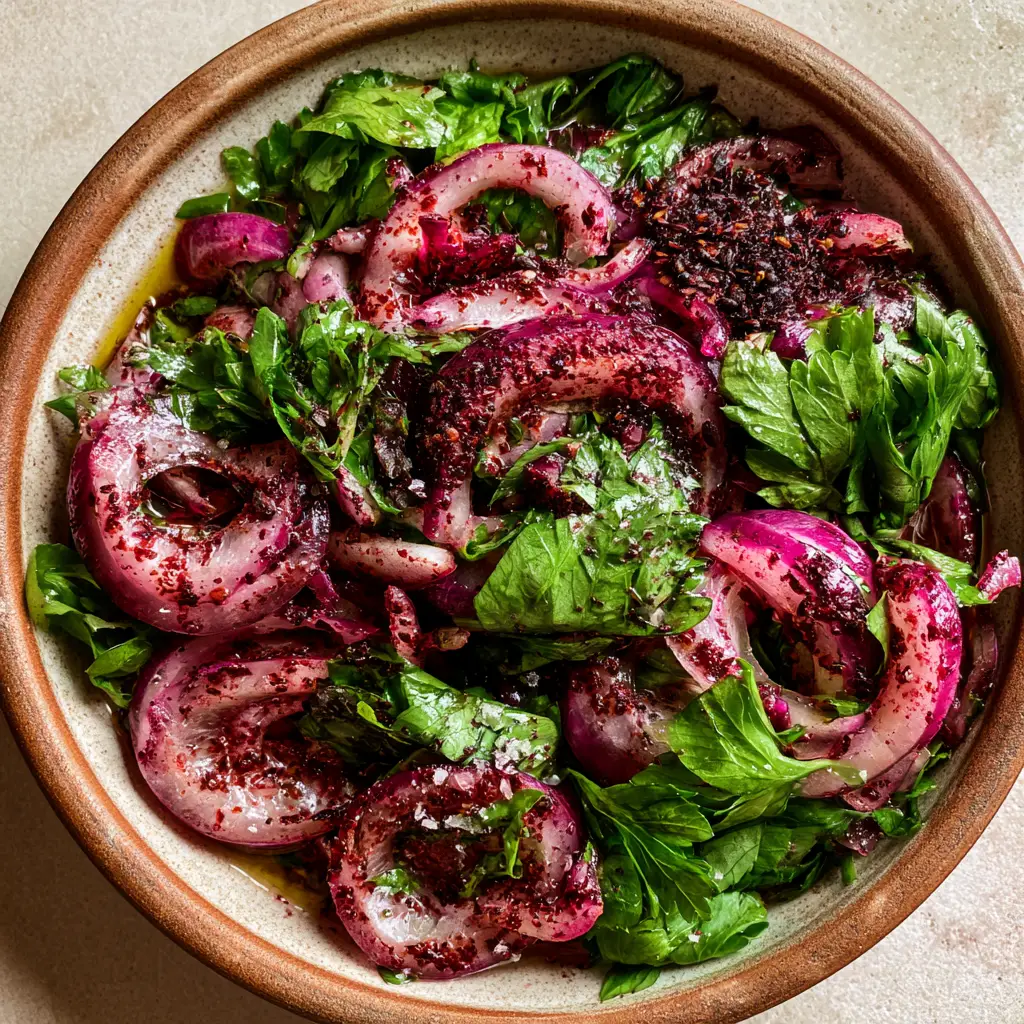
- Visual Depth: The grainy, deep-red sumac stains the onions, creating a rustic, high-contrast look against emerald green parsley.
- Versatile Pairing: It provides the perfect acidic balance to everything from grilled lamb to a light Turkish tomato and walnut salad.
- Natural Glisten: The combination of premium olive oil and lemon juice creates a moist, crunchy texture that shines under natural light.
Essential Elements for a Vibrant Sumac Onion Salad
To achieve the authentic “kebab shop” result, every ingredient serves a specific structural and sensory purpose. Do not skip the massaging process, as this is the secret to the salad’s unique Suppleness.
Large Red Onions: You need 2 large red onions, sliced into paper-thin half-moons. Red onions provide the necessary sharp base and beautiful purple-to-translucent color profile.
Ground Sumac: Use 2 tbsp (12g) of high-quality, grainy sumac powder. This spice provides the signature deep ruby-red stain and a unique tartness that lemon alone cannot replicate.
Fresh Flat-Leaf Parsley: Roughly 1 cup (30g) of fresh, torn flat-leaf parsley leaves adds an emerald brightness and a clean, herbaceous finish.
Extra Virgin Olive Oil: 3 tbsp (45ml) of premium oil is required to create that signature glistening coating seen in rustic earthenware presentations.
Fresh Lemon Juice: 1.5 tbsp (22ml) of juice provides the droplets of acidity that wake up the palate and soften the onion fibers further.
Flaky Sea Salt: 1 tsp (5g) of flaky salt is used for the massaging phase and as a final visible garnish to catch the light.
Professional Tools for Thin Slices
Achieving the translucent look described in our visual blueprint requires the right tools. A sharp chef’s knife is great, but a mandoline slicer set to 1/16th of an inch (1.5mm) is the secret to uniform, paper-thin half-moons.
You will also need a large mixing bowl—preferably rustic earthenware to match the aesthetic—and clean hands for the massaging process. A citrus juicer will ensure you get every drop of lemon juice without the seeds interfering with the salad’s texture.
Step-by-Step Instructions to Perfection
1. Slicing for Translucency
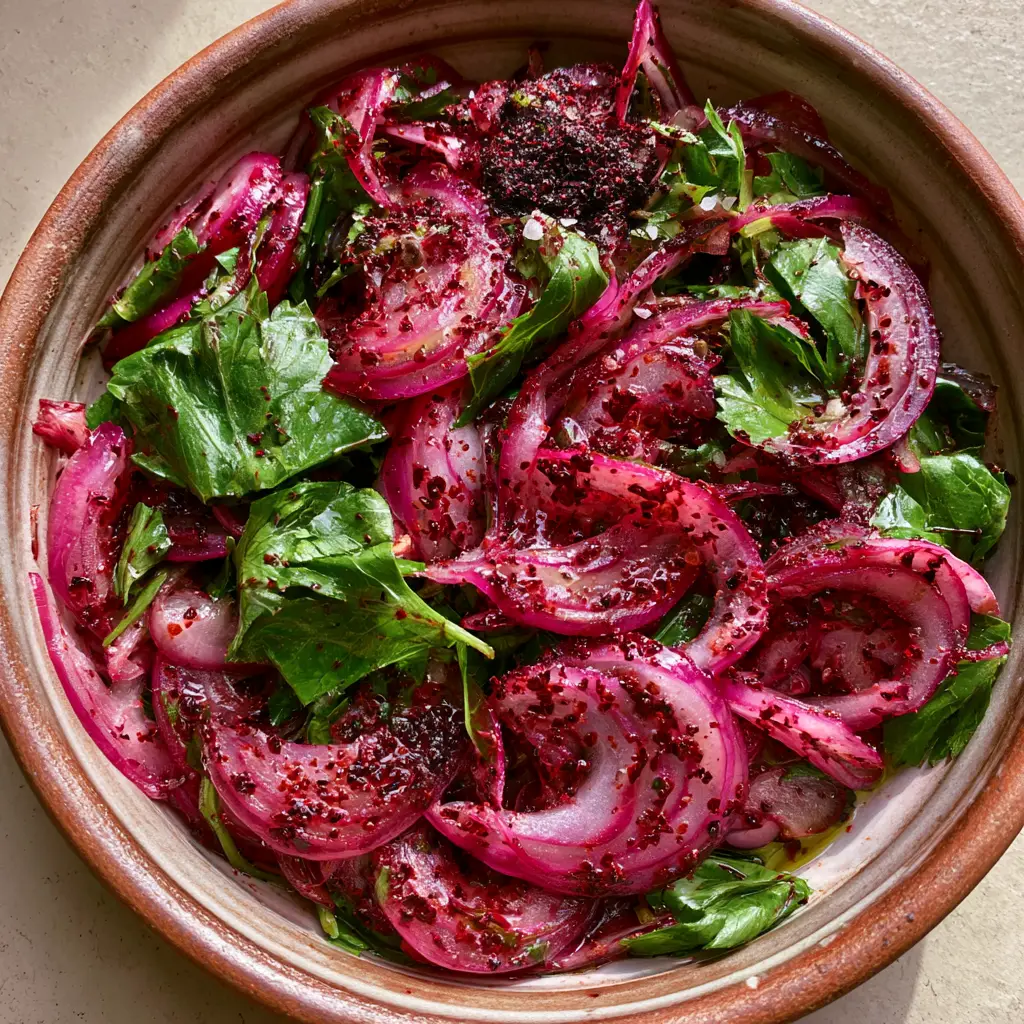
Begin by peeling your red onions and cutting them in half from pole to pole. Use a mandoline or a very sharp knife to slice the onions into paper-thin half-moons. The goal is for them to be thin enough to be slightly translucent when held up to the light.
2. The Salt Massage Technique
Place the sliced onions in a bowl and sprinkle with 1/2 tsp (2.5g) of the sea salt. Using your hands, firmly massage the onions for about 60 seconds. You will feel the onions soften and become supple as the salt draws out excess moisture and tames the raw “bite.”
3. Staining with Deep Ruby Sumac
Add the 2 tbsp (12g) of ground sumac to the bowl. Toss and rub the spice into the softened onion slices until they are completely stained with a deep ruby-red hue. The sumac should look grainy and well-distributed, not clumped.
4. Tossing the Aromatics
Add the roughly chopped or torn flat-leaf parsley to the onions. Gently fold the greens in so they remain bright and fresh, creating a stark emerald contrast against the red-stained onions.
5. The Final Glisten
Drizzle the extra virgin olive oil and lemon juice over the mixture. Toss one last time so the vegetables glisten beautifully. Finish with a final pinch of flaky sea salt and an extra dusting of sumac on top for a professional, rustic presentation.
Expert Tips for Success
- Rinse if Needed: If you find red onions too pungent even after massaging, rinse the sliced onions in cold water and pat them bone-dry before adding the sumac.
- Tear, Don’t Mince: Large, torn leaves of parsley provide a better visual and textural experience than finely minced herbs, which can become muddy.
- Serve Immediately: While this salad can sit, it is most vibrant and crunchy within the first 30 minutes of preparation.
- Temperature Matters: Serve at room temperature to allow the olive oil flavors to remain fluid and fragrant.
Storage and Freshness
This Turkish onion salad is best enjoyed fresh. However, leftovers can be stored in an airtight container in the refrigerator for up to 2 days. Note that the parsley will wilt and the onions will release more liquid over time, losing some of that glistening, crunchy appeal.
We do not recommend freezing this salad, as the cellular structure of the onions will collapse, resulting in a mushy texture upon thawing. If you are prepping ahead, slice the onions and chop the parsley, but wait to massage and dress them until just before serving.
What to Serve With This Sumac Salad
This salad is the ultimate companion for a Mediterranean feast. It pairs beautifully with a Greek chickpea salad for a vegetarian spread. If you are leaning towards a protein-heavy meal, it is the classic topping for various healthy chicken salad recipes or even a simple creamy cold chicken salad sandwich for a fusion twist.
Traditionalists will serve these sumac onions alongside Adana kebabs, grilled lamb chops, or stuffed flatbreads. The acidity helps digest the fats in the meat, making each bite feel as fresh as the first.
Frequently Asked Questions
While you can use white onions, red onions are traditional because they offer a sweeter profile and a beautiful purple hue that complements the red sumac.
It is best served fresh within 30 minutes. You can store it for up to 2 days in the fridge, but the onions will lose their crunch and the parsley will wilt.
No, this salad is not spicy. It is acidic, tangy, and bright. If you want heat, you can add a pinch of Turkish Aleppo pepper (Pul Biber).
Sumac has a unique tangy, citrusy profile that is slightly astringent. It provides a deeper, more complex sourness than lemon juice alone and is responsible for the salad’s ruby-red color.
Massaging onions with salt breaks down their cellular structure, making them supple and translucent. It also draws out the harsh sulfurous compounds, leaving a mellow, pleasant flavor.
Authentic Turkish Onion Salad Recipe
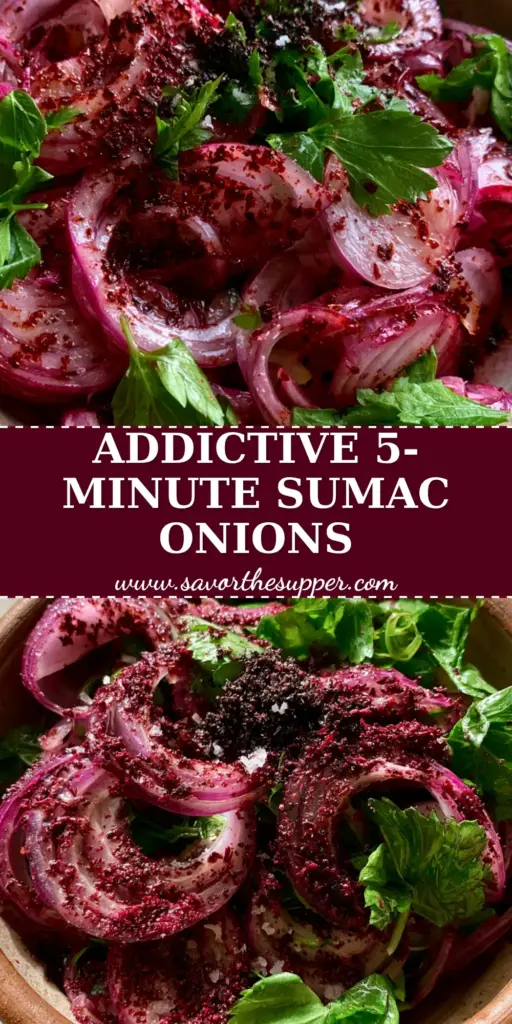
Turkish Onion Salad Recipe: Authentic Sumac Onions (Sumaklı Soğan)
Ingredients
Equipment
Method
- Cut red onions into paper-thin half-moons using a mandoline or sharp knife until translucent.
- Place onions in a bowl with half the salt; massage firmly for 60 seconds until supple and softened.
- Add sumac and rub into onions until they are a deep, grainy ruby-red.
- Fold in parsley, drizzle with olive oil and lemon juice, and finish with a pinch of flaky sea salt.
Notes
Use flat-leaf parsley instead of curly for a more authentic texture.
Join the Savor The Supper Community
We hope this Turkish onion salad brings a burst of Anatolian flavor to your kitchen. The balance of ruby-red sumac and supple onions is a sensory experience you won’t soon forget. If you enjoyed this recipe, please leave a comment below and tell us how you served it!
For more rustic Mediterranean inspiration, follow us on Pinterest and sign up for our newsletter to get the latest recipes delivered straight to your inbox. Don’t forget to share your creations and tag us!